انتقل إلى المحتوى الرئيسي
ملفات الحمض النووي

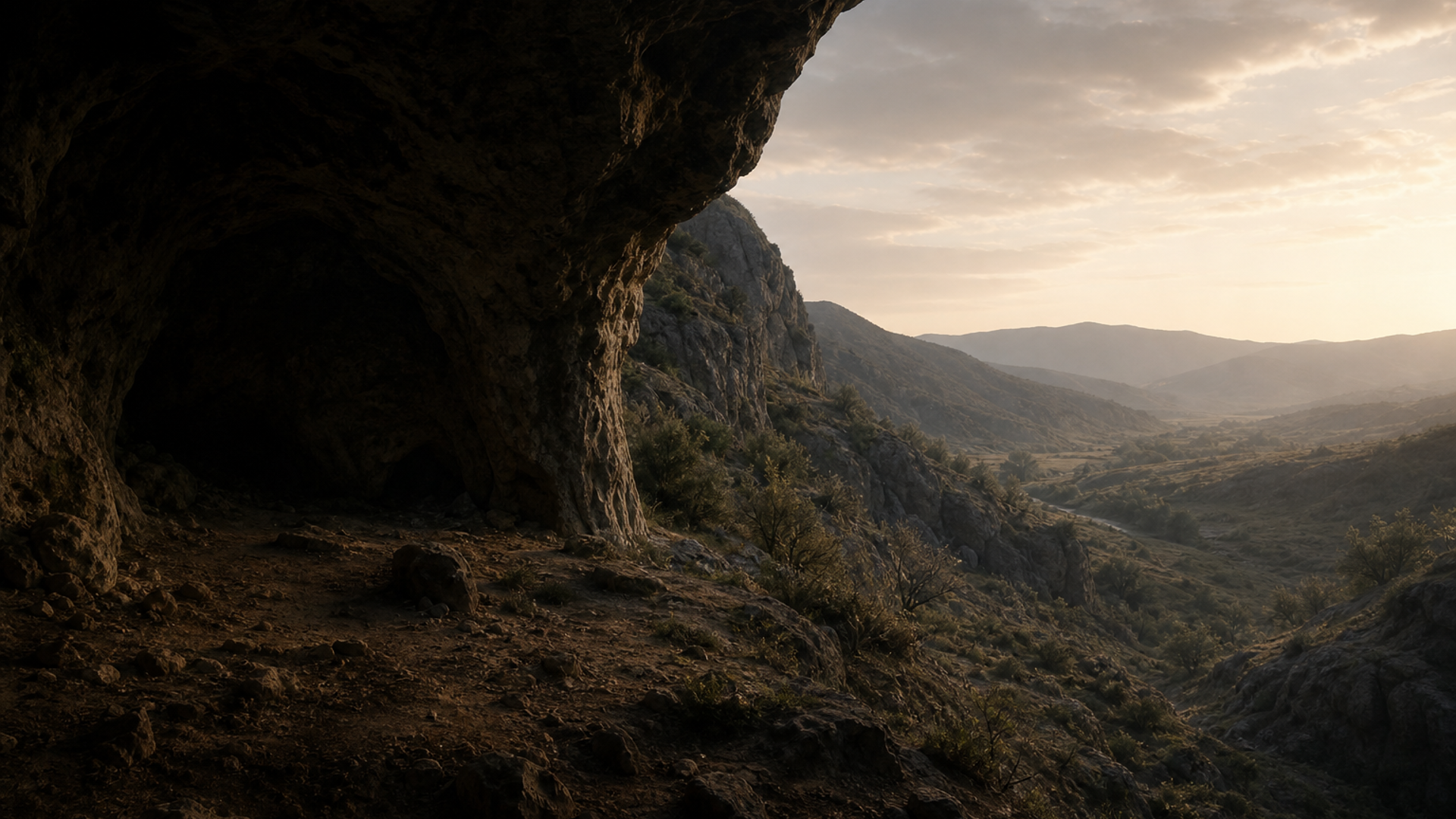
Tren Cave Echoes

Two Late Neolithic–Chalcolithic voices from the Devoll valley

5000 CE - 3500 BCE
Devoll valley, Albania (Tren Cave)

القصة

Human remains from Tren Cave (Devoll, Albania) dated 5000–3500 BCE reveal mitochondrial haplogroups HV4 and J1c. Limited samples caution broad inference; archaeological context links these individuals to Late Neolithic–Chalcolithic lifeways in southeastern Albania.

Time Period

5000–3500 BCE

Region

Devoll valley, Albania (Tren Cave)

Common Y-DNA

No Y-DNA recovered / insufficient data

Common mtDNA

HV4, J1c (each observed in 1 of 2 samples)

الموضوعات

الخط الزمني

2500 BCE

Tren Cave occupation (mid-period)

Tren Cave in the Devoll valley records Late Neolithic–Chalcolithic activity; two individuals sampled for mtDNA (HV4, J1c), offering a preliminary genetic snapshot of the period.

Origins & Emergence

Archaeological data indicates that the people represented by the Tren Cave samples lived during the Late Neolithic to Chalcolithic transition in southeastern Albania (c. 5000–3500 BCE). Tren Cave sits in the Devoll valley, a corridor linking inland Balkan uplands with Adriatic and Aegean coasts. The broader region shows a long arc of Neolithic farming traditions introduced from Anatolia and then transformed locally over millennia.

Limited evidence suggests that communities here practiced mixed farming, ceramic production, and increasingly visible metallurgy by the later end of this range. Material culture in nearby sites points to continuity with Early and Middle Neolithic farmer groups alongside local adaptations. Genetically, such populations in the Balkans often combine Anatolian farmer ancestry with varying amounts of local European hunter-gatherer input; however, the Tren Cave dataset is small and cannot alone define regional origins.

The Tren Cave individuals therefore offer a tantalizing, if preliminary, glimpse into the human tapestry of the Devoll valley: a place where incoming farming lifeways blended with long-standing local traditions, setting the stage for social and technological changes that culminated in the Chalcolithic.

  • Located in Tren Cave, Devoll valley, southeastern Albania
  • Dates fall between Late Neolithic and Chalcolithic (5000–3500 BCE)
  • Reflects Anatolian-farmer-derived cultural contexts with local admixture

Daily Life & Society

Archaeological contexts in the Late Neolithic–Chalcolithic Balkans paint a vivid picture of everyday life: settled farming, domesticated animals, ceramic craft, and expanding exchange networks. In the Devoll valley, fertile riverine soils would have supported cereals and pulses, while upland meadows favored sheep and goats. Pottery styles, stone tools, and emerging copper use reflect both local innovation and long-distance contacts.

Caves such as Tren may have had multiple roles—seasonal shelter, ritual space, or deposition places for human remains and material offerings—depending on the site and period. Archaeological deposits nearby show household activities interleaved with specialized craft and communal practices, suggesting communities balanced kin-based farms with wider social ties. Mobility likely included short-distance herding movements and episodic exchanges of raw materials like obsidian or copper.

While evocative, these reconstructions rest on regional parallels; Tren Cave itself provides only two sampled individuals, so reconciling individual life histories with broader social patterns requires more data.

  • Economy: mixed farming, pastoralism, pottery production
  • Cave contexts possibly used for burial, storage, or ritual purposes

Genetic Profile

The genetic signal from Tren Cave is striking in its brevity: two analyzable individuals, each preserving a different mitochondrial lineage—HV4 and J1c. Mitochondrial DNA traces maternal ancestry; HV lineages have deep roots in Europe and the Near East, while J1c is commonly documented among Neolithic farming populations in Europe and has ties to Anatolian-derived farmer ancestry. These mtDNA results are consistent with archaeological expectations of Neolithic-descended maternal lines in the western Balkans.

Importantly, no Y-chromosome haplogroups were reported from these two samples, either because Y-DNA was not preserved or not recovered; this prevents any direct statement about paternal lineages or patrilineal social structures at Tren. Broader regional ancient DNA studies show that Neolithic Balkan populations typically carried substantial Anatolian farmer ancestry admixed with local hunter-gatherers; later (post-3500 BCE) steppe-related ancestry increases in some areas. Given the sample count (n=2), conclusions are preliminary: patterns hinted at here require follow-up with larger, stratified sampling to test continuity, admixture timing, and links to later Bronze Age influxes.

  • Two mtDNA lineages: HV4 and J1c (each in one individual)
  • No Y-DNA recovered — paternal ancestry remains unresolved; conclusions are preliminary

Legacy & Modern Connections

The Tren Cave individuals join a mosaic of prehistoric peoples who contributed to the genetic and cultural foundation of the Balkans. Modern populations in Albania and surrounding regions carry layered ancestry—Neolithic farmers, local hunter-gatherers, and later Bronze Age influences—that likely includes echoes of communities like those who used Tren Cave. However, direct continuity cannot be assumed from two samples alone.

These small genetic glimpses are valuable: they anchor maternal lineages in place and time, guiding hypotheses about population movement, interaction, and persistence. Each additional excavated site and sequenced genome will sharpen the picture, transforming cinematic fragments into a robust narrative of how ancient lifeways in the Devoll valley shaped later human history.

  • Adds maternal-line evidence to the prehistoric Balkan record
  • Suggests layers of ancestry that contribute to modern regional genetic diversity

مساعد الذكاء الاصطناعي

مساعد الذكاء الاصطناعي من DNA Genics

فتح هذه الميزة
اطرح أسئلة عن ثقافة Tren Cave Echoes. يمكن للمساعد شرح النتائج الجينية والسياق التاريخي والأدلة الأثرية والصلات بالعصر الحديث.
مثال على تحليل بالذكاء الاصطناعي

لمحة عن ثقافة Tren Cave Echoes

تساعد عينات الحمض النووي القديم الباحثين على دراسة أنماط الهجرة والعلاقات الجينية بين المجموعات السكانية القديمة.

هذه معاينة للتحليل. يتيح المساعد الكامل استكشاف الموضوعات التالية:

  • التركيب الجيني والأصول
  • أنماط الهجرة والأصول
  • الحياة اليومية والممارسات الثقافية
  • الإرث الجيني المعاصر