Caves of Early Italy

Download PDF creates a visual, rasterized copy. Use Print for selectable text and better assistive-technology support.

Bericht wird vorbereitet

Verfügbare Informationen und Referenzen werden geladen

Verbindung mit dem archäologischen Quellenbestand...

Alte Quellen werden zusammengestellt

Zum Hauptinhalt springen
Caves of Early Italy
Zivilisations-Spotlight

Caves of Early Italy

Mesolithic foragers of Abruzzo seen through archaeology and a trio of ancient genomes

9999 CE - 7062 BCE
Abruzzo, Italy (Grotta de Continenza)
Scrollen zum Start
Kapitel I

Die Geschichte

Die Caves of Early Italy-Kultur verstehen

Archaeological layers and three ancient genomes from Grotta de Continenza (Abruzzo) illuminate Italy's Mesolithic world (9999–7062 BCE). Limited samples point to local hunter‑gatherer ancestry related to broader Western European hunter‑gatherers, but conclusions are preliminary.

Time Period

9999–7062 BCE

Region

Abruzzo, Italy (Grotta de Continenza)

Common Y-DNA

Insufficient data (3 samples)

Common mtDNA

Insufficient data (3 samples)

Kapitel II

Zeitleiste

Zentrale Momente in der Geschichte dieser Kultur

9999 BCE

Early Holocene occupation at Grotta de Continenza

Radiocarbon dates indicate initial Mesolithic human activity at Grotta de Continenza in Abruzzo, marking early postglacial forager presence.

Kapitel III

Origins & Emergence

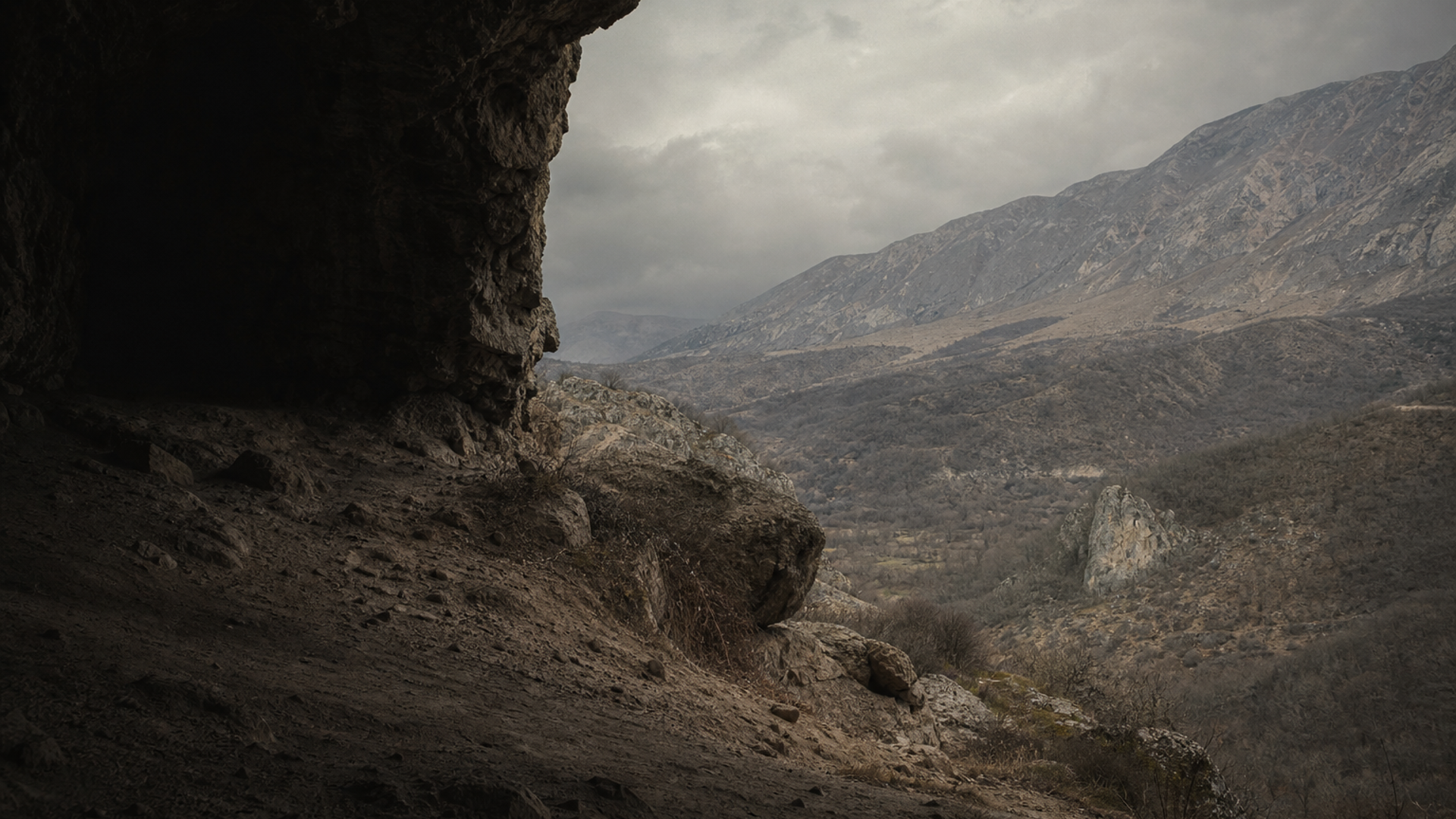
The Mesolithic layers of Grotta de Continenza sit like a palimpsest of coastal and upland lives, spanning roughly 9999 to 7062 BCE. Radiocarbon dates from charcoal and bone place human activity in the early Holocene, a time when rising seas and shifting ecosystems transformed the Italian peninsula. Archaeological data indicates sequences of occupation with hearths, stone tool scatters and faunal remains that speak to a resilient forager economy adapting to postglacial landscapes.

In wider genetic terms, the three sequenced individuals from Grotta de Continenza fall within the temporal window when populations across Italy and southern Europe retained strong hunter‑gatherer ancestry. Limited evidence suggests affinity with the broader Western Hunter‑Gatherer (WHG) genetic cluster that becomes prominent in late Upper Palaeolithic and Mesolithic Europe. However, with only three samples, patterns of migration, continuity and local interaction remain hypotheses to be tested by future sampling.

Cinematically: imagine a shoreline reshaping itself under a pale sun while small groups exploit river mouths and shelters. Archaeology provides the tools and bones; ancient DNA offers the genetic threads, but the tapestry is still thinly woven here.

  • Occupations dated ca. 9999–7062 BCE in Grotta de Continenza (Abruzzo)
  • Postglacial forager adaptations to coastal and upland resources
  • Genetic affinities consistent with Western Hunter‑Gatherer ancestry, tentative due to small sample size
Kapitel IV

Daily Life & Society

Archaeological remains at Grotta de Continenza evoke a seasonal, mobile lifeway anchored to caves and coastal shelters. Stone tools—small blades and microlithic fragments—along with animal bones suggest hunting of red deer, wild boar and exploitation of aquatic resources. Hearths and burned bone layers indicate repeated short‑term occupations: families returning to known shelters as rivers, estuaries and forests shifted with the early Holocene climate.

Social organization can be inferred only in broad strokes. Small group sizes, flexible mobility and knowledge transmission across generations likely structured life here. Material culture shows both continuity with earlier Palaeolithic traditions and innovations suited to a warmer, more productive environment. Ornament fragments and ochre traces, where present, hint at symbolic behaviors, social identities and networks of exchange that connected coastal Abruzzo to inland and Mediterranean neighbors.

These images are reconstructed from stone and bone, and are tempered by the reality that direct evidence—especially genetic—remains sparse. The story is compelling but incomplete.

  • Seasonal hunter‑gatherer camps exploiting terrestrial and aquatic resources
  • Stone tool production geared toward mobility and diverse prey
Kapitel V

Genetic Profile

Ancient DNA from three individuals excavated at Grotta de Continenza provides a rare genetic glimpse into early Holocene Italy, but the small sample count (<10) makes all interpretations provisional. Genomic analyses indicate dominance of hunter‑gatherer ancestry components broadly similar to the Western Hunter‑Gatherer (WHG) cluster known from other parts of Europe. This suggests long‑standing local ancestry rather than clear signals of incoming farming populations, which appear later in time.

Y‑chromosome and mitochondrial haplogroup assignments are not robustly established for these individuals in the publicly available summary data; therefore, reporting of specific lineages would be premature. Instead, the key genetic message is patternary: these genomes align with postglacial hunter‑gatherer variation in southern Europe, contributing to the picture of regional continuity punctuated by later demographic shifts during the Neolithic.

Crucially, three samples cannot resolve fine‑scale structure, sex‑biased mobility, or subtle admixture events. Future sampling across Abruzzo and contemporaneous sites will be required to test hypotheses about micro‑regional population structure, kinship at cave sites, and the timing of genetic turnovers associated with incoming Neolithic farmers.

  • Three genomes show predominant hunter‑gatherer ancestry consistent with WHG affinities
  • Lineage assignments (Y/mtDNA) are currently insufficient or inconclusive; interpretations are preliminary
Kapitel VI

Legacy & Modern Connections

The individuals of Grotta de Continenza represent threads in a deep human story that shapes the genetic landscape of modern Italy. Archaeological continuity and the persistence of hunter‑gatherer ancestry in early Holocene genomes suggest that parts of Italy retained local genetic contributions that later mixed with incoming Neolithic farmers. These early foragers are therefore part of the ancestral mosaic contributing to contemporary southern European diversity.

But the connection is nuanced: with only three Mesolithic genomes from this site, we must resist deterministic narratives. The cinematic image of an unbroken line from cave communities to modern populations is tempting, yet the truth is a palimpsest of continuity and change. Ongoing ancient DNA sampling, combined with archaeological excavation across Abruzzo and beyond, will clarify how much of the Mesolithic genetic legacy persisted, where it mixed, and how cultural practices transformed through millennia.

  • Contributed to the mosaic of ancestries that shape modern southern Europe
  • Current genetic links are tentative; greater sampling is needed to map continuity and admixture
KI-gestützt

KI-Assistent

Stellen Sie Fragen zur Caves of Early Italy-Kultur

KI-Assistent von DNAGENICS

Funktion freischalten
Stellen Sie Fragen zur Kultur Caves of Early Italy. Unser KI-Assistent kann genetische Befunde, historischen Kontext, archäologische Belege und moderne Verbindungen erläutern.
Beispiel einer KI-Analyse

Die Caves of Early Italy-Kultur ist ein faszinierendes Kapitel der Menschheitsgeschichte...

Genetische Analysen zeigen Übereinstimmungen mit früheren Populationen und Hinweise auf besondere Anpassungen und kulturelle Innovationen. Alte DNA-Proben liefern Einblicke in Migrationsmuster, soziale Strukturen und genetische Verbindungen zwischen Populationen.

Dies ist eine Vorschau der KI-Analyse. Schalten Sie den vollständigen KI-Assistenten frei, um detaillierte Einblicke zu erkunden:

  • Genetische Zusammensetzung und genetische Ähnlichkeit
  • Migrationsmuster und Ursprünge
  • Alltag und kulturelle Praktiken
  • Genetischer Bezug zu heutigen Populationen

Weitere antike Kulturen erkunden

Geschichten von Zivilisationen aus der antiken Welt entdecken

Use code for 35% off • Expires Nov 09




