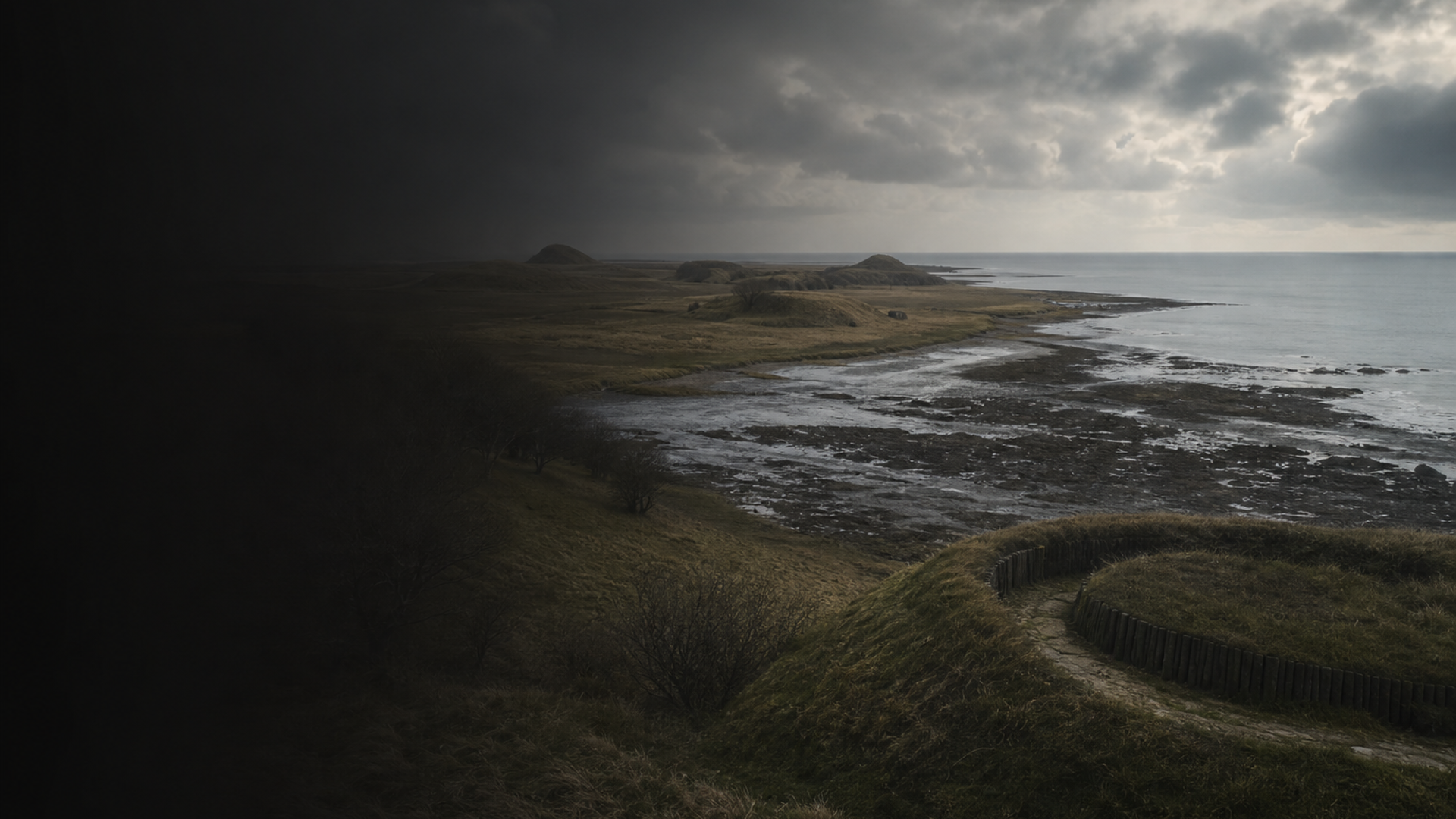
The bones and teeth recovered from Sealand — principally at Tollemosegard and Hundstrup Mose — speak in a quiet, peat-preserved voice about communities living on the edge of the Baltic. Archaeological data indicates activity at these localities spans the transition into the Viking Age. The date range for the genetic samples (660–1000 CE) covers the late Iron Age into the Early Viking Age, a period of intensifying maritime contact, craft specialization, and social reconfiguration across Denmark.
Limited evidence suggests these individuals derive largely from regional north-central European gene pools that had been established in Scandinavia for centuries. Material culture from coastal Zealand shows continuity in farming, fishing, and small-scale craft, even as long-distance voyages and raiding began to reshape political horizons after the late 8th century. Wetland contexts such as bogs on Sealand can preserve human remains and sometimes indicate ritual or depositional practices; however, without a larger comparative dataset, it remains uncertain whether these samples represent typical local inhabitants or unusual depositional events.
Because only six genomes are available, any model of population emergence must be cautious. These remains are a tantalizing glimpse — fragments of identity that, when placed alongside larger regional datasets, will refine our understanding of how local communities adapted and connected during the first centuries of the Viking expansion.