跳转到主内容
mtDNA · 母亲 lineage

L0A1B

mtDNA Haplogroup L0A1B

一个家族分支的参考简介 。 共享haplogroups 无法建立家庭关系或文化认同 。

参考简介

部门背景

mtDNA 谱系分支 L0A1B 的历史背景

Origins and Evolution

mtDNA haplogroup L0A1B is a downstream branch of L0A1, itself a subclade of the deeply rooted African lineage L0. Based on the phylogenetic position within L0A1 and molecular-clock estimates for nearby nodes, L0A1B most likely arose in eastern Africa during the Late Pleistocene (roughly ~25 kya, with uncertainty on the order of several thousand years). Its emergence reflects continued local diversification of maternal lineages in eastern Africa after the initial differentiation of L0A and L0A1.

Mutational differences that define L0A1B are relatively few compared with older splits in the L0 family, indicating an intermediate-age clade that persisted regionally and was later affected by Holocene demographic processes.

Subclades (if applicable)

L0A1B functions as an intermediate clade between the parent L0A1 node and any downstream private lineages identified in modern and ancient mitogenomes. Where sampling density permits, L0A1B can be subdivided into localized sub-branches defined by additional private mutations; however, those finer splits are often rare and sometimes restricted to single populations or regions. Continued sequencing of complete mtDNA genomes, especially from under-sampled eastern African groups, is required to resolve and name stable downstream subclades within L0A1B.

Geographical Distribution

L0A1B shows its highest frequencies and greatest diversity in eastern Africa, particularly in the Horn of Africa and neighboring populations. Moderately lower frequencies occur in central and southern African populations, reflecting historical gene flow (including Bantu expansion and regional admixture). Very low-frequency occurrences appear in southern African Khoe‑San groups and in African-descended populations in the Americas as a result of the transatlantic slave trade. Sporadic, low-frequency detections in North Africa and the Near East are best explained by historical and recent admixture rather than primary origin in those regions.

Historical and Cultural Significance

L0A1B documents an ancient maternal lineage that was present in eastern Africa prior to, and during, major Holocene cultural transitions. Its distribution today reflects both deep continuity in the Horn and redistribution during the Holocene by processes such as:

  • Pastoralist expansions across eastern Africa (movement of Cushitic- and Afroasiatic-speaking pastoral communities), which redistributed regional maternal lineages.
  • Bantu-related migrations, which carried some eastern African maternal lineages into central and southern Africa through admixture.
  • Local continuity among Nilotic and Cushitic-speaking groups in eastern Africa, where L0A1B can be relatively concentrated.

Because mtDNA traces strictly maternal ancestry, L0A1B provides insight into maternal population structure and female-mediated gene flow in eastern Africa over the last tens of thousands of years. It complements autosomal, Y-chromosome, and archaeological evidence for population continuity and mobility in the region.

Conclusion

L0A1B is an informative intermediate branch of the deep African L0 family, highlighting eastern Africa as a center of maternal lineage diversification during the Late Pleistocene. Its present-day distribution is shaped by a mix of ancient local continuity and Holocene redistributive events (pastoral expansions and Bantu-associated gene flow). Further whole-mitogenome sampling across eastern, central, and southern Africa—especially among under-sampled groups—will refine the internal structure, age estimates, and historical dynamics of L0A1B.

关键点

  • Origins and Evolution
  • Subclades (if applicable)
  • Geographical Distribution
  • Historical and Cultural Significance
  • Conclusion
参考简介

树形关系( N)

phylgenetic 上下文和子拼写

进化路径

沿已记录的上级分支追溯至 L0A1B。年代为估计值,可能随参考数据更新而调整。

步骤 单倍群 年龄估计 考古时代 时间流逝 直系后裔 被测试的现代后裔 古代连接
1 L0A1B 当前 ~25,000 years ago Paleolithic 25,000 years 2 22 0
2 L0A1A ~8,000 years ago Neolithic 8,000 years 5 84 10
3 L0A1 ~20,000 years ago Mesolithic 20,000 years 2 109 0
4 L0A1'4 - - - 1 116 0
5 L0A ~50,000 years ago Paleolithic 50,000 years 2 210 13
6 L0A'G - - - 1 218 0
7 L0A'B'G - - - 2 265 0
8 L0A'B'F'G - - - 2 284 0
9 L0A'B'F'G'K - - - 2 287 0
10 L0 ~170,000 years ago Paleolithic 170,000 years 3 384 6
11 L ~160,000 years ago Paleolithic 160,000 years 2 32,236 5

Siblings (4)

来自同一父分支的分支( oplogroup)

参考简介

哪里是这个世界

地理分布和现代存在

记录来源

Eastern Africa

现代发行

The populations where mtDNA haplogroup L0A1B is found include:

  1. Horn of Africa groups (e.g., Oromo, Somali, Amhara)
  2. Cushitic- and Nilotic-speaking populations of eastern Africa
  3. Bantu-speaking populations in central and southern Africa (via admixture)
  4. Central African forager groups (low-to-moderate frequencies)
  5. Khoe‑San and southern African groups (low frequencies, typically historical admixture)
  6. African-descended populations in the Americas (low frequency, via the transatlantic slave trade)
  7. Sporadic occurrences in North Africa and the Near East (historical/recent admixture)
历史背景

分枝穿越时间

大致历史时间范围内的估计形成情况:周期标志提供了背景,并不意味着与特定文化的联系。

  1. ~25k 年前

    Haplogroup L0A1B

    此 mtDNA 分支的形成时间为推定值,日期和地点仅作参考。

    这个分支
  2. ~20k 年前

    上一个冰川最大值

    上一个冰河时代的高峰,人口隔离

  3. ~10k 年前

    新石器革命

    农业开始,定居社区形成

  4. ~5k 年前

    青铜时代

    金属加工、书写和早期文明

  5. ~3k 年前

    铁器时代

    铁工具,扩大贸易网络

  6. ~2.5k 年前

    古典时代

    希腊和罗马文明蓬勃发展

  7. 现

    现日

    现代时代

参考简介

考古学背景

已记录的 mtDNA 分支 L0A1B 考古关联

有记录的协会

这些标签描述与 L0A1B 相关的参考样本所处的考古背景。仅凭这种关联,无法判断所有携带者都属于某种文化或沿同一路线迁徙。

Elmenteitan Culture Italy_Sicily_LateAntiquity_ImperialRoman_Sicilia Makwasinyi Modern Period Mtwapa Nubian Christian Pemba Phase I St. Helena Colonial Tanzanian Prehistoric
文化任务基于古代DNA样本的考古背景,可能代表特定时期的区域协会.
参考简介

样本目录

单倍群 L0A1B 的子分支携带者 6 名(当前选定的参考样本中没有直接携带者)

6 显示 ^ 6 匹配样本

Portraits是AI生成的插图,样本标签和加入ID识别参考记录.

纵向 样本 国家 大纪元 日期 文化 mtDNA 匹配
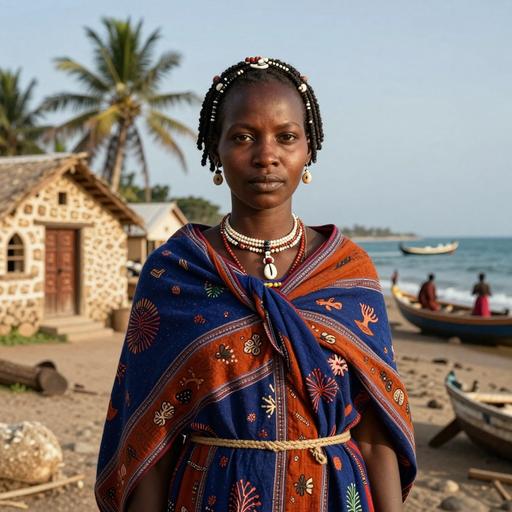
AI生成的示例性肖像 Medieval Swahili individual, Mtwapa (Kilifi), Kenya (1,200-1,450 CE)
Sample ID: I23558
Kenya Swahili Culture of Mtwapa 1300-1500 CE Mtwapa L0a1b1a 下游分支
AI生成的示例性肖像 Medieval Swahili individual, Mtwapa (Kilifi), Kenya (1,250-1,650 CE)
Sample ID: I17413
Kenya Swahili Culture of Mtwapa 1510-1655 calCE (315±15 BP, ISGS-A2203) Mtwapa L0a1b2a 下游分支
AI生成的示例性肖像 Medieval Swahili individual, Mtwapa (Kilifi), Kenya (1,442-1,612 CE)
Sample ID: I19409
Kenya Swahili Culture of Mtwapa 1442-1612 calCE (455±20 BP, PSUAMS-12148) Mtwapa L0a1b1a 下游分支
AI生成的示例性肖像 Democratic Republicofthe Congo Protohistoric individual, Kindoki, DR Congo (1,636-1,800 CE)
Sample ID: KIN004
DR Congo Kindoki Protohistoric Era in Congo 1653-1801 calCE (241±20 BP, OxA-37355) Kindoki L0a1b1a1 下游分支
AI生成的示例性肖像 Western individual, Maryland's Catoctin Furnace African American Cemetery, USA (1,700-1,850 CE)
Sample ID: I8084
USA Modern Era 1700 CE - 1850 CE Modern Period L0a1b1a 下游分支
AI生成的示例性肖像 British Empire individual, Rupert’s Valley, St. Helena (1,840-1,940 CE)
Sample ID: STH_245
St. Helena St. Helena 1840 CE - 1940 CE St. Helena Colonial L0a1b2a 下游分支
MATERNAL LINEAGE · ANCIENT DNA

古代世系证据地图

跟随母舰飞向这个分支 探索古代载体的发现地点

正在装入古老的观测...

标记是考古发现地点。一个破碎的连接器是连续分支之间一种不确定的、拟议中的地理过渡,辅以多个日期的观察;它不是一个准确的旅行路线、出生地或直接血统的证明。父系样本可能属于其他后代分支。在证据不足的地方,差距依然存在。样本日期与随机群形成日期不同。

参考简介

载体分布图

6 个古代 DNA 样本的地理分布,涵盖 L0A1B 及其下游分支的携带者

子舱载体
时间段过滤器
所有时间段
显示全部样本
参考简介

时间分布

载体在考古时期的分布

参考简介

地理分布

按有记录的抽样国家计算,反映的是现有的参考选择,而不是人口频率。

参考简介

国家 × 大纪元发行

比较各国和考古时期记录的样本数量。选择一个人口密集的细胞来检查样本。

数据

数据证明( P)

来源信息和数据质量

上次更新 2026-02-16
信心分数 50/100
覆盖范围 Low

数据来源

分类、估计日期和地理背景反映了所记录的参考数据,随着证据的修订而可能发生变化,样本覆盖范围不均匀;所记录的地点和考古协会没有确定个人出身或文化特征。