部门背景
mtDNA 谱系分支 L0A1B2 的历史背景
Origins and Evolution
mtDNA haplogroup L0A1B2 is a subclade of L0A1B, itself nested within the deep African lineage L0A. The parent clade L0A1B has been dated to the Late Pleistocene (~25 kya) and is concentrated in eastern Africa; L0A1B2 represents a later branching event, plausibly in the early Holocene (roughly 6–10 kya). Its emergence likely reflects local differentiation within eastern African maternal gene pools after the Last Glacial Maximum, during a period of climatic amelioration and demographic change that included increased mobility, localized expansions of pastoralism, and the beginnings of more intensive interregional contact.
Subclades (if applicable)
As a relatively derived subclade, L0A1B2 may itself contain further downstream lineages characterized by private control-region and coding-region mutations observed in modern and ancient mitogenomes. Published phylogenies for L0 lineages often show several named subbranches under L0A1B; L0A1B2 should be treated as an intermediate node linking the diagnostic mutations of L0A1B to more recent local variants found in Horn and eastern African populations. Because sampling in some regions remains sparse, additional substructure within L0A1B2 may be revealed as more whole-mtDNA sequences are analyzed.
Geographical Distribution
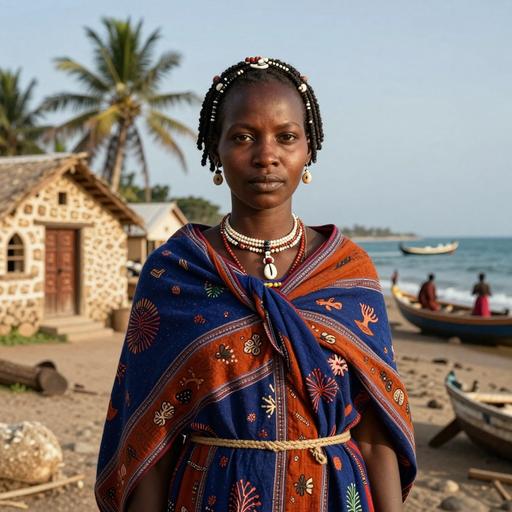
L0A1B2 is concentrated in eastern Africa, especially in the Horn (e.g., Oromo, Somali, Amhara) and neighbouring Cushitic and Nilotic groups, where frequencies are highest relative to other regions. Secondary occurrence is seen in central and southern Africa at low-to-moderate frequencies, reflecting Holocene movements such as Bantu-speaking expansions and historic admixture with forager and pastoralist communities. Sporadic instances occur in North Africa, the Near East, and among African-descended populations in the Americas where they can be traced to the transatlantic slave trade.
Historical and Cultural Significance
The geographic and temporal placement of L0A1B2 links it to demographic processes important in Holocene eastern Africa: localized population growth after the Pleistocene, the spread and intensification of pastoralism in the Pastoral Neolithic, and later contacts with expanding Bantu-speaking agriculturalists. Where present at higher frequencies in the Horn, L0A1B2 contributes to the deep maternal genetic continuity observed in Cushitic and Semitic-speaking groups. In regions where it is rare, its presence frequently reflects historic gene flow rather than primary demographic replacement.
Conclusion
L0A1B2 is a regionally informative maternal lineage for eastern Africa that documents mid-Holocene maternal differentiation within the L0A clade. While abundant sampling and whole-mtDNA sequencing have clarified its placement as a descendant of L0A1B, further population-level sequencing—particularly from under-sampled eastern African and adjacent southern African groups—will better resolve its internal structure, precise date estimates, and the finer-scale migration events that distributed it beyond the Horn.
Note: age estimates and distributional statements are based on current phylogenetic placement within L0A and published population-genetic patterns; confidence increases with denser full mitogenome sampling.
关键点
- Origins and Evolution
- Subclades (if applicable)
- Geographical Distribution
- Historical and Cultural Significance
- Conclusion