部门背景
mtDNA 谱系分支 U1A2 的历史背景
Origins and Evolution
mtDNA haplogroup U1A2 is a subclade of U1A, itself a branch of haplogroup U1. U1A likely formed after the Last Glacial Maximum in the Near East/Caucasus (estimated ~17 kya for U1A), and U1A2 represents a later divergence within that lineage during the early Holocene (plausibly around ~11 kya). The timing and geographic position place U1A2 among maternal lineages that emerged as human populations re-expanded and restructured in West Asia after the Ice Age and during the Neolithic transition.
Phylogenetically, U1A2 inherits the deeper U1A mutations and is defined by additional control-region or coding-region variants (specific diagnostic mutations depend on the full mitogenome resolution). Like many West Asian mtDNA subclades, U1A2 is relatively rare and geographically concentrated, consistent with a pattern of localized expansions and limited but detectable dispersal events.
Subclades
U1A2 may itself contain downstream branches detected at low frequencies in population surveys and occasionally in full mitogenome sequencing. Because U1A and its subclades are not as extensively diversified or as common as major Eurasian haplogroups (e.g., H, J, T), subclade structure for U1A2 is relatively shallow and often only resolvable with complete mitochondrial genomes. Continued mitogenome sampling in West Asia, the Caucasus and South Asia may reveal additional internal diversity and permit finer dating of subclade splits.
Geographical Distribution
U1A2 shows a distribution concentrated in the Near East and the Caucasus, with occurrences at lower frequencies in adjacent regions. Modern surveys and regional mitogenome studies place U1A2 (and closely related U1A lineages) among the maternal lineages of:
- Iran, Anatolia (Turkey) and the Levant
- Caucasus groups such as Armenians and Georgians
- Northwestern South Asia (parts of Pakistan and India) at low-to-moderate frequencies
- Sporadic occurrences in North Africa and southern/eastern Europe, usually at low frequency and often attributable to historic or prehistoric gene flow
Ancient DNA evidence for U1A2 is currently limited but consistent with a West Asian Holocene presence; as a lineage tied to U1A, it fits patterns of post-LGM continuity seen in archaeological contexts across West Asia.
Historical and Cultural Significance
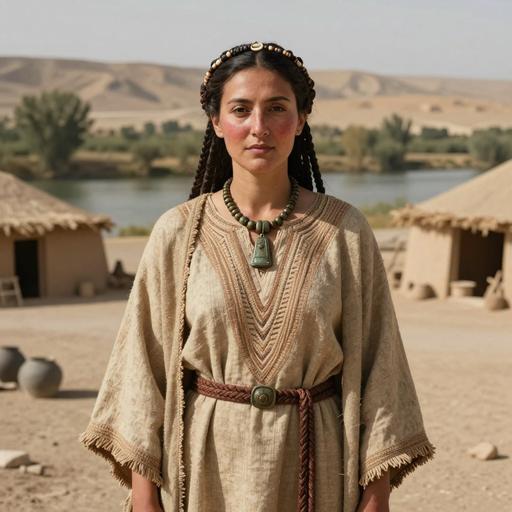
U1A2's temporal and geographic placement suggests it was part of the maternal substrate of populations involved in the Neolithic transition and subsequent Bronze Age developments in West Asia and the Caucasus. It may have been present among early farming or mixed hunter–gatherer–farmer communities in Anatolia and the Transcaucasus and could have accompanied regional demographic continuity and localized expansions rather than large continent-spanning replacements.
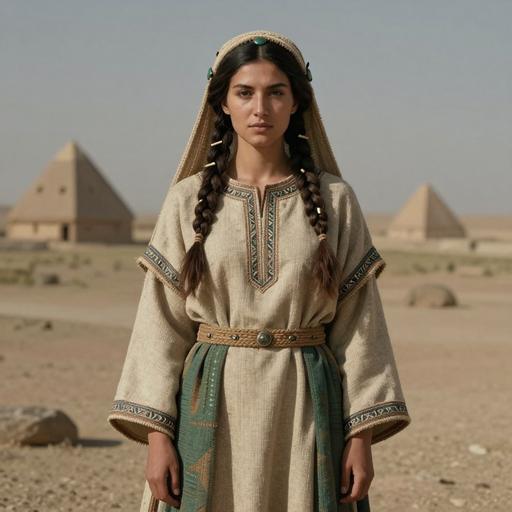
Its low frequency outside West Asia indicates limited large-scale dispersal, but detectable presence in South Asia and parts of North Africa and southern Europe points to secondary movements: overland contacts, trade networks, small-scale migrations, or assimilation into expanding cultural groups (e.g., Chalcolithic–Bronze Age interregional contacts). In some modern population studies, U1A-lineages, including U1A2, are also observed sporadically in Jewish communities and diasporas reflecting historical mobility.
Conclusion
U1A2 is a regional West Asian maternal lineage that reflects post-glacial continuity and early Holocene diversification in the Near East and Caucasus. Its restricted but persistent geographic footprint and occasional presence in neighboring regions make it informative for studies of West Asian population history, local Neolithic and Bronze Age demography, and tracing maternal ties between the Caucasus, the Near East and parts of South Asia. Greater mitogenome sampling and ancient DNA discoveries will refine its internal structure and historical trajectories.
关键点
- Origins and Evolution
- Subclades
- Geographical Distribution
- Historical and Cultural Significance
- Conclusion