部门背景
Y-DNA 谱系分支 R1A1A1B1A3A 的历史背景
Origins and Evolution
Y-DNA haplogroup R1A1A1B1A3A is a downstream subclade of R1a, one of the most important paternal lineages associated with the spread of steppe ancestry across Eurasia. Its deeper phylogenetic context places it within the broad R1a-Z645/Z93/Z282 radiation that expanded during and after the Bronze Age, but this specific branch is more localized and likely arose from a regional founder event within an Eastern European or steppe-associated population.
Because this lineage sits below R1A1A1B1A3, its age is likely relatively recent in comparison with the major R1a trunk, probably dating to roughly 3 thousand years ago or slightly less. The branch likely formed during a period of intense mobility and demographic turnover across the Pontic-Caspian steppe, Eastern Europe, and adjacent regions. Subsequent expansions and bottlenecks would have shaped its present-day distribution.
Subclades
As an intermediate subclade, R1A1A1B1A3A may contain additional downstream branches that are not always evenly sampled in population studies. In practical genealogical interpretation, this kind of node often represents a bridge between a broad regional haplogroup and more localized family or tribal lineages.
Key phylogenetic relationships:
- It is a subclade of R1a, and therefore part of the wider Indo-European-associated paternal landscape.
- It is likely nested within one of the major steppe-related R1a expansions that contributed to populations in Eastern Europe, Central Asia, and South Asia.
- Its distribution may overlap with multiple sibling and downstream R1a branches that were carried by Slavic, Baltic, Indo-Iranian, and other Eurasian groups.
Geographical Distribution
The present-day distribution of R1A1A1B1A3A is expected to be concentrated in Eastern Europe, with additional occurrences across the Eurasian steppe, Central Asia, and parts of South Asia. Like many R1a subclades, it is unevenly distributed and often appears in clusters due to founder effects, local expansions, and historical migration routes.
It is most plausibly found among populations such as:
- Poles, Ukrainians, Belarusians, and Russians
- Lithuanians and Latvians
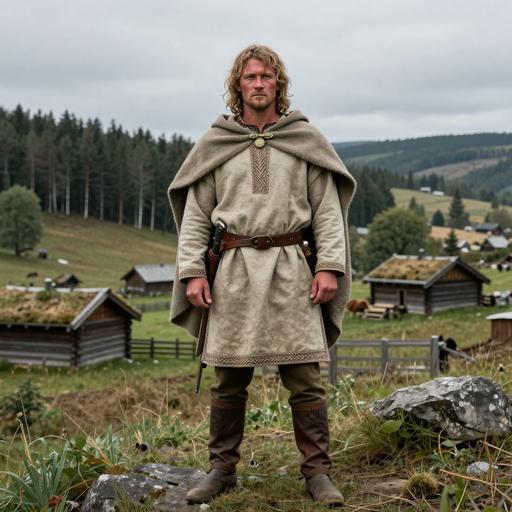
- Scandinavians, especially Swedes and Norwegians, at lower frequencies
- Kazakhs, Kyrgyz, and related Central Asian groups
- Indo-Aryan-speaking populations in South Asia
- Some Iranian-speaking groups
- Selected Siberian and Uralic-speaking populations
Historical and Cultural Significance
Although this exact subclade may not be strongly tied to a single archaeological culture, its broader paternal background is commonly associated with the population processes linked to Yamnaya, Corded Ware, and later steppe-derived Bronze Age expansions. These movements played a central role in the spread of languages, technologies, and social networks across Eurasia.
In Eastern Europe, related R1a branches are frequently connected with the formation and expansion of Slavic and Baltic populations. Farther east, related lineages are often discussed in the context of Indo-Iranian dispersals into Central Asia and South Asia. The presence of this lineage in diverse modern populations likely reflects a combination of ancient migration, elite dominance, and long-term regional continuity.
Interpretation in Genetic Genealogy
For genetic genealogists, R1A1A1B1A3A is important because it can help refine paternal ancestry beyond broad R1a assignment. While R1a itself is widespread, intermediate subclades like this one may indicate more specific regional history, especially when paired with downstream SNP testing and comparison to modern and ancient DNA datasets.
This haplogroup should be interpreted cautiously: its presence does not imply a single ethnic origin, but rather a shared paternal line shaped by ancient demographic processes. The most informative conclusions usually come from combining Y-DNA results with geographic context, downstream SNP resolution, and documentary genealogy.
Conclusion
R1A1A1B1A3A is a relatively young but historically important R1a subclade rooted in the broader Bronze Age steppe paternal expansion. Its distribution across Eastern Europe, Central Asia, and parts of South Asia reflects complex episodes of migration, founder effects, and population continuity that have shaped Eurasian paternal diversity.
关键点
- Origins and Evolution
- Subclades
- Geographical Distribution
- Historical and Cultural Significance
- Interpretation in Genetic Genealogy