Alai Valley Iron Age Echoes

下载的 PDF 是图像副本。如需可选中文本及更好的辅助技术支持,请使用打印功能。

Alai Valley Iron Age Echoes

揭开一个失落的文明

正在加载考古记录……

正在收集古代记录

跳转到主内容
Alai Valley Iron Age Echoes
文明焦点

Alai Valley Iron Age Echoes

Nine genomes from the Tuyuk mounds illuminate a crossroads of steppe, mountain, and southern influences.

749 BCE - 415 CE
Alai Valley, Osh Province, Kyrgyzstan
滚动开始
Chapter I

剧情

了解 Alai Valley Iron Age Echoes 文化

Archaeogenetic and archaeological data from 9 individuals (749 BCE–415 CE) in the Alai/Nura and Tuyuk II mounds, Osh Province, Kyrgyzstan, reveal mixed steppe and southern signals. Limited sample size means conclusions remain preliminary but suggest a dynamic Iron Age frontier.

Time Period

749 BCE – 415 CE

Region

Alai Valley, Osh Province, Kyrgyzstan

Common Y-DNA

R (3), Q (2), E (1)

Common mtDNA

U (2), U7, H97, D4i, D4j

Chapter II

时间线

这种文化历史上的关键时刻

749 BCE

Earliest documented burials in dataset

Earliest radiocarbon-constrained interments in the Alai/Nura collection date to c. 749 BCE, marking Iron Age funerary activity in the high valley.

415 CE

Latest dated individuals

The most recent genomes in the sample set date to c. 415 CE, reflecting continued use of mound burial traditions into the late Iron Age/early historical period.

Chapter III

Origins & Emergence

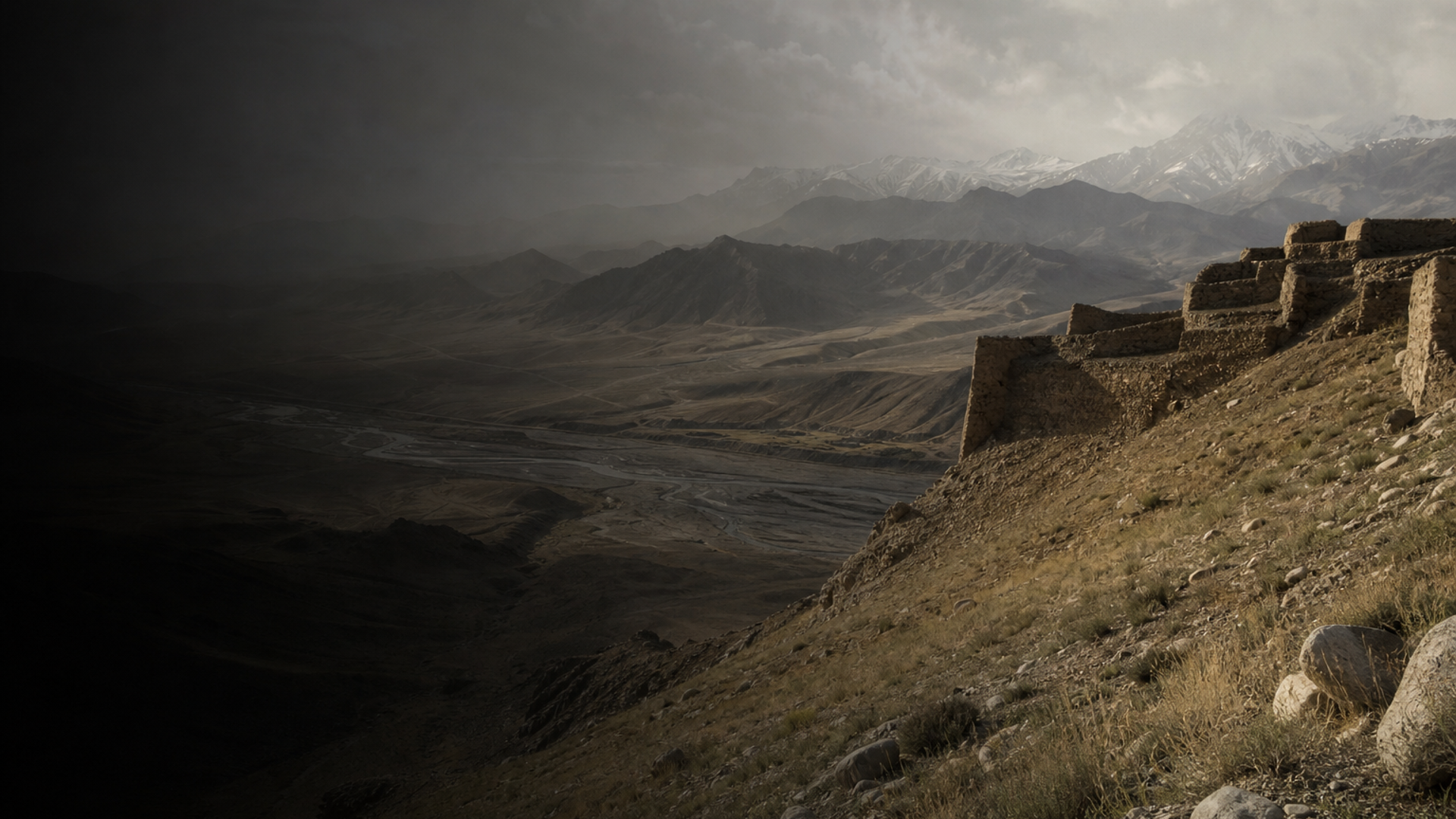
The human story preserved in the Alai/Nura I–II and Tuyuk II mounds unfolds within a high mountain corridor where the Pamir and Tian Shan ranges meet. Archaeological data indicates funerary use of mound contexts in the Alai Valley from the late first millennium BCE into the early centuries CE (749 BCE–415 CE). Material traces — burial mounds, sparse grave goods and seasonal pastoral markers recorded at these sites — suggest communities adapted to alpine pastures and long-distance exchange routes.

Genetically, the nine sequenced individuals present a mosaic pattern consistent with a contact zone: several Y-lineages assigned to broad haplogroup R alongside Q and a single E lineage evoke mixtures of West Eurasian steppe ancestry with northern and southern inputs. Mitochondrial diversity (U lineages, H97, and eastern clades D4i/D4j) further illustrates female-mediated connections across Eurasia. Limited evidence suggests this region was not genetically homogeneous but a palimpsest of migrations, trade, and local continuity.

Because only nine genomes are available, any reconstruction of population origins is provisional. Archaeological context from known sites in Osh Province anchors these genetic signals in a landscape of mobility, herding lifeways, and evolving Iron Age social networks.

  • Alai/Nura I–II and Tuyuk II mounds in Alai Valley (Osh Province)
  • Occupation and burial use c. 749 BCE–415 CE
  • Small sample hints at a genetic contact zone between steppe and southern lineages
Chapter IV

Daily Life & Society

Archaeological evidence from the Alai Valley paints a portrait of resilient mountain lifeways: seasonal transhumance between valley pastures and higher alpine summer grazing, with mound burials marking ancestral ties on the landscape. Excavations at Tuyuk II and Alai/Nura mounds reveal funerary architecture consistent with mobile pastoral communities who nonetheless invested labor to build enduring memorials.

Grave goods are often modest where present, suggesting societies organized around household herds rather than urban craft specialization. The Alai corridor sits on a climatic and cultural threshold; artisanship, metal fragments, and exchanged goods recorded in similar regional contexts imply participation in wider Iron Age networks rather than isolation. Ceramic styles and portable artifacts (where recovered) reflect both local traditions and influences carried along mountain routes.

Osteological assessments, when available, can show wear patterns consistent with riding and heavy physical labor, while isotopic studies — not yet extensive for these specific mounds — could clarify mobility and diet. Archaeological data indicates a living world of high passes, echoing horses, and long-distance ties rather than densely settled polities.

Given the limited genomic sample (n=9) and sparse material cultural detail for some graves, reconstructions of daily life should remain cautious and open to revision as new fieldwork and analyses arrive.

  • Seasonal pastoralism and transhumant movement
  • Mound burials used as landscape anchors and memory sites
Chapter V

Genetic Profile

Nine genomes from Alai/Nura I–II and Tuyuk II provide the first genetic window into this Iron Age highland corridor. Common Y-DNA haplogroups include R (3 individuals), Q (2), and a single E lineage — a mix that suggests contributions from classic West Eurasian steppe ancestries (R), northern/siberian-associated lineages (Q), and a lower-frequency southern/near-eastern-associated lineage (E). Mitochondrial diversity features West Eurasian-associated U lineages (including U7) and H97 alongside eastern Eurasian D4 subclades (D4i, D4j), indicating both maternal inputs from western and eastern realms.

Archaeogenetic interpretation: the co-occurrence of R and Q on the male line and both western (U, H) and eastern (D4) mitochondrial lineages point to a heterogeneous population formed by admixture and mobility. This pattern aligns with archaeological expectations for a crossroads: male-mediated steppe-derived lineages could coexist with women bearing eastern mitochondrial haplotypes brought by marriage networks or local continuity.

Important caveats: with only nine samples, statistical power is limited. Signals that appear consistent with broader Iron Age trends should be treated as provisional. Additional sampling, autosomal analyses, and comparison with contemporaneous samples across the Tian Shan–Pamir nexus are essential to refine models of ancestry, kinship, and migration. Archaeological context remains crucial to interpret genetic signals responsibly.

  • Mixed paternal lineages: R, Q, and rare E indicate multiple male-line inputs
  • Maternal diversity (U, H97, D4) signals both western and eastern connections
Chapter VI

Legacy & Modern Connections

The Alai Valley mounds speak to deep continuities in mountain pastoralism and long-distance exchange that shaped later Kyrgyz histories. Genetic echoes from these Iron Age individuals — a mosaic of western steppe, northern, and southern components — mirror patterns seen across Central Asia where mobility and mixture are recurrent themes.

Modern populations of Kyrgyzstan carry complex ancestries shaped by many such episodes; however, drawing direct lines from these nine Iron Age genomes to contemporary groups would be premature. Limited sampling and later historical migrations (Saka, Turkic, and Islamic-era movements) mean genetic continuity is possible in part, but not guaranteed. Archaeological and genetic datasets together provide a cinematic but cautious narrative: the Alai corridor has long been a place of passage, meeting, and rearranged identities that resonate into the present.

  • Reflects long-term patterns of mobility and admixture in Central Asia
  • Direct links to modern populations are possible but remain tentative given sparse sampling
AI 电源

AI 助手

就 Alai Valley Iron Age Echoes 文化提问

AI 助手 由DNAGENICS公司制作

解锁此特性
Ask questions about the Alai Valley Iron Age Echoes culture. Our AI assistant can explain genetic findings, historical context, archaeological evidence, and modern connections.
AI 样本分析

Alai Valley Iron Age Echoes 文化是人类历史中值得了解的一章……

遗传分析揭示了与早期种群的联系,同时显示了独特的适应和文化创新的证据。 古代DNA样本提供了对迁徙模式、社会结构以及古代种群之间的生物关系的深刻见解。

这是人工智能分析的预览。 解锁全AI 助手, 以探索关于:

  • 遗传组成和祖先
  • 移徙模式和起源
  • 日常生活和文化习俗
  • 现代遗传遗产

探索更古老的文化

揭开古代世界文明的故事

使用优惠码 可减免 35% • 11月12日 到期




