Ayousaigoukou Iron Age Echoes

下载的 PDF 是图像副本。如需可选中文本及更好的辅助技术支持,请使用打印功能。

Ayousaigoukou Iron Age Echoes

揭开一个失落的文明

正在加载考古记录……

正在收集古代记录

跳转到主内容
Ayousaigoukou Iron Age Echoes
文明焦点

Ayousaigoukou Iron Age Echoes

Tiny sample from Xinjiang reveals a stirring, mixed ancestry at the heart of the Yili corridor.

754 CE - 204 BCE
Xinjiang, Yili Region (Xinyuan County)
滚动开始
Chapter I

剧情

了解 Ayousaigoukou Iron Age Echoes 文化

Iron Age remains from Ayousaigoukou (Xinjiang, China; 754–204 BCE) show a mixture of west and east Eurasian lineages in a small sample (n=3). Archaeological data indicates local Iron Age lifeways and steppe connections; genetic signals are promising but preliminary.

Time Period

754–204 BCE

Region

Xinjiang, Yili Region (Xinyuan County)

Common Y-DNA

J (observed in 2/3 samples)

Common mtDNA

HV (2), C (1)

Chapter II

时间线

这种文化历史上的关键时刻

500 BCE

Iron Age occupation at Ayousaigoukou

Archaeological and genetic traces indicate local Iron Age activity around 500 BCE with signs of interaction across the Yili corridor.

Chapter III

Origins & Emergence

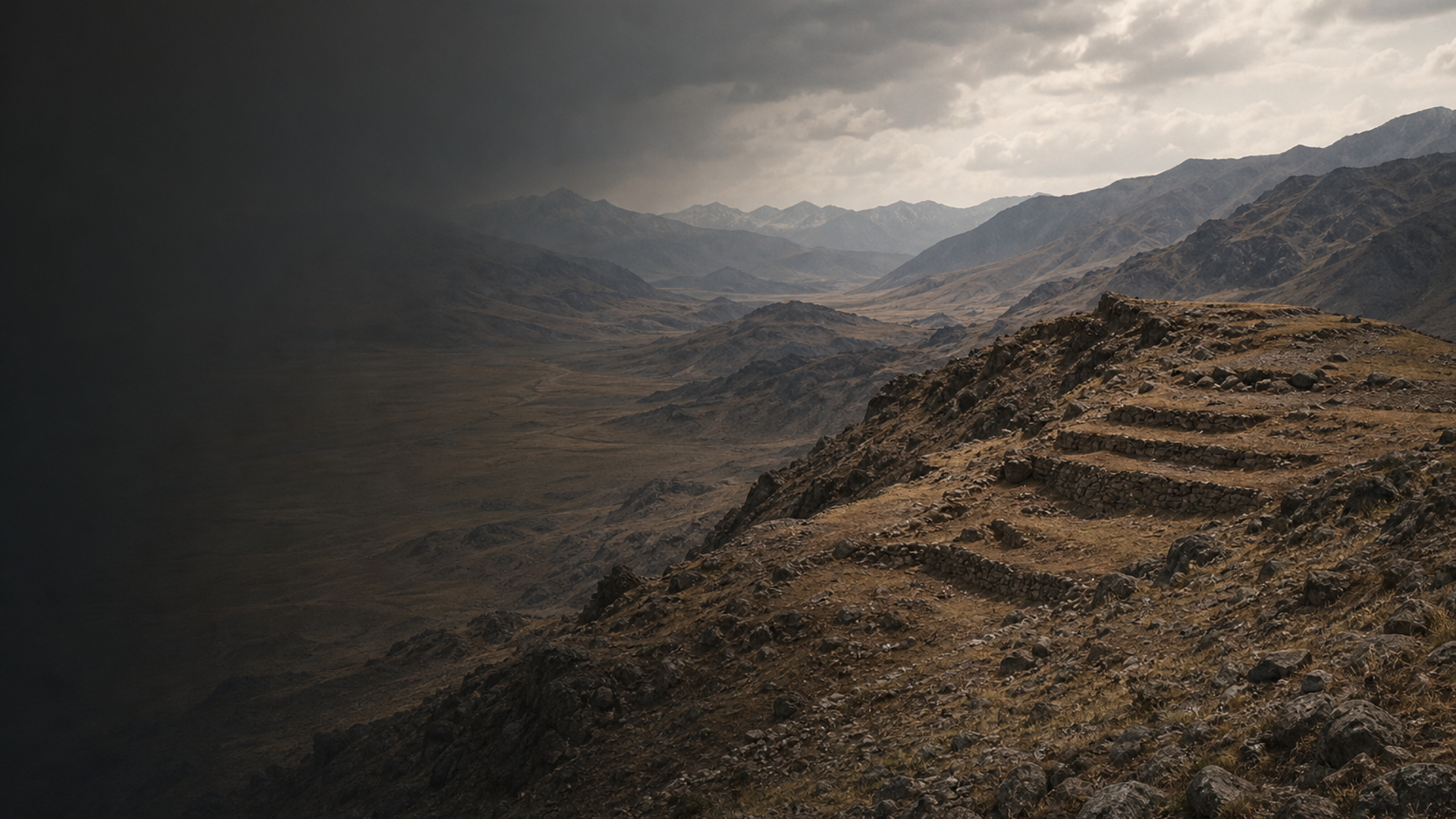
Set in the fertile Yili corridor, the site of Ayousaigoukou (Xinyuan County, Xinjiang) occupies a landscape where mountain rain-shadow meets broad steppe. Archaeological data indicates Iron Age occupation between 754 and 204 BCE, a period when mobile pastoral groups and settled farmers intersected along emerging long‑distance routes. Limited evidence suggests that communities here participated in networks that reached from the Inner Asian steppe toward Western Eurasia and the Chinese hinterland. Excavations at Ayousaigoukou have recovered funerary contexts and habitation traces consistent with regional Iron Age assemblages, though the full material record remains thin.

The emergence of this local Iron Age horizon likely reflects both indigenous cultural continuity and incoming influences carried by people, animals, and ideas across the mountains. Geographically the Yili basin is a natural conduit: rivers and valleys focus movement, while mountain passes channel contacts. Archaeological indicators — settlement patterns, burial variability, and regional comparisons — point to a dynamic, multi‑directional process rather than a single migratory event. As with many frontier zones, the material culture at Ayousaigoukou preserves a palimpsest of local lifeways and external connections.

  • Located in Yili corridor, Xinjiang (Xinyuan County)
  • Iron Age occupation dated to 754–204 BCE
  • Archaeology suggests local continuity plus external influences
Chapter IV

Daily Life & Society

Archaeological traces paint a vivid, if partial, picture of daily life in the Iron Age Yili landscape. The ecology supports mixed economies: pastoralism on the open steppe, irrigated cropping in valley niches, and seasonal mobility that tied households to highland pastures. Material remains from nearby Iron Age sites in Xinjiang indicate craft production, animal husbandry, and the use of wheeled transport and pack animals—technologies that enable long-distance exchange.

Social life would have revolved around household assemblies, pastoral circuits, and ritual engagements with the landscape. Funerary deposits at Ayousaigoukou, though limited in published detail, hint at social differentiation and the importance of marking identity in death as well as life. Archaeological data indicates a community woven into wider trade and social networks: objects, metalwork styles, and burial practices show echoes of steppe and western influences filtered through local traditions.

Climate and topography shaped mobility and settlement size: river terraces sheltered agropastoral sites while mountain pastures supported seasonal herding. This interleaving of lifeways created resilient, adaptable societies able to navigate environmental and cultural crossroads.

  • Mixed agropastoral economy adapted to valley-steppe ecotone
  • Funerary evidence suggests social differentiation and long-distance ties
Chapter V

Genetic Profile

Ancient DNA from Ayousaigoukou comprises three analyzed individuals dated between 754 and 204 BCE. Because the sample size is very small (n=3), any population-level inference must be treated as preliminary. Still, the genetic signatures are evocative: two of the three male-line Y-chromosome profiles belong to haplogroup J, a lineage today frequent in parts of West Asia and the Near East. On the maternal side, two mitochondrial genomes fall into haplogroup HV (a West Eurasian-associated lineage) and one into haplogroup C (a lineage widespread in northern and eastern Eurasia).

This combination — predominant J Y-chromosomes with HV and a single C maternal lineage — suggests a local population bearing both west and east Eurasian genetic elements. Such a pattern is consistent with the Yili corridor acting as a genetic and cultural contact zone where west Eurasian paternal inputs and mixed maternal ancestries coexisted. Archaeological data indicating trade and mobility dovetails with a genetic picture of admixture.

Caveats are essential: with fewer than ten samples, drift, kinship among buried individuals, or sampling bias can dramatically skew apparent frequencies. Broader sampling across sites and time slices is required to test whether the Ayousaigoukou trio reflects a wider regional pattern or a small family-level signal. Nevertheless, these first results illuminate the complex human tapestry of Iron Age Xinjiang and motivate further integrated archaeological and genetic study.

  • Y-DNA: J observed in 2 of 3 samples, indicating west Eurasian paternal input
  • mtDNA: HV (2) and C (1) point to mixed west–east maternal ancestries; small sample size limits conclusions
Chapter VI

Legacy & Modern Connections

Ayousaigoukou serves as a microcosm of the larger story of Xinjiang: a landscape where peoples, languages, and genes intermingle across millennia. Modern populations of the region display complex genetic ancestries reflecting millennia of contacts along mountain corridors and steppe routes. The admixture signals seen in the Ayousaigoukou samples echo broader patterns observed elsewhere in Iron Age Central Asia, where west Eurasian and east Eurasian lineages meet and blend.

Importantly, the limited dataset means these impressions are tentative. Future excavations, more extensive radiocarbon dating, and larger ancient DNA series will be needed to trace continuity and change from the Iron Age into historical periods. For now, Ayousaigoukou offers a cinematic glimpse — human faces glimpsed in fragments of bone and DNA — of a frontier world that helped shape the genetic and cultural map of Central Asia.

  • Illustrates long-term west–east genetic mixing in Xinjiang
  • Highlights need for expanded sampling to connect Iron Age patterns to modern diversity
AI 电源

AI 助手

就 Ayousaigoukou Iron Age Echoes 文化提问

AI 助手 由DNAGENICS公司制作

解锁此特性
Ask questions about the Ayousaigoukou Iron Age Echoes culture. Our AI assistant can explain genetic findings, historical context, archaeological evidence, and modern connections.
AI 样本分析

Ayousaigoukou Iron Age Echoes 文化是人类历史中值得了解的一章……

遗传分析揭示了与早期种群的联系,同时显示了独特的适应和文化创新的证据。 古代DNA样本提供了对迁徙模式、社会结构以及古代种群之间的生物关系的深刻见解。

这是人工智能分析的预览。 解锁全AI 助手, 以探索关于:

  • 遗传组成和祖先
  • 移徙模式和起源
  • 日常生活和文化习俗
  • 现代遗传遗产

探索更古老的文化

揭开古代世界文明的故事

使用优惠码 可减免 35% • 11月12日 到期





