Saka of the Kazakh Steppe

下载的 PDF 是图像副本。如需可选中文本及更好的辅助技术支持,请使用打印功能。

Saka of the Kazakh Steppe

揭开一个失落的文明

正在加载考古记录……

正在收集古代记录

跳转到主内容
Saka of the Kazakh Steppe
文明焦点

Saka of the Kazakh Steppe

Iron Age kurgans and preliminary DNA trace Saka communities in eastern Kazakhstan

777 CE - 419 BCE
Eastern Kazakhstan (Central Steppe)
滚动开始
Chapter I

剧情

了解 Saka of the Kazakh Steppe 文化

Archaeological and genetic data from four Iron Age Saka burials (777–419 BCE) in eastern Kazakhstan (Izmaylovka, Kargaly‑1, Tian Shan) reveal a uniform Y‑DNA Q signal and mixed West Eurasian maternal lineages (J, HV). Limited samples make conclusions provisional.

Time Period

777–419 BCE

Region

Eastern Kazakhstan (Central Steppe)

Common Y-DNA

Q (4/4 sampled)

Common mtDNA

J (2), HV / HV_ (2)

Chapter II

时间线

这种文化历史上的关键时刻

800 BCE

Emergence of Saka horizons

Material markers of Saka cultural traditions emerge across the Central Steppe, marking new Iron Age mortuary and pastoral practices.

777 BCE

Earliest sampled burial

Oldest radiocarbon-dated individual in this dataset from Izmaylovka Kurgan, East Kazakhstan.

419 BCE

Latest sampled burial

Most recent individual in this set, reflecting the later Iron Age Saka presence in the region.

Chapter III

Origins & Emergence

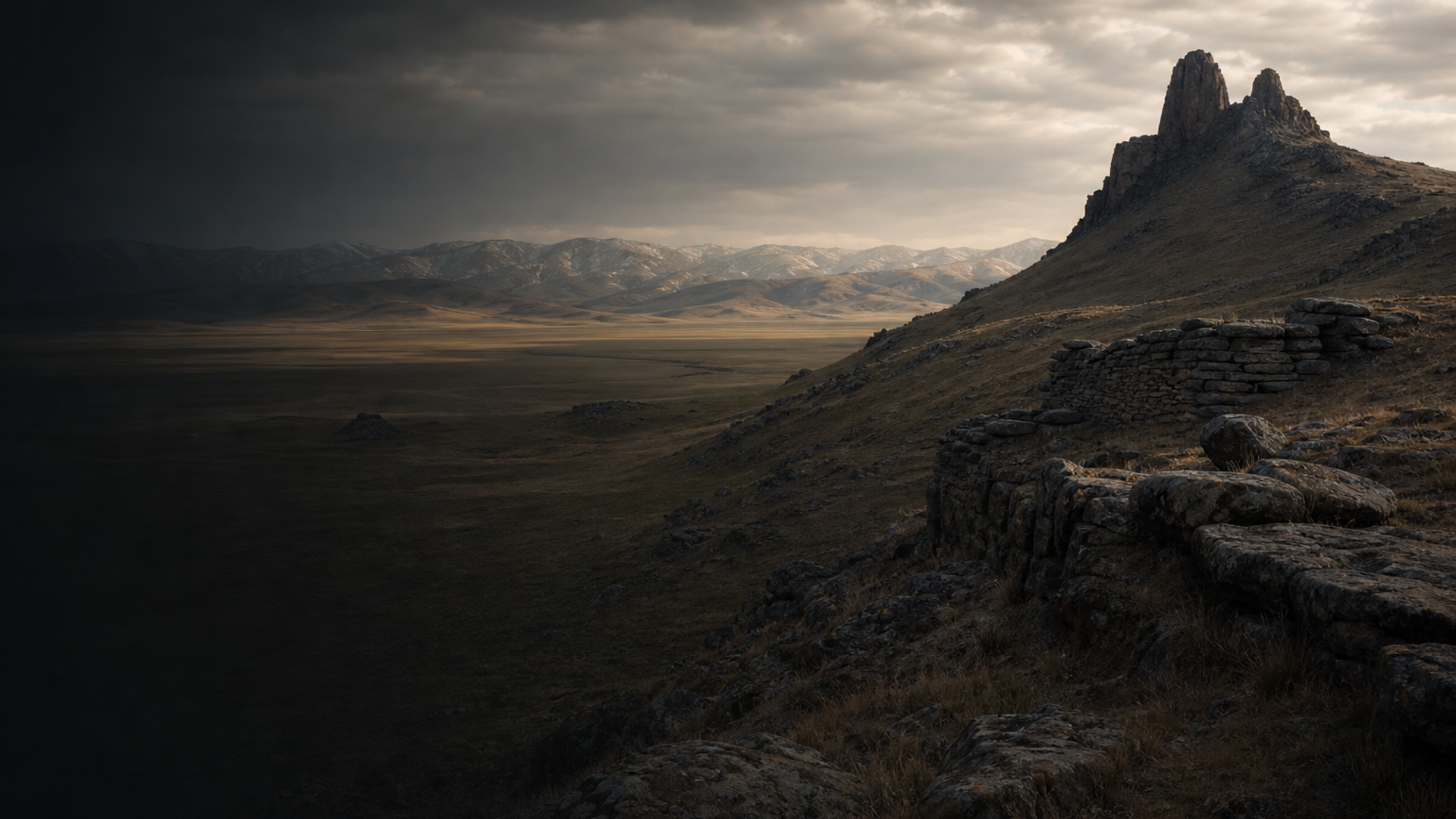
Wind-scoured burial mounds and the silhouette of the Tian Shan on the horizon signal the appearance of Saka lifeways in the eastern Kazakh steppe during the first millennium BCE. Archaeological data indicates that by the late 8th century BCE communities identified by material markers we group under the Saka (part of the broader Scythian or steppe nomad horizon) were building kurgan cemeteries such as Izmaylovka and Kargaly‑1. These sites preserve funerary architecture and contexts — compact mounds, pit burials, and grave goods consistent with mobile pastoralism and long-distance networks across the Central Steppe.

The human story here is one of landscape and mobility: seasonal herding strategies, horse-centered transport, and interregional exchange that linked the highlands of the Tian Shan with the lower steppe. Archaeological evidence points to cultural continuity with earlier Bronze Age steppe traditions alongside innovations in craft and burial display that characterize Iron Age Saka identity. Limited available samples (n=4) from Izmaylovka Kurgan and Kargaly‑1 provide a genetic glimpse that aligns with these archaeological signals but must be treated as preliminary. Multiple lines of evidence suggest the Saka phenomenon was heterogeneous across space and time — a mosaic of local traditions interacting across a broad Eurasian corridor.

  • Saka horizons appear in the Central Steppe by late 8th century BCE
  • Key sites: Izmaylovka Kurgan (East Kazakhstan) and Kargaly‑1 (Almaty Region)
  • Archaeology shows pastoral mobility, kurgan burial traditions, and steppe exchange networks
Chapter IV

Daily Life & Society

Daily life for Saka communities in eastern Kazakhstan would have been shaped by the rhythms of the steppe: seasonal pastures, herds of sheep, goats and horses, and the constant need to move with forage. Archaeological traces — middens, hearths near habitation loci documented around kurgan cemeteries, and associated artifact scatters — indicate a mixed subsistence economy centered on pastoralism with complementary craft production such as textile working and metalworking observed across the broader Saka world.

Kurgan burials reflect social differentiation: some graves contain rich assemblages in the wider Saka corpus (elaborate horse gear, weaponry, and personal ornaments), while others are modest. In the eastern Kazakhstan contexts sampled here, funerary architecture records communal investment in monumentality and memory. Burial variability suggests rank differences and possibly age- or gender-based roles tied to mobility, martial prowess, and control of grazing territory. Archaeological data indicates frequent contact with neighboring mountain and steppe communities — trade and exchange in raw materials and finished objects were integral to daily life. Ethnographic analogy, careful excavation records, and the spatial distribution of artifacts together paint a cinematic picture of tents, flocks, and horses moving beneath open skies.

  • Pastoral economy with horse-centered mobility shaped settlement and burial practices
  • Kurgan variability indicates social differentiation and regional exchange ties
Chapter V

Genetic Profile

Genetic data from four Iron Age individuals (dated 777–419 BCE) from Izmaylovka Kurgan and Kargaly‑1 present a clear but provisional signal. All four male individuals carry Y‑chromosome haplogroup Q, a lineage widely distributed among Siberian and some Central Asian populations and known in many steppe contexts. This uniform paternal signal suggests either a patrilineal social structure, local continuity of male lines, or founder effects in the sampled burial assemblage.

Mitochondrial DNA is more diverse: two individuals carry haplogroup J, and two carry HV/HV_ variants. Haplogroups J and HV are commonly associated with West Eurasian maternal lineages. The contrast — homogeneous paternal Q and mixed West Eurasian maternal lineages — is evocative of sex-biased ancestry processes observed in other steppe populations, where male-mediated migration or local patrilines mix with diverse maternal inputs through marriage and mobility. However, with only four samples, these patterns are preliminary: small numbers inflate the effect of local kin groups and cemetery-specific practices. Archaeogenetic interpretation should therefore be cautious — the data signal intriguing patterns of interaction across the Central Steppe and possible linkages between Siberian, Central Asian, and West Eurasian ancestries, but broader sampling is required to test population-level models.

  • Y‑DNA: Uniform Q in all four male samples, suggesting paternal continuity or founder effects
  • mtDNA: J (2) and HV/HV_ (2) indicate mixed maternal inputs with West Eurasian affinities
Chapter VI

Legacy & Modern Connections

The Saka of eastern Kazakhstan leave a visible archaeological legacy in kurgan landscapes and the cultural memory of steppe mobility. Genetic findings, while limited, hint at threads that may connect ancient Saka populations with later Eurasian groups: haplogroup Q persists in many Central and North Asian paternal lineages, and mitochondrial lineages like J and HV continue across West and Central Eurasia. Together they reflect the deep entanglement of eastern and western Eurasian gene pools across the first millennium BCE.

Caution is essential: the small sample count (n=4) prevents strong claims about population continuity or direct ancestry to modern Kazakh groups. Instead, these results should be read as a tantalizing window — archaeological and genetic strands that, when woven with future data, will clarify how mobility, marriage networks, and social organization shaped the human tapestry of the Central Steppe.

  • Y‑DNA Q continuity suggests ties with broader Siberian/Central Asian paternal lineages
  • Small sample size means connections to modern populations are tentative and require more data
AI 电源

AI 助手

就 Saka of the Kazakh Steppe 文化提问

AI 助手 由DNAGENICS公司制作

解锁此特性
Ask questions about the Saka of the Kazakh Steppe culture. Our AI assistant can explain genetic findings, historical context, archaeological evidence, and modern connections.
AI 样本分析

Saka of the Kazakh Steppe 文化是人类历史中值得了解的一章……

遗传分析揭示了与早期种群的联系,同时显示了独特的适应和文化创新的证据。 古代DNA样本提供了对迁徙模式、社会结构以及古代种群之间的生物关系的深刻见解。

这是人工智能分析的预览。 解锁全AI 助手, 以探索关于:

  • 遗传组成和祖先
  • 移徙模式和起源
  • 日常生活和文化习俗
  • 现代遗传遗产

探索更古老的文化

揭开古代世界文明的故事

使用优惠码 可减免 35% • 11月12日 到期




