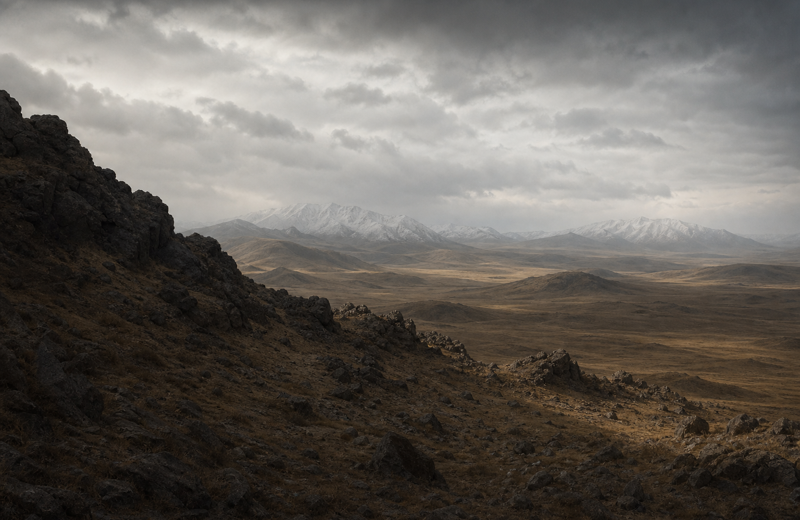
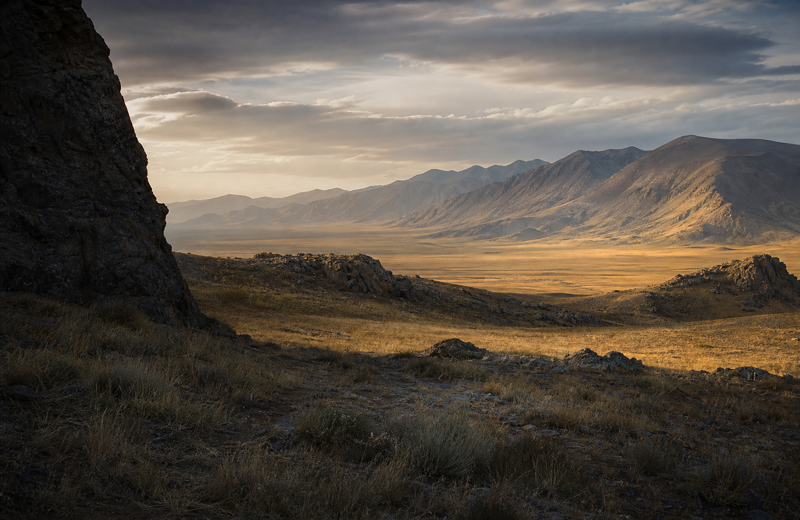
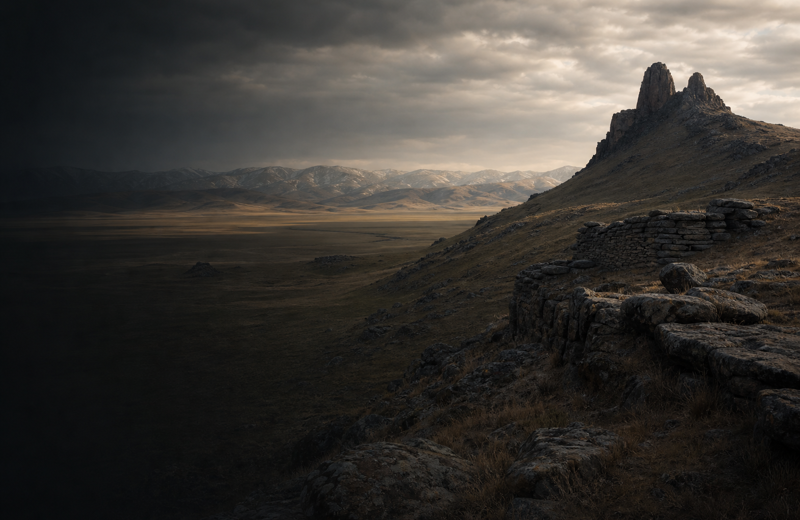
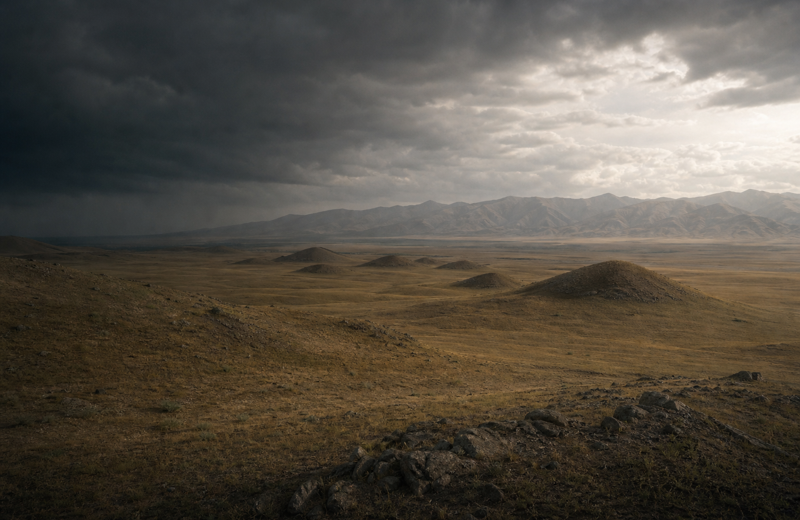
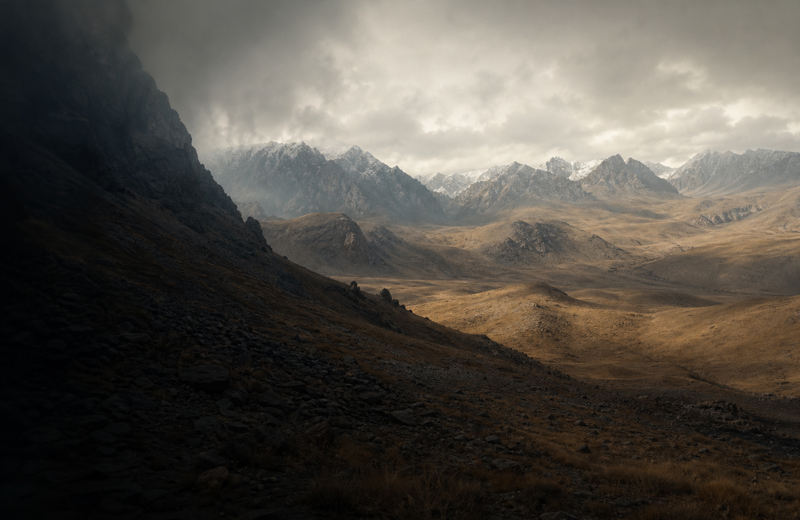
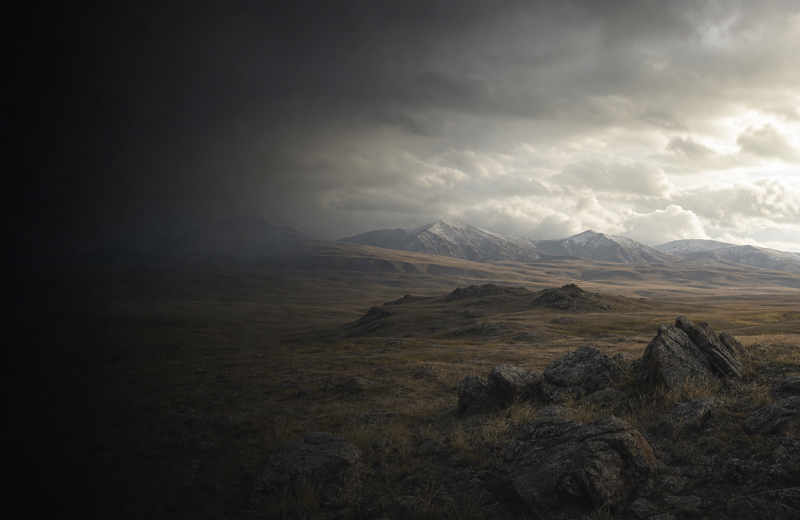
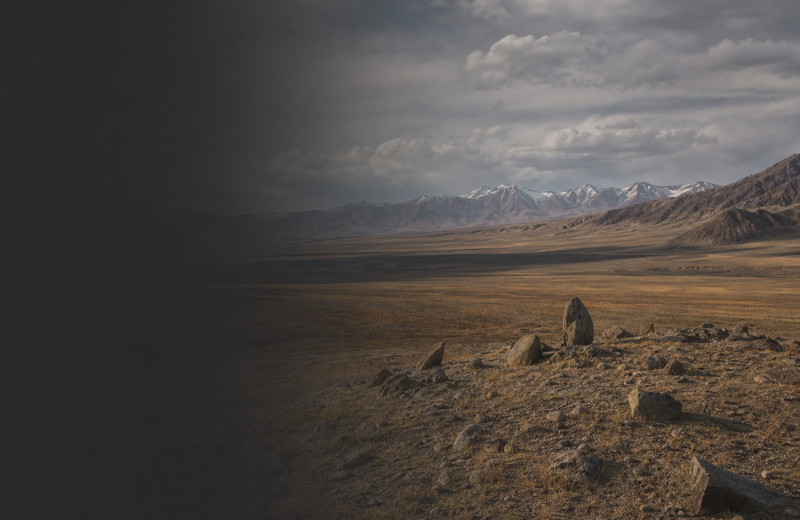
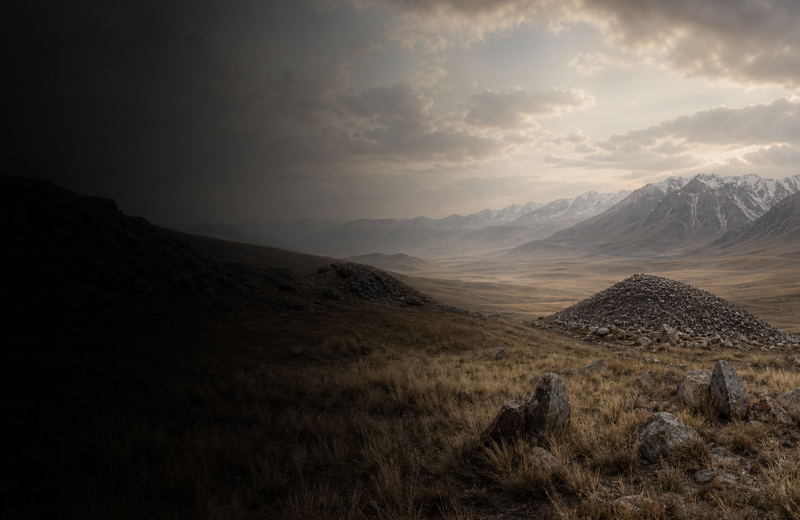
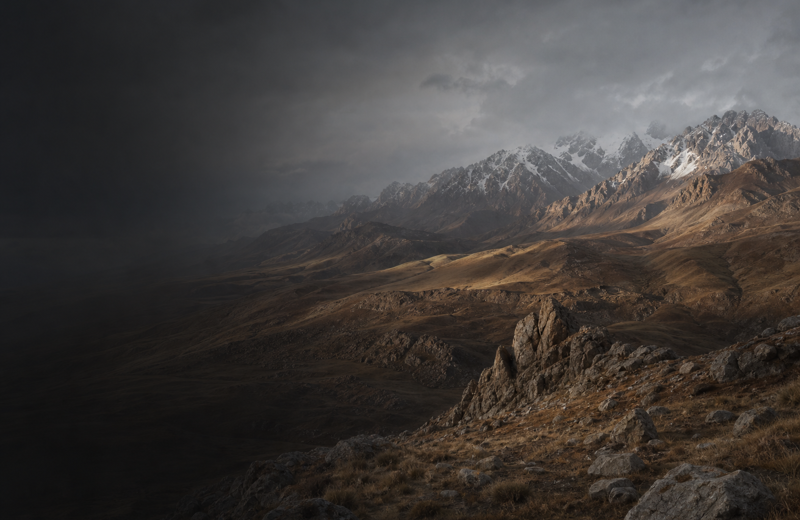
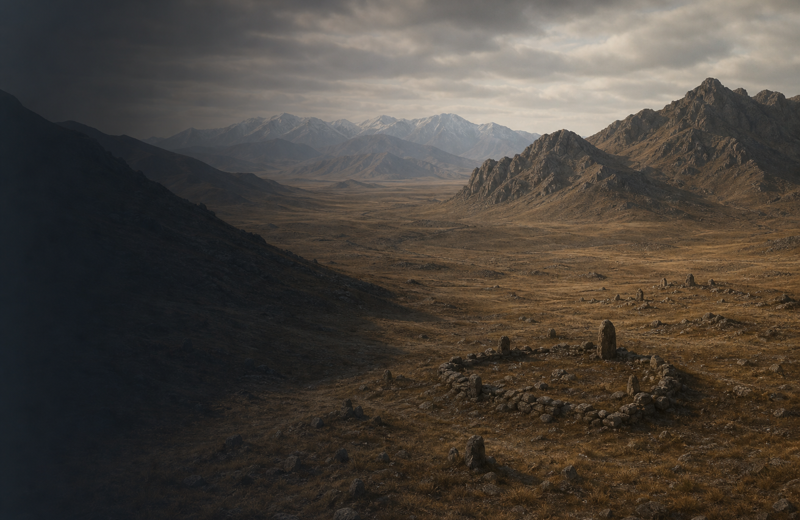
Central Saka of the Tian Shan Iron Age nomads of Kazakhstan — where steppe archaeology meets ancient DNA 810 CE - 400 BCE Tian Shan & Central Steppe, Kazakhstan
Central Saka of the Kazakh Steppe Iron Age horsemen and mound-builders of Tian Shan, revealed by archaeology and ancient DNA 777 CE - 416 BCE Central Steppe, Kazakhstan (Tian Shan; Taldy-2)
Saka of the Kazakh Steppe Iron Age kurgans and preliminary DNA trace Saka communities in eastern Kazakhstan 777 CE - 419 BCE Eastern Kazakhstan (Central Steppe)
Kaspan Saka: Mounds of the Almaty Steppe Four Iron Age Saka burials from Kaspan Valley linking archaeology and early steppe DNA 1499 BCE - 72 CE Kaspan Valley, Almaty Region, Kazakhstan
Wusun (Late Saka) — Tian Shan Profiles Three Late Saka–era individuals from Turgen-2 reveal maternal links across the Central Steppe. 344 BCE - 5 CE Tian Shan, Central Steppe (Kazakhstan)
Wind-Swept Saka: Eleke Sazy Burials Iron Age Tasmola‑Saka burials on the Eleke Sazy Plateau, revealing steppe life through archaeology and DNA 789 CE - 483 BCE East Kazakhstan (Tarbagatai, Eleke Sazy Plateau)
Issyk‑Kul Saka: Chilpek & Ken‑Su Burials A cinematic glimpse into Iron Age Saka lifeways on the shores of Issyk‑Kul, revealed by archaeology and ancient DNA. 751 BCE - 884 CE Issyk‑Kul region, Kyrgyzstan
Tian Shan Saka: Steppe Voices Iron Age horsemen of the Kyrgyz Tian Shan—where graves and genomes meet 650 BCE - 100 CE Tian Shan, Central Steppe, Kyrgyzstan
Tian Shan Saka: Voices of the Central Steppe Six Iron Age individuals from kurgans in Kazakhstan connect archaeology and ancient DNA. 777 CE - 416 BCE Tian Shan & Central Steppe, Kazakhstan
Kyrgyzstan_Saka_IA Whispers of the Steppe Horseborn nomads of the Scythian–Saka world across Central Asia 1499 BCE - 884 CE Kyrgyzstan, Kazakhstan, Xinjiang (China), Russia