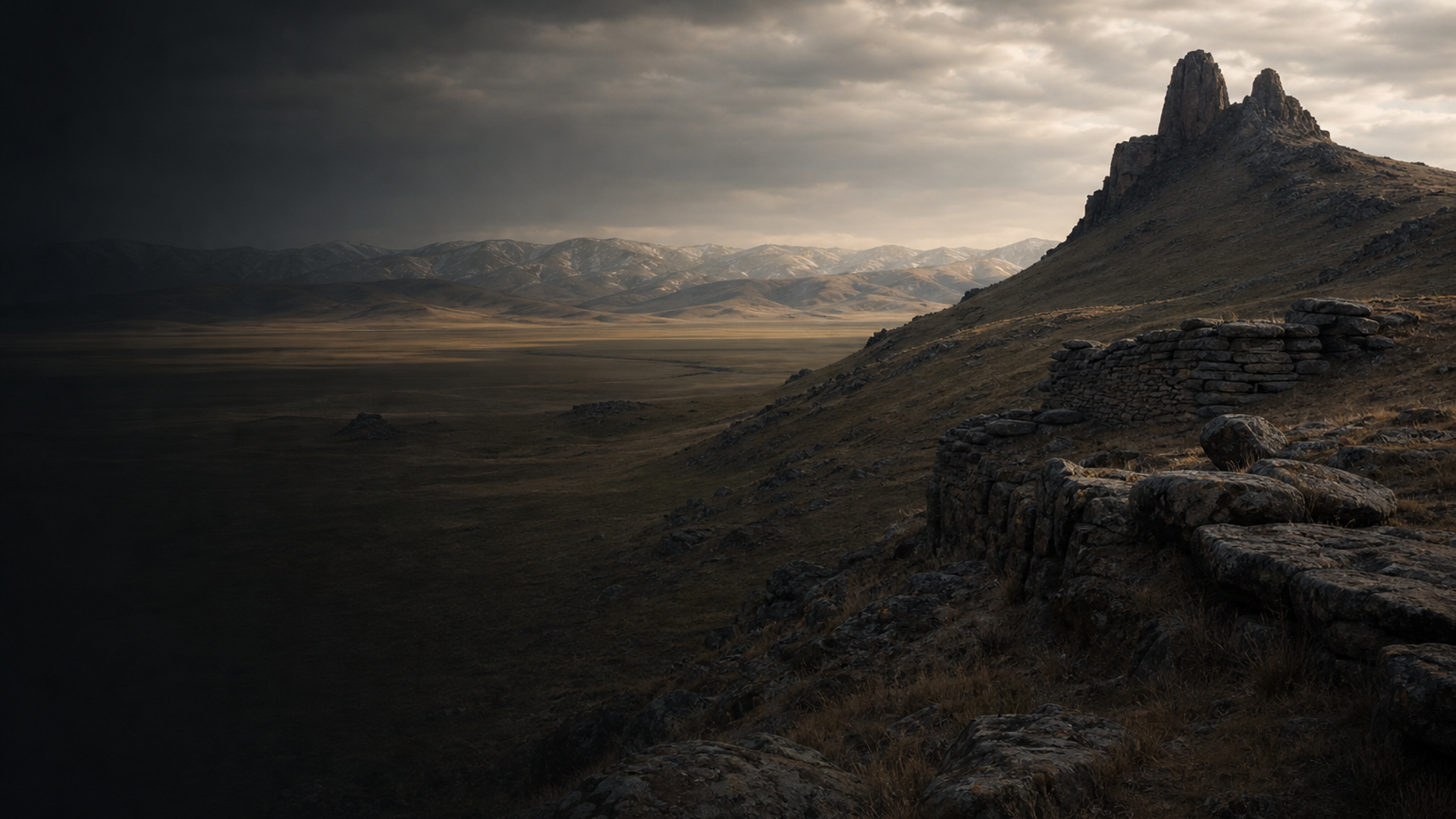
Daily life for Saka communities in eastern Kazakhstan would have been shaped by the rhythms of the steppe: seasonal pastures, herds of sheep, goats and horses, and the constant need to move with forage. Archaeological traces — middens, hearths near habitation loci documented around kurgan cemeteries, and associated artifact scatters — indicate a mixed subsistence economy centered on pastoralism with complementary craft production such as textile working and metalworking observed across the broader Saka world.
Kurgan burials reflect social differentiation: some graves contain rich assemblages in the wider Saka corpus (elaborate horse gear, weaponry, and personal ornaments), while others are modest. In the eastern Kazakhstan contexts sampled here, funerary architecture records communal investment in monumentality and memory. Burial variability suggests rank differences and possibly age- or gender-based roles tied to mobility, martial prowess, and control of grazing territory. Archaeological data indicates frequent contact with neighboring mountain and steppe communities — trade and exchange in raw materials and finished objects were integral to daily life. Ethnographic analogy, careful excavation records, and the spatial distribution of artifacts together paint a cinematic picture of tents, flocks, and horses moving beneath open skies.