Menu
Store
Blog
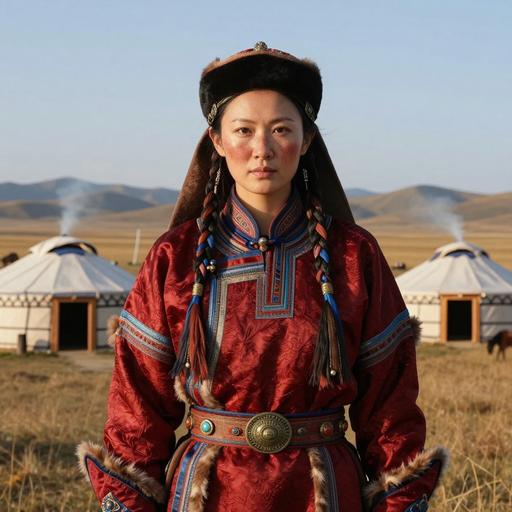
Portrait reconstruction of GD2-2
Ancient Individual

A woman buried in Mongolia in the Tribal era

GD2-2
880 CE - 985 CE
Female
Zubu Mongols
Mongolia
Scroll to begin
Chapter I

Identity

The biological and cultural markers that define this ancient individual

Sample ID

GD2-2

Date Range

880 CE - 985 CE

Biological Sex

Female

mtDNA Haplogroup

A25

Cultural Period

Zubu Mongols

Chapter II

Place

Where this individual was discovered

Country Mongolia
Locality Gurvan Dov
Chapter III

Time

When this individual lived in the broader context of human history

GD2-2 880 CE - 985 CE
Chapter IV

Story

The narrative of this ancient life

The Zubu Mongols, a sub-group within the larger Mongol confederation, represent a unique and fascinating era in the tapestry of Mongolian history. The story of the Zubu Mongols, like that of many other Mongol tribes, is intricately tied to the vast and rugged landscapes of Central Asia, characterized by steppe expanses, harsh deserts, and formidable mountain ranges. This environment played an instrumental role in shaping their nomadic lifestyle, social structure, and cultural practices.

Historical Background

The Zubu Mongols emerged during the early to mid-medieval period, around the time when the various Mongol tribes were coalescing into a formidable entity under leaders like Genghis Khan. Historically, the term \Zubu" has sometimes been used in Mongolian contexts to refer to certain tribes or sub-groups, implying a sense of tribal identity and kinship. The Zubu were among these tribal entities, contributing to the foundation of what would eventually become the Mongol Empire under Genghis Khan's unification.

Social Structure and Governance

As with many Mongol tribes, the Zubu maintained a social structure based heavily on kinship ties, clans, and a hierarchy that respected the authority of chieftains and elders. Their society was markedly egalitarian for its time, particularly in terms of gender roles, as Mongol women often enjoyed a degree of influence and freedom uncommon in other contemporary civilizations. The leadership was typically hereditary, but a leader’s effectiveness was paramount, with ineffective leaders often being replaced through meritocratic means.

Nomadic Lifestyle and Economy

The Zubu Mongols were primarily pastoral nomads, reliant on the movement of their herds across the steppes for sustenance. Their economy revolved around livestock—particularly horses, sheep, goats, and camels—which were integral not only to their diet but also in social and economic transactions. The horse, in particular, was central to their way of life, providing mobility, serving as a status symbol, and functioning as an instrument of military power.

Housing consisted of portable felt yurts (gers), which afforded the Zubu resilience and adaptability in the face of environmental changes. Their nomadic nature meant that they were experts in navigation, survival, and the sustainable use of the natural resources available to them.

Cultural Practices

Culturally, the Zubu Mongols shared similarities with other Mongol groups, with a strong emphasis on oral traditions, shamanistic beliefs, and later, the incorporation of Tibetan Buddhism when it spread across the steppe in subsequent centuries. Storytelling, music, and dance were crucial social activities, often reflecting their cosmology, history, and values.

The shaman played a vital role in Zubu culture, acting as a mediator between the physical and spiritual worlds. Over time, some of these practices would be syncretized with Buddhist elements, creating a unique spiritual tapestry.

Military Prowess

Militarily, the Zubu, like their fellow Mongol tribes, were highly skilled in cavalry-based warfare, employing strategies that utilized speed, surprise, and superior horsemanship. Their capacity to engage in rapid, long-distance campaigns made them formidable foes, contributing significantly to the military successes of the Mongol Empire overall.

Interactions with Other Cultures

The Zubu Mongols, through trade and conquest, encountered and interacted with numerous other cultures across Eurasia. These interactions often led to exchanges of goods, ideas, and technologies, enriching Zubu culture while also integrating elements from other civilizations into their own societal frameworks.

Conclusion

The Zubu Mongols, like their fellow tribes within the Mongol milieu, played a pivotal role in the tapestry of Central Asian history. Their legacy, preserved in oral histories and somewhat in historical texts, offers insight into the life of a nomadic people who balanced between tradition and adaptability, contributing to the rise of one of history's most impressive empires. Their culture, though less documented than some of their more prominent counterparts, provides a window into the diverse and dynamic world of the medieval Mongolian steppes."

Chapter V

Context

Other ancient individuals connected to this sample

Use code for 40% off Expires Feb 26