Menu
Store
Blog
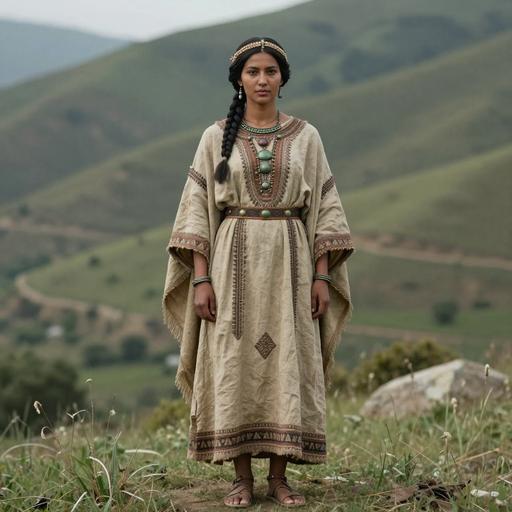
Portrait reconstruction of I6888
Ancient Individual

A woman buried in Pakistan in the Iron Age era

I6888
811 BCE - 780 BCE
Female
Iron Age Aligrama
Pakistan
Scroll to begin
Chapter I

Identity

The biological and cultural markers that define this ancient individual

Sample ID

I6888

Date Range

811 BCE - 780 BCE

Biological Sex

Female

mtDNA Haplogroup

H

Cultural Period

Iron Age Aligrama

Chapter II

Place

Where this individual was discovered

Country Pakistan
Locality Swat Valley. Aligrama
Coordinates 34.8049, 72.3182
Chapter III

Time

When this individual lived in the broader context of human history

I6888 811 BCE - 780 BCE
Chapter IV

Story

The narrative of this ancient life

The Iron Age Aligrama site of the Indus Valley Civilization, located in what is now Pakistan, represents a fascinating yet lesser-known chapter in the expansive history of the ancient South Asian civilization. This phase is marked by a significant transition in the technological, cultural, and social dynamics of the region. Here, I'll provide an extensive overview of the era, covering various aspects such as geography, cultural advancements, social structure, technology, and archaeological significance.

Geographic and Historical Context

Aligrama is situated in Pakistan's Khyber Pakhtunkhwa province, in the Swat Valley region, which is noted for its rich history and continuous habitation through various eras. During the Iron Age, roughly spanning from 1200 BCE to 600 BCE, the influence of the Indus Valley Civilization had started to wane, but its traditions persisted and evolved.

The site of Aligrama is strategically situated in a fertile valley, conducive to agriculture and trade. The Swat Valley was a significant corridor for cultural exchanges, influenced by neighboring regions such as Afghanistan and Central Asia, bringing novel ideas and technologies to the Indus Valley influence zone.

Cultural Advancements

  1. Art and Architecture: The Iron Age inhabitants of Aligrama developed distinct artistic expressions, incorporating local materials such as terracotta, stone, and metal. Excavations have revealed sophisticated pottery with geometric designs, which suggests a continuation and adaptation of earlier Harappan styles. Architecture was primarily utilitarian, with residential structures built from wattle and daub or stone.

  2. Religion and Rituals: By the Iron Age, religious practices in the region had likely diversified. There may have been a blend of local animistic practices, ancestor worship, and emerging Vedic traditions. However, despite the cultural shift, continuity in ritual practices such as burials and possibly proto-Shiva worship could be observed from Indus traditions.

Social Structure

The social hierarchy during the Iron Age Aligrama phase was likely more segmented compared to the relatively egalitarian early Indus society. The advent of iron technology facilitated advancements in agriculture and warfare, potentially leading to stratification based on control over these resources.

  • Elites and Chieftains: There may have been a class of warriors or chieftains who controlled the distribution of resources and were perhaps instrumental in protection and local governance.

  • Artisans and Farmers: Artisans skilled in metalwork and pottery enjoyed a crucial status, given their role in producing essential goods.

  • Traders and Merchants: Positioned along key trade routes, the community likely engaged in trade with Central Asia and beyond, exchanging local goods for exotic materials.

Technological Innovation

The introduction and utilization of iron significantly impacted the region. Iron tools and weapons allowed for improved agricultural productivity and territorial defense. This technological leap facilitated more extensive cultivation and possibly led to a population increase.

  1. Metallurgy: Workshops for metallurgy have been unearthed, showcasing a developing skill in iron smelting and forging, which had ramifications for agriculture, warfare, and trade.

  2. Agriculture: Enhanced farming techniques with iron plows increased efficiency, enabling the support of larger communities and contributing to societal complexity.

Archaeological Significance

Archaeological investigations in Aligrama provide vital insights into the transitional phase from the Bronze Age Harappan culture to the more regional cultures that preceded the mature historic periods. The site's artifacts, including pottery, tools, and remnants of residential structures, help piece together this mosaic of cultural continuity and change.

Conclusion

The Iron Age Aligrama of the Indus Valley Civilization captures a transformative era. Despite the decline of urban Harappan centers, this period was marked by resilience and adaptability, characterized by the integration of new technologies and ideas. These shifts set the stage for subsequent historical developments in the wider South Asian context, making Aligrama a critical site for understanding the complex tapestry of ancient human civilization in the region.

Chapter V

Genetics

The genetic ancestry of this ancient individual

Ancient Genetic Admixture

This analysis compares the DNA profile of I6888 with ancient reference populations, showing the genetic composition in terms of prehistoric ancestral groups.

Neolithic Farmers 45.9%
Ancient Asians 43.8%
Western Steppe Pastoralists 10.3%

Modern Genetic Admixture

This analysis compares the DNA profile with present-day reference populations, showing what percentage of genetic makeup resembles modern populations from different regions.

Asia 99.0%
Central Asian, Northern Indian & Pakistani 94.1%
Indian 72.0%
Pakistan 20.1%
Central Asian 2.1%
Northern West Asian 4.8%
Caucasian 4.8%
Oceania 0.6%
Melanesian 0.6%
Papuan 0.6%

Closest Modern Populations

These are the modern populations showing the closest statistical alignment to A woman buried in Pakistan in the Iron Age era, ranked by genetic distance. Lower distance values indicate closer statistical similarity.

1
Brahmin Gujarat
1.7406
2
Gujar Rajasthan
1.8760
3
Khatri O
2.2992
4
Brahmin Gujarat Audichya
2.3510
5
Pathan Bhopal
2.3651
6
Syed Uttar Pradesh West
2.3760
7
Brahmin Himachal Pradesh
2.3996
8
Punjabi Hindu India
2.4369
9
Kashmiri Pakistan
2.6064
10
Tarkhan Sikh/Hindu
2.6201
Chapter VI

Context

Other ancient individuals connected to this sample

Sources

References

Scientific publications and genetic data

Scientific Publication

The formation of human populations in South and Central Asia

Authors Narasimhan VM, Patterson N, Moorjani P
Abstract

By sequencing 523 ancient humans, we show that the primary source of ancestry in modern South Asians is a prehistoric genetic gradient between people related to early hunter-gatherers of Iran and Southeast Asia. After the Indus Valley Civilization's decline, its people mixed with individuals in the southeast to form one of the two main ancestral populations of South Asia, whose direct descendants live in southern India. Simultaneously, they mixed with descendants of Steppe pastoralists who, starting around 4000 years ago, spread via Central Asia to form the other main ancestral population. The Steppe ancestry in South Asia has the same profile as that in Bronze Age Eastern Europe, tracking a movement of people that affected both regions and that likely spread the distinctive features shared between Indo-Iranian and Balto-Slavic languages.

G25 Coordinates

The G25 coordinates for sample I6888 can be used for detailed admixture analysis in our G25 Studio tool.

I6888,0.0629228,-0.02534956,-0.12451844,0.08478728,-0.07863808,0.04880744,0.0023234,0.00704608,0.00629696,-0.00102476,-0.00793544,0.00103236,-0.0036918,-0.00347636,0.00701604,0.00468348,-0.00189128,0.00061052,0.00142568,-0.00817776,-0.00071044,-0.00171328,0.00133296,0.00091088,-0.00350358
Analyze in G25 Studio
Use code for 40% off Expires Feb 26