Menu
Store
Blog
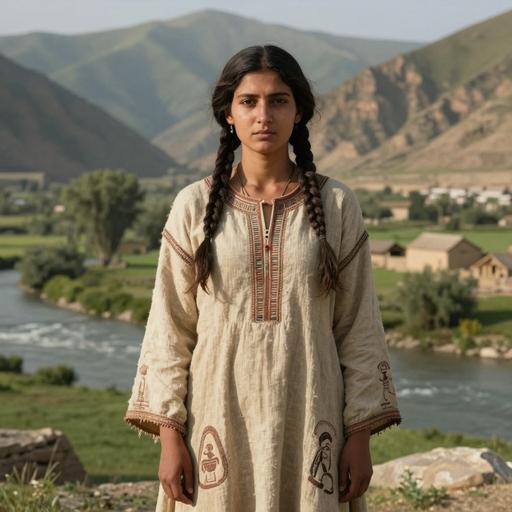
Portrait reconstruction of I8193
Ancient Individual

A woman buried in Pakistan in the Iron Age era

I8193
1376 BCE - 1018 BCE
Female
Gogdara Iron Age Petroglyphs in Swat Valley, Pakistan
Pakistan
Scroll to begin
Chapter I

Identity

The biological and cultural markers that define this ancient individual

Sample ID

I8193

Date Range

1376 BCE - 1018 BCE

Biological Sex

Female

mtDNA Haplogroup

M30-a

Cultural Period

Gogdara Iron Age Petroglyphs in Swat Valley, Pakistan

Chapter II

Place

Where this individual was discovered

Country Pakistan
Locality Swat Valley. Gogdara
Coordinates 34.7488, 72.3084
Chapter III

Time

When this individual lived in the broader context of human history

I8193 1376 BCE - 1018 BCE
Chapter IV

Story

The narrative of this ancient life

The Gogdara Iron Age Petroglyphs are a significant archaeological and cultural heritage site located in the Swat Valley of northern Pakistan. This region, known for its rich history and diverse cultural influences, presents a remarkable window into the past, particularly concerning the Indo-Aryan presence in the area. The petroglyphs at Gogdara are among the numerous rock carvings found across the Swat Valley, each offering unique insights into the ancient cultures that inhabited this region.

Geographic and Historical Context

The Swat Valley is a part of the present-day Khyber Pakhtunkhwa Province in Pakistan. Renowned for its stunning landscapes and strategic location along historic trade routes, the valley has been a cultural melting pot for millennia. The Gogdara site specifically is situated near the city of Mingora, a key location along the ancient Silk Road networks that facilitated cultural and commercial exchanges between the Indian subcontinent, Central Asia, and the Middle East.

The Petroglyphs

Content and Style

The petroglyphs at Gogdara date back to the Iron Age, roughly from 1200 to 600 BCE, and are believed to have been created by Indo-Aryan groups that migrated into the Indian subcontinent. These carvings are etched onto large boulders and rock faces, depicting a variety of subjects including human figures, animals, and symbolic motifs. The artistic style reflects a blend of local traditions and broader Indo-Aryan influences, characterized by their simplicity and elemental forms.

Symbolism and Interpretation

The carvings are likely to have served multiple purposes, ranging from religious and ritualistic to communicative and decorative. Human figures, often shown in dynamic postures, could represent deities, tribal leaders, or individuals significant in local folklore. Animal depictions might include species indigenous to the region, possibly holding spiritual significance or representing the pastoral lifestyle predominant at the time.

Symbolic motifs are more abstract, possibly conveying cosmological ideas, tribal identity, or important events. Scholars suggest that some symbols may correspond to early Vedic iconography, offering clues about the religious practices and beliefs of the Indo-Aryan settlers.

Cultural and Religious Implications

The arrival of Indo-Aryan cultures in the Swat Valley during the Iron Age marked the beginning of significant cultural and religious transformation, influencing local practices and societal structures. The petroglyphs may reflect early expressions of Vedic traditions, preceding the more structured and formalized religious systems that emerged later.

The art offers evidence of a society undergoing transition, with elements of animism and shamanistic practices intertwined with evolving Vedic rituals. This era contributed to the foundation for later developments in Hinduism and Buddhism, both of which have roots traceable to this region.

Archaeological Significance

The Gogdara petroglyphs, alongside other archaeological findings in the Swat Valley, provide valuable insights into the region's prehistoric period. They help chart the flow of human migration, the diffusion of cultural ideas, and the interconnections between ancient societies. Scholars use these carvings to understand more about the subsistence strategies, social organization, and worldview of the people who once inhabited this landscape.

Preservation and Challenges

Preserving these petroglyphs is crucial given their cultural heritage importance. However, they face threats from both natural erosion and human activities, such as construction and unregulated tourism. Efforts to document and protect these sites are ongoing but require greater international support and awareness to ensure their survival for future generations.

Chapter V

Genetics

The genetic ancestry of this ancient individual

Ancient Genetic Admixture

This analysis compares the DNA profile of I8193 with ancient reference populations, showing the genetic composition in terms of prehistoric ancestral groups.

Neolithic Farmers 49.5%
Ancient Asians 30.2%
Western Steppe Pastoralists 16.0%
European Hunter-Gatherers 2.3%
Ancient Native Americans 2.0%

Modern Genetic Admixture

This analysis compares the DNA profile with present-day reference populations, showing what percentage of genetic makeup resembles modern populations from different regions.

Asia 97.6%
Central Asian, Northern Indian & Pakistani 68.5%
Indian 35.8%
Pakistan 32.7%
Northern West Asian 28.0%
Caucasian 20.0%
Mesopotamian 8.0%
Northern Asian 1.1%
Siberian 1.1%
America 2.0%
America 2.0%
Native American 2.0%

Closest Modern Populations

These are the modern populations showing the closest statistical alignment to A woman buried in Pakistan in the Iron Age era, ranked by genetic distance. Lower distance values indicate closer statistical similarity.

1
Pashtun Pakistan
1.9840
2
Kamboj
2.1703
3
Arain
2.1956
4
Khatri
2.2058
5
Pashtun Yusufzai
2.4078
6
Arora
2.5938
7
Jat Punjab Muslim
2.6360
8
Kohistani
2.6415
9
Pashtun Uthmankhel
2.8756
10
Jat Punjab Sikh
2.8987
Chapter VI

Context

Other ancient individuals connected to this sample

Sources

References

Scientific publications and genetic data

Scientific Publication

The formation of human populations in South and Central Asia

Authors Narasimhan VM, Patterson N, Moorjani P
Abstract

By sequencing 523 ancient humans, we show that the primary source of ancestry in modern South Asians is a prehistoric genetic gradient between people related to early hunter-gatherers of Iran and Southeast Asia. After the Indus Valley Civilization's decline, its people mixed with individuals in the southeast to form one of the two main ancestral populations of South Asia, whose direct descendants live in southern India. Simultaneously, they mixed with descendants of Steppe pastoralists who, starting around 4000 years ago, spread via Central Asia to form the other main ancestral population. The Steppe ancestry in South Asia has the same profile as that in Bronze Age Eastern Europe, tracking a movement of people that affected both regions and that likely spread the distinctive features shared between Indo-Iranian and Balto-Slavic languages.

G25 Coordinates

The G25 coordinates for sample I8193 can be used for detailed admixture analysis in our G25 Studio tool.

I8193,0.0727687,0.01305116,-0.09506782,0.0673587,-0.07814426,0.04061722,0.00261438,0.00103918,-0.01524828,-0.0186616,-0.00772116,-0.001438,-0.00208832,-0.00841942,0.01326916,0.01211032,-0.00793452,-0.00089018,-0.00104724,-0.01495166,-0.0045801,-0.00403114,-0.00093494,-0.00326434,-0.00188942
Analyze in G25 Studio
Use code for 40% off Expires Feb 27