Menu
Store
Blog
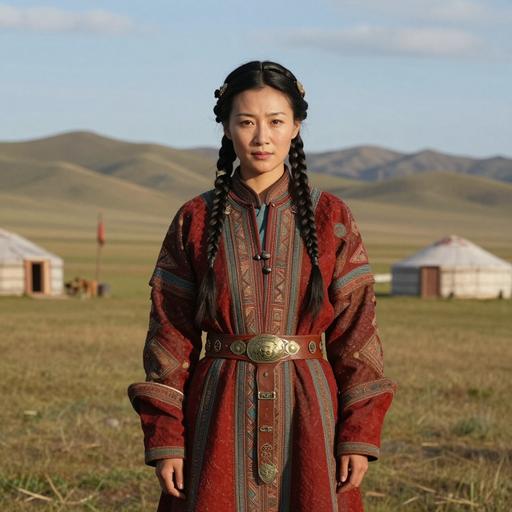
Portrait reconstruction of GD1-4
Ancient Individual

A woman buried in Mongolia in the Nomadic era

GD1-4
59 CE - 212 CE
Female
Xiongnu-Xianbei Cultures of Mongolia
Mongolia
Scroll to begin
Chapter I

Identity

The biological and cultural markers that define this ancient individual

Sample ID

GD1-4

Date Range

59 CE - 212 CE

Biological Sex

Female

mtDNA Haplogroup

B5b4

Cultural Period

Xiongnu-Xianbei Cultures of Mongolia

Chapter II

Place

Where this individual was discovered

Country Mongolia
Locality Gurvan Dov
Chapter III

Time

When this individual lived in the broader context of human history

GD1-4 59 CE - 212 CE
Chapter IV

Story

The narrative of this ancient life

The Xiongnu-Xianbei cultures of Mongolia represent a significant historical period characterized by the interaction, dominance, and cultural evolution of two major nomadic groups on the Eurasian Steppe: the Xiongnu and the Xianbei. This era spans roughly from the 3rd century BCE to the early 4th century CE, covering a rich tapestry of political, social, and economic dynamics that shaped the history of Central Asia.

The Xiongnu Culture

Origins and Political Structure

The Xiongnu were a confederation of nomadic tribes that emerged as a formidable power in the 3rd century BCE. Originating from the steppes of Mongolia and parts of northern China, the Xiongnu established a sophisticated political and military system under the leadership of their chanyu (kings), with Modu Chanyu being one of the most notable early leaders. The Xiongnu empire was arguably the first organized political entity to unite various nomadic tribes under a centralized leadership, developing a proto-state structure that was highly influential.

Social Organization

Socially, the Xiongnu were organized into a hierarchical clan system. At the top of the hierarchy was the chanyu, followed by aristocrats and a large base of common herders and warriors. The Xiongnu society was mobile, with a strong emphasis on horseback riding and archery, which were integral to their military prowess. They practiced a pastoral nomadic lifestyle, with herding of sheep, horses, camels, and cattle forming the backbone of their economy.

Relations with Neighboring Cultures

The Xiongnu were known for their complex relationships with neighboring civilizations, particularly the Han dynasty of China. This period saw frequent conflicts, treaties, and trade agreements, including the famous heqin policy where Chinese princesses were married off to Xiongnu leaders to ensure peace. The Xiongnu controlled crucial trade routes across the steppes, including parts of the Silk Road, facilitating the exchange of goods, ideas, and technologies.

The Xianbei Culture

Rise to Prominence

Following the decline of the Xiongnu in the 1st century CE, partly due to internal strife and external pressures from the Han dynasty, the Xianbei began to rise as a dominant force on the steppes. The Xianbei were another confederation of nomadic tribes, likely sharing ethno-linguistic ties with earlier groups. They rose to prominence in the 2nd century CE and established their own territories across Mongolia and parts of northern China.

Cultural and Political Influence

Under leaders like Tanshihuai, the Xianbei consolidated power and expanded their influence, reorganizing tribal alliances into a more cohesive state. The Xianbei culture, while sharing some characteristics with the Xiongnu, also showed unique attributes. They maintained traditional nomadic practices but were also influenced by the agricultural and sedentary cultures they came into contact with through conquests and trade.

Integration and Legacy

The Xianbei are credited with further advancements in metallurgy, particularly in iron and bronze work, and they played an important role in the further development of the steppe cultures. As they integrated more into the Chinese sphere of influence, parts of the Xianbei populace began to settle down, adopting agricultural practices and contributing to the sinicization process. By the time of the Northern Wei dynasty (established by the Tuoba clan of the Xianbei in the late 4th century), they had effectively transitioned from a purely nomadic culture to one that was partly sedentary.

Cultural Contributions and Legacy

  • Art and Craftsmanship: Both the Xiongnu and Xianbei were skilled metalworkers. Artifacts recovered from archaeological sites include intricate jewelry, weaponry, and horse gear that reflect a blend of nomadic artistry and influences from neighboring settled cultures.

  • Military Innovations: Their military tactics, particularly mobile cavalry warfare, left a lasting impact on both contemporary and future military strategies across Eurasia.

  • Trade and Economic Impact: By controlling and influencing sections of the Silk Road, these cultures were key players in the transcontinental trade networks, facilitating the exchange of goods such as silk, spices, and precious metals.

  • Cultural Exchange: The interactions between the Xiongnu, Xianbei, and neighboring empires like China, Persia, and later the Roman Empire, fostered significant cultural and technological exchanges that shaped the historical trajectories of these regions.

In conclusion, the Xiongnu-Xianbei cultures of Mongolia represent a transformative era in Central Asian history. Their contributions to military strategy, art, trade, and intercultural exchange laid the groundwork for the development of subsequent nomadic empires and influenced the broader history of the Eurasian continent.

Chapter V

Context

Other ancient individuals connected to this sample

Use code for 40% off Expires Feb 26