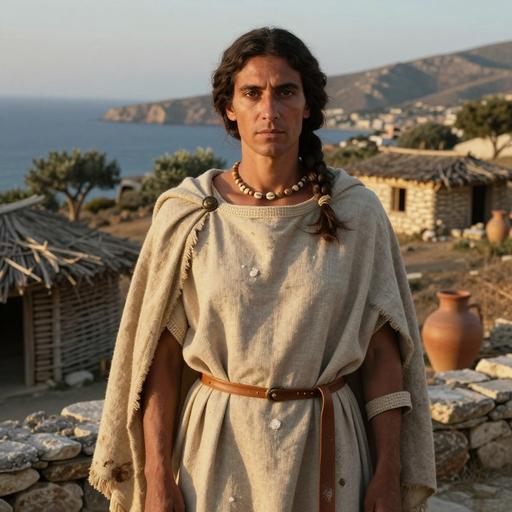
The Early Helladic period, particularly focusing on the settlement of Manika, offers a rich tapestry of cultural and societal developments that formed a crucial part of the Aegean civilization during the Early Bronze Age. This era, spanning approximately from 3000 to 2000 BCE, is marked by major changes in the social, economic, and technological landscapes of mainland Greece and the surrounding areas.
Geographic and Archaeological Context
Manika is located near the modern-day city of Chalkida on the island of Euboea, positioned strategically along the Aegean Sea, which played a significant role in its prominence as a trade and cultural hub. Excavations have revealed that Manika was one of the largest Early Helladic settlements, covering about 500 hectares, indicating its importance during this time.
Societal Structure
The society in Manika during the Early Helladic period was characterized by its complex social structures. Evidence suggests the presence of a hierarchical system, likely headed by elite leadership groups or chiefdoms. This is inferred from the differentiation in house sizes and grave goods, indicating social stratification. The settlement patterns, including large, multi-roomed houses, imply organized urban planning and social organization.
Economy and Trade
The economy of Manika heavily relied on both agriculture and maritime activities. The fertile plains of Euboea allowed for the cultivation of various crops, including grains, olives, and grapes, supporting a growing population. Additionally, Manika's coastal placement facilitated robust trade networks. Artifacts from distant lands, such as pottery and metal objects, suggest active trade with other Aegean areas and possibly with regions as far afield as Anatolia and Egypt.
Technological and Cultural Developments
Technology during the Early Helladic period in Manika showed significant advancements. Pottery from this era, typically distinguished by its utilitarian and decorative elements, was produced using increasingly sophisticated techniques. The introduction of the potter's wheel around this time signifies a leap in manufacturing efficiency and artistic expression.
Furthermore, metallurgy saw substantial progress, with copper and bronze objects being produced. These included tools, weapons, and ornamental items. The increased use of metal cemented Manika's participation in the wider Bronze Age Aegean cultural sphere.
The architectural strategies employed were notably advanced for the time, with the use of megaron-type structures, representing both residential and possibly communal or administrative buildings. These large, rectangular hall-like constructions are considered precursors to the later palatial architecture of the Mycenaean civilization.
Burial Practices
Burial customs in Manika provide valuable insights into the spiritual and cultural values of the Early Helladic people. Tombs ranged from simple pit graves to more elaborate cist graves, often accompanied by pottery, tools, and personal ornaments, which suggests a belief in an afterlife where such goods were necessary.
The variety and richness of grave goods also reflect the socio-economic status of individuals, with wealthier burials featuring imported items and finely crafted objects. These practices offer glimpses into the complex societal hierarchies and the significance attributed to life beyond death.
Cultural Influences and Legacy
The Early Helladic period in Manika represents a formative phase in Greek prehistory, linking the nascent developments of the Aegean world with subsequent Greek cultural and historical evolution. The archaeological records from Manika, alongside those from other Early Helladic sites, depict a burgeoning civilization that set the stage for the more advanced urban societies of the Middle and Late Bronze Age, particularly the Minoans and Mycenaeans.
While much of our understanding of Manika is reconstructed from material remains and comparative studies, ongoing archaeological work continues to enhance our knowledge of this fascinating settlement’s role in the broader narrative of early Aegean civilizations.