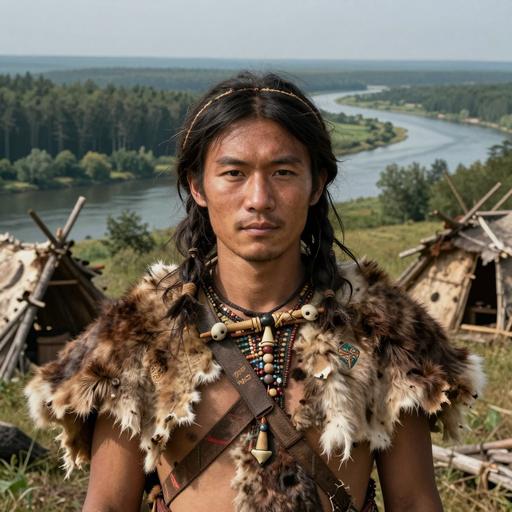
The Mesolithic era, a transitional period between the Paleolithic and Neolithic ages, represents a fascinating chapter in the prehistoric development of human societies. In East Asia, specifically around regions like the Amur River in present-day China, this era witnessed significant cultural and environmental changes that laid the foundations for subsequent agricultural societies.
Geographic and Environmental Context
The Amur River, one of the longest rivers in the world, flows through the northeastern part of China, forming part of the border between China and Russia. During the Mesolithic period, this region was characterized by diverse ecosystems, ranging from mixed forests to expansive riverine systems. The climate was undergoing gradual warming after the last Ice Age, leading to rising temperatures and changing vegetation patterns. This environment provided a rich and varied set of resources for Mesolithic communities, fostering diverse subsistence strategies.
Subsistence Patterns
The Mesolithic era is typically marked by a shift from nomadic hunting and gathering towards more settled, complex societies. In the Amur River region, this transition involved exploiting a wide array of resources. The river itself was a crucial source of sustenance, offering abundant fish and facilitating access to various ecological zones. Hunting of terrestrial animals and gathering of wild plants supplemented this diet. The utilization of the river not only provided immediate nutritional needs but also influenced settlement patterns, with communities strategically located near reliable water resources.
Tools and Technology
Mesolithic communities around the Amur River developed and utilized a range of tools and technologies — a hallmark of this era. Stone tools became more sophisticated and specialized compared to the preceding Paleolithic period. Microliths, small stone blades, were commonly used, often set into wooden shafts or bone handles to create composite tools for hunting and processing food. The development of fishing tools like nets and hooks indicates a growing reliance on aquatic resources. Additionally, evidence suggests the beginnings of pottery production, which would become more widespread in the ensuing Neolithic period.
Social Structure and Cultural Practices
The Mesolithic period in this region was likely characterized by small, kin-based groups. These groups were semi-nomadic, moving within defined territories to exploit seasonal resources. Social structures were relatively egalitarian, although the increasing complexity of societies might have led to the emergence of more defined leadership roles or social stratification.
Art and symbolic cultural practices are evidenced in the archaeological record, including potential burial sites, engravings, and personal adornments. These suggest a rich spiritual life and the transmission of cultural traditions. The presence of decorative items implies the importance of social communication and possibly trade networks, which facilitated the exchange of goods and ideas across different groups.
Interactions and Influences
The Amur River region was not isolated; there were interactions with neighboring regions and cultures. Movements of peoples, goods, and ideas across northern China and into Siberia suggest a dynamic landscape of cultural exchange. These interactions could have facilitated the diffusion of technological innovations and cultural practices, playing a crucial role in shaping the region's prehistoric development.
Transition to the Neolithic
The Mesolithic era set the stage for the Neolithic Revolution, characterized by the advent of agriculture and more permanent settlements. In East Asia, this transition involved domestication of plants and animals, development of larger social communities, and more complex societal structures.
In summary, the Mesolithic period along the Amur River in China was a time of significant change and development. It bridged the gap between simple hunter-gatherer groups and more complex agrarian societies, featuring advancements in technology, adaptations to a changing environment, and the emergence of new cultural patterns that would profoundly influence the region's prehistoric trajectory.