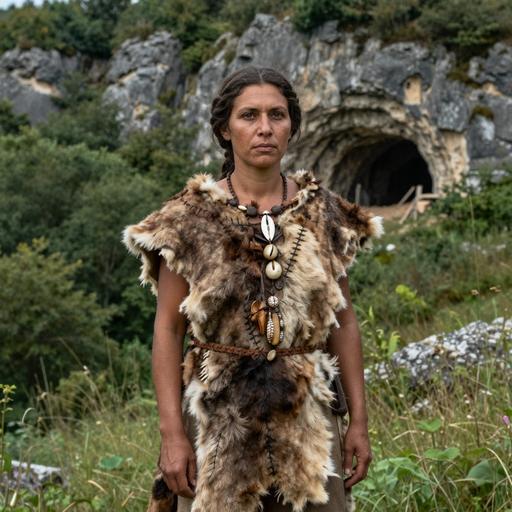
The Early Upper Paleolithic period in Europe is a crucial phase in human prehistory, characterized by the presence of anatomically modern humans and their cultural developments. One significant site that provides valuable insights into this era is Peștera Muierii, located in Romania. This cave site offers a glimpse into the life and culture of early modern humans during the Upper Paleolithic, roughly dated to around 35,000–40,000 years ago.
Geography and Environment
Peștera Muierii, meaning \The Cave of the Woman," is situated in the Carpathian Mountains of Romania, a region characterized by its rugged terrain, forested hills, and river valleys. During the Upper Paleolithic, the climate would have been considerably colder than today, with environments fluctuating between glacial and interglacial periods. This would have influenced the availability of resources and the types of flora and fauna present, impacting human subsistence strategies.
Archaeological Significance
The site gained significant attention due to the discovery of human skeletal remains alongside various lithic and organic artifacts. The Peștera Muierii remains are particularly valuable for understanding the morphology and behavior of early modern humans in Europe.
Human Remains
The most noteworthy finds at Peștera Muierii are the human skeletal remains, including cranial and post-cranial elements that belong to a number of individuals. These remains have been subjected to numerous studies, revealing insights into the physical characteristics and health of these early modern humans. The cranial features show a mix of modern and archaic traits, reflecting the complex evolutionary history of humans during this period.
Tools and Technology
The lithic assemblage at Peștera Muierii consists primarily of flint tools, including blades, scrapers, and points, typical of the Upper Paleolithic technological repertoire. These tools suggest a well-developed understanding of flintknapping techniques, which were used for a variety of tasks such as hunting, processing animal hides, and butchering meat. The presence of bone and antler implements also highlights the technological advancements of this culture.
Subsistence and Economy
The inhabitants of Peștera Muierii likely subsisted on a combination of hunting, gathering, and possibly fishing. Faunal remains found at the site point to a diet that included large mammals such as reindeer, bison, and possibly mammoth, which were hunted using well-crafted tools. The extraction and processing of these resources indicate a developed understanding of the seasonal migration patterns of these animals, as well as effective hunting strategies.
Symbolism and Art
While Peștera Muierii does not feature extensive evidence of symbolic behavior or art, the broader Upper Paleolithic period in Europe is well-known for its rich symbolic culture, including cave paintings, carvings, and personal adornments. It is likely that similar symbolic expressions were present among the groups inhabiting this region, potentially including body ornamentation and the use of ochre for decorative purposes.
Social Structure
The social structure of the Upper Paleolithic communities, including those at Peștera Muierii, is believed to have been organized into small, kin-based groups. These groups likely practiced a form of egalitarian social organization, with shared responsibilities and cooperative hunting and gathering efforts. Social bonds may have been reinforced through shared rituals and possibly through exchange networks with neighboring groups.
Cultural Context
Peștera Muierii is part of the broader Aurignacian culture, which is noted for its technological innovations and artistic achievements. This culture marks the spread of modern humans into Europe, characterized by a rapid dispersion and adaptation to diverse environments.
Conclusion
Peștera Muierii offers a fascinating window into the early stages of modern human development in Europe. Through its archaeological record, it provides insights into the adaptive strategies, technological capabilities, and potential cultural practices of the early Upper Paleolithic inhabitants. Despite the challenges of reconstructing the complete lifestyle of these ancient people, sites like Peștera Muierii contribute significantly to our understanding of human history and our evolutionary journey."