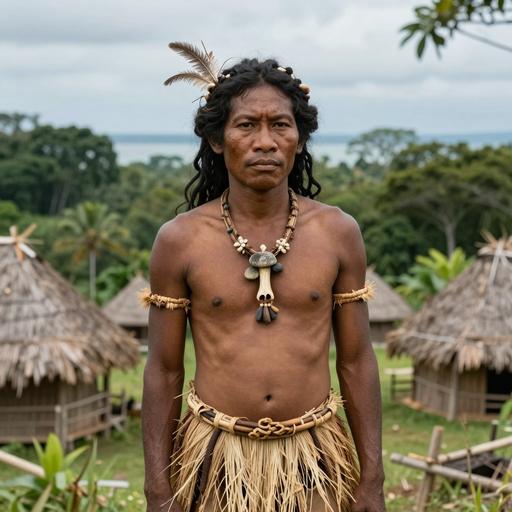
The Neolithic period in Indonesia, specifically in relation to the Austronesian peoples, is a fascinating era marked by significant cultural and technological advancements. The Austronesian expansion is one of the most significant migrations in human history, and it has profoundly shaped the cultural and linguistic landscape of Southeast Asia, including regions such as the Kayoa and Gua Uattamdi in the Moluccas.
Geographical Context
Kayoa and Gua Uattamdi are situated in the Maluku Islands in eastern Indonesia, an area characterized by its tropical climate and rich biodiversity. The islands are part of the broader Austronesian cultural and linguistic sphere, which extends throughout Southeast Asia, the Pacific Ocean, and even parts of Madagascar.
Austronesian Expansion
The Austronesian expansion began around 3000 to 1500 BCE from Taiwan, spreading through the Philippines, Indonesia, and further into the Pacific. This migration was facilitated by the development of sophisticated seafaring technologies, such as outrigger canoes and advanced navigation techniques, which allowed these early peoples to traverse vast oceanic distances.
Neolithic Cultural Characteristics
The Neolithic period in Indonesia is characterized by the transition from nomadic hunter-gatherer communities to more settled agricultural societies. This transformation was enabled by the domestication of various plant species such as rice, taro, and yam. The introduction of agriculture led to the establishment of permanent settlements and the development of complex societies.
Material Culture
Pottery: Neolithic Austronesian pottery is noted for its intricate designs and forms, which often reflect the symbolic and functional aspects of the culture. Vessels were commonly used for storage, cooking, and ritual purposes.
Stone Tools: The Neolithic assemblage includes polished stone adzes and axes, which were critical for clearing forests for agriculture and building. The technology and style of these tools exhibit regional variations, suggesting localized adaptations.
Shell Artifacts: The use of shells for tools, ornaments, and trade items was widespread. Shell beads and other decorative items indicate a complex social structure with trade networks extending across islands.
Social Structure and Economy
The Neolithic Austronesian societies in Indonesia displayed a range of social organizations, from egalitarian village communities to more stratified chiefdoms. The economy was largely based on agriculture, supplemented by fishing, hunting, and gathering. The rich maritime environment provided abundant resources, encouraging the development of trade networks.
Language and Culture
The Austronesian languages, originating from this period, form one of the world's largest language families. They reveal much about the cultural practices, beliefs, and social structures of early Austronesian communities. Folklore, music, and dance were integral parts of the cultural expression, often tied to agricultural cycles and spiritual beliefs.
Spiritual and Religious Beliefs
Neolithic Austronesian societies are believed to have practiced animism, with a spiritual system that revered ancestors and nature spirits. Megalithic structures and burial practices indicate a belief in an afterlife and the importance of ritual in daily life.
Archaeological Evidence
Kayoa and Gua Uattamdi provide rich archaeological sites that have yielded insights into Neolithic life. Excavations have uncovered artifacts such as pottery, stone tools, and shell items that illustrate the material culture of these communities. Additionally, burial sites and settlement remains offer a glimpse into the social and spiritual dimensions of their lives.
Conclusion
The Neolithic period in Indonesia, particularly among the Austronesian peoples, was a time of profound transformation. The combination of agricultural development, sophisticated seafaring, and vibrant cultural expressions set the stage for the rise of complex societies in the region. The legacy of this era is evident in contemporary Indonesian culture, which continues to reflect the diverse influences of its Austronesian heritage.