انتقل إلى المحتوى الرئيسي
ملفات الحمض النووي

Amur River Neolithic Voices

Early riverine communities (6690–4270 BCE) from the Amur Basin, China — archaeology meets DNA

6690 CE - 4270 BCE
Amur River Basin, China

القصة

Archaeological and ancient-DNA evidence from 10 individuals in the Amur River Basin (6690–4270 BCE) reveals river-focused Neolithic lifeways and a genetic profile dominated by Y-haplogroup C and mtDNA lineages D and F. Limited sample size makes conclusions provisional.

Time Period

6690–4270 BCE

Region

Amur River Basin, China

Common Y-DNA

C (5/10)

Common mtDNA

D (3), F (1), D4o (1)

الخط الزمني

5000 BCE

Riverine Neolithic lifeways flourish

Circa 5000 BCE, Amur Basin communities intensify river-based fishing and establish recurring seasonal camps; this period is evidenced by pottery, fish-dominated faunal assemblages, and emerging local genetic signatures.

Origins & Emergence

Along the broad, braided channels of the Amur River Basin, communities emerged in the mid-Holocene to exploit a landscape of wetlands, floodplain forests, and abundant fish runs. Archaeological data indicates sustained human presence in parts of what is now Heilongjiang and neighboring provinces between roughly 6690 and 4270 BCE, a period when rising temperatures and stable riverine resources fostered denser seasonal occupation.

Material traces — pottery sherds, stone tools with riverine wear patterns, charred fish and mammal bones — paint a picture of groups whose lifeways pivoted on the river. Limited evidence suggests a gradual intensification of fishing, targeted hunting of cervids and boar, and plant foraging rather than an immediate turn to agriculture. Settlement traces appear in low-lying camps and possible semi-subterranean structures in flood-protected ridges, though preservation varies and data remain patchy.

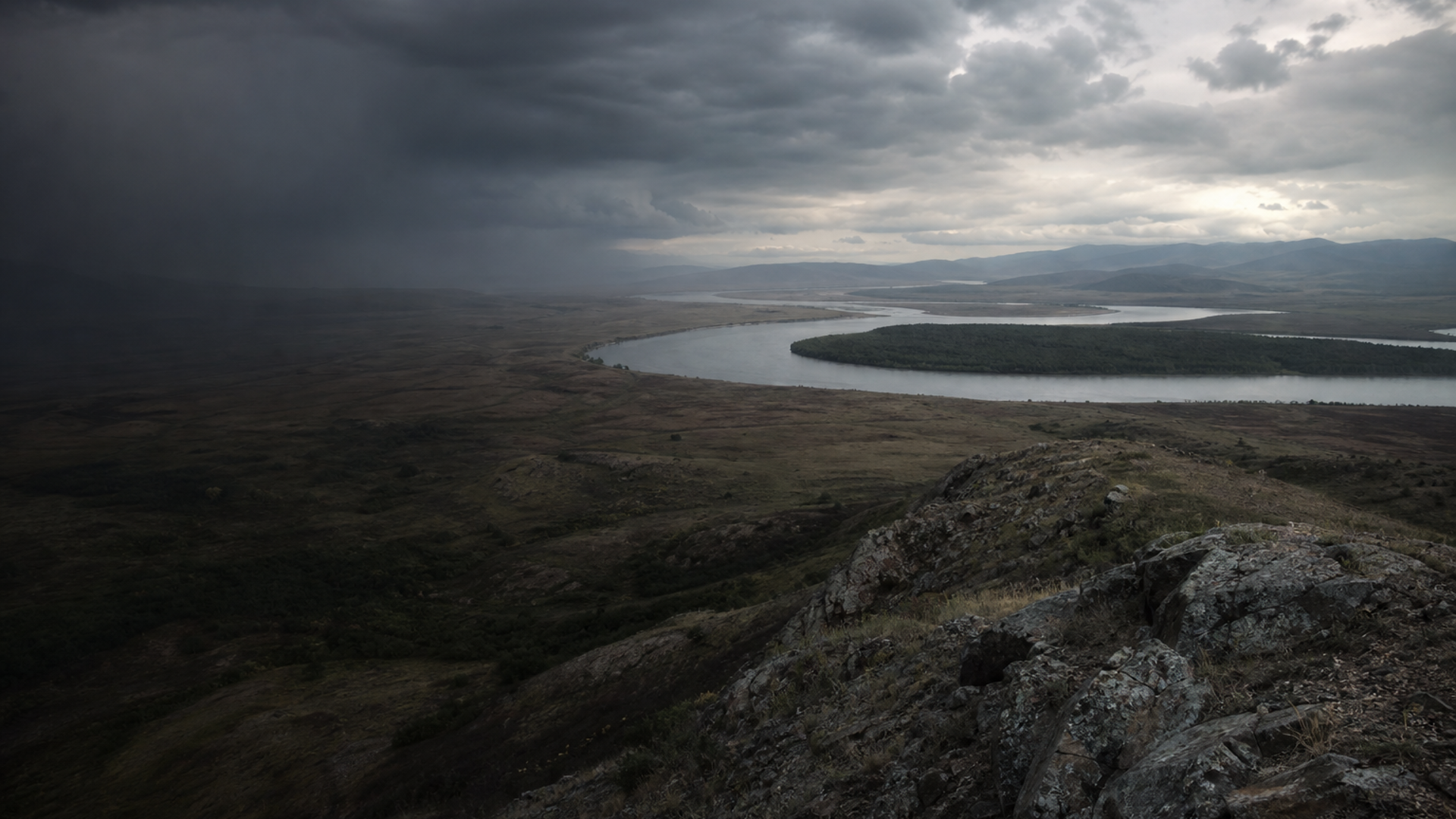
The cinematic sweep of broad waters and coniferous shorelines frames a slow, local emergence of Neolithic adaptations in northeastern China. Archaeologists emphasize that while the Amur Basin shows hallmarks of independent regional development, connections to neighboring northern East Asian groups likely influenced technology and mobility. Given the modest number of archaeological contexts that have been sampled for DNA so far, narratives about migration and cultural transmission remain provisional and open to revision as more sites are analyzed.

  • Occupation concentrated along Amur floodplains and tributaries
  • Evidence of riverine fishing, hunting, and pottery use
  • Regional Neolithic traits develop alongside influences from neighboring areas

Daily Life & Society

Daily life in the Amur Neolithic likely unfolded with the rhythms of the river: seasonal pulses of spawning fish, migratory birds, and the movement of game. Archaeological assemblages contain ground and chipped stone tools, pottery fragments with simple cord or comb impressions, and faunal remains dominated by freshwater fish and medium-sized ungulates. These remains imply technologies adapted to processing fish (butchery marks, bone concentrations) and preserving seasonal surplus, though direct evidence for storage features is sparse.

Sites suggest small to medium-sized bands, perhaps aggregating seasonally for social exchange, resource abundance, or ritual activities. The presence of worked bone, antler, and domestic debris implies craft specialization at a household level—cordage, netting, simple fishing gear, and composite stone-bone implements. Funerary data are limited but indicate a range of burial treatments, sometimes with grave goods, hinting at social differentiation that remains difficult to quantify.

Environmental resilience mattered: these communities navigated flood cycles, ice, and shifting fish runs, adapting mobility and settlement to the river’s moods. Archaeological data indicates a people intimately tied to the Amur as a highway and pantry, shaping both material culture and social organization around predictable ecological wealth.

  • Seasonal riverine subsistence dominated by fishing and hunting
  • Craft production using bone, antler, and stone; pottery fragments common

Genetic Profile

Ten ancient individuals sampled from the Amur River Basin provide the first glimpses of a coherent genetic signal for this Neolithic assemblage, but the sample size is small enough that conclusions are tentative. Y-chromosome data show a predominance of haplogroup C in 5 of the 10 males tested, a paternal lineage widely found in northern East Asia and parts of Siberia. This pattern suggests local continuity with northern Eurasian male lineages that were present in the region during the Holocene.

Mitochondrial DNA diversity among the 10 individuals includes haplogroup D (3 individuals), F (1), and a D4o branch (1). Haplogroup D is a frequent component in northern and eastern East Asian maternal lineages and appears in many modern populations across northeastern Asia and in ancient samples implicated in wider Holocene dispersals. Haplogroup F similarly has deep roots in East Asia. The presence of D4o is intriguing as a sublineage with northern associations, but with only a single occurrence its significance is limited.

Genome-wide affinities (where available) indicate an “Amur-related” ancestry component that is observed at elevated levels in some modern populations of the Lower Amur and adjacent Siberia. Such affinities may link these Neolithic groups to later Tungusic-speaking and other northern East Asian communities, but genetic continuity is complex: admixture, later migrations, and demographic shifts have reshaped ancestry profiles over millennia. Given the limited total of 10 samples, these genetic signals should be treated as preliminary—valuable hints rather than definitive population histories.

  • Y-haplogroup C predominant among males (5/10)
  • mtDNA dominated by D lineages; presence of F and D4o; sample size limits inference

Legacy & Modern Connections

The echoes of Amur Neolithic communities persist in both landscape and genes. Archaeological continuities—river-focused subsistence strategies and certain pottery traditions—are mirrored in genetic affinities that contribute to an Amur-related ancestry component identified in multiple modern and ancient populations of northeastern Asia. This component may have participated in broader population blends that shaped later Tungusic, Mongolic, and other northern East Asian groups.

However, the story is not linear. Millennia of movement, admixture, and cultural change mean that modern populations are palimpsests of many ancestries. While haplogroup C and mtDNA D lineages in the ancient Amur samples resonate with patterns seen today, asserting direct descent demands more data. Continued sampling across time and space in the Amur Basin will help resolve questions about continuity, migration, and the role these communities played in regional prehistory. For now, these people stand as a vivid chapter: river-born lifeways whose genetic traces inform our understanding of northeastern Asia’s deep past.

  • Amur-related ancestry persists in parts of northeastern Asia
  • Continuity plausible but complex; more samples needed to confirm direct descent

مساعد الذكاء الاصطناعي

مساعد الذكاء الاصطناعي من DNA Genics

فتح هذه الميزة
اطرح أسئلة عن ثقافة Amur River Neolithic Voices. يمكن للمساعد شرح النتائج الجينية والسياق التاريخي والأدلة الأثرية والصلات بالعصر الحديث.
مثال على تحليل بالذكاء الاصطناعي

لمحة عن ثقافة Amur River Neolithic Voices

تساعد عينات الحمض النووي القديم الباحثين على دراسة أنماط الهجرة والعلاقات الجينية بين المجموعات السكانية القديمة.

هذه معاينة للتحليل. يتيح المساعد الكامل استكشاف الموضوعات التالية:

  • التركيب الجيني والأصول
  • أنماط الهجرة والأصول
  • الحياة اليومية والممارسات الثقافية
  • الإرث الجيني المعاصر