انتقل إلى المحتوى الرئيسي
ملفات الحمض النووي

Delphi: Iron Age Echoes

Three ancient voices from Kastrouli near Delphi illuminate a fragile genetic and archaeological portrait (800–500 BCE).

800 CE - 500 BCE
Phokis, Greece (near Delphi)

القصة

Archaeological remains from Kastrouli (Desfina, Phokis) spanning 800–500 BCE, paired with three genetic samples (mtDNA J1c, J1, U), offer preliminary insights into the Iron Age communities around Delphi. Limited sample size makes conclusions tentative but suggests continuity with broader Mediterranean maternal lineages.

Time Period

800–500 BCE

Region

Phokis, Greece (near Delphi)

Common Y-DNA

Undetermined / insufficient data

Common mtDNA

J1c (1), J1 (1), U (1)

الموضوعات

الخط الزمني

800 BCE

Iron Age presence documented near Delphi

Archaeological layers at Kastrouli and nearby sites indicate continuous occupation and local cultural activity during the early Iron Age (circa 800 BCE).

Origins & Emergence

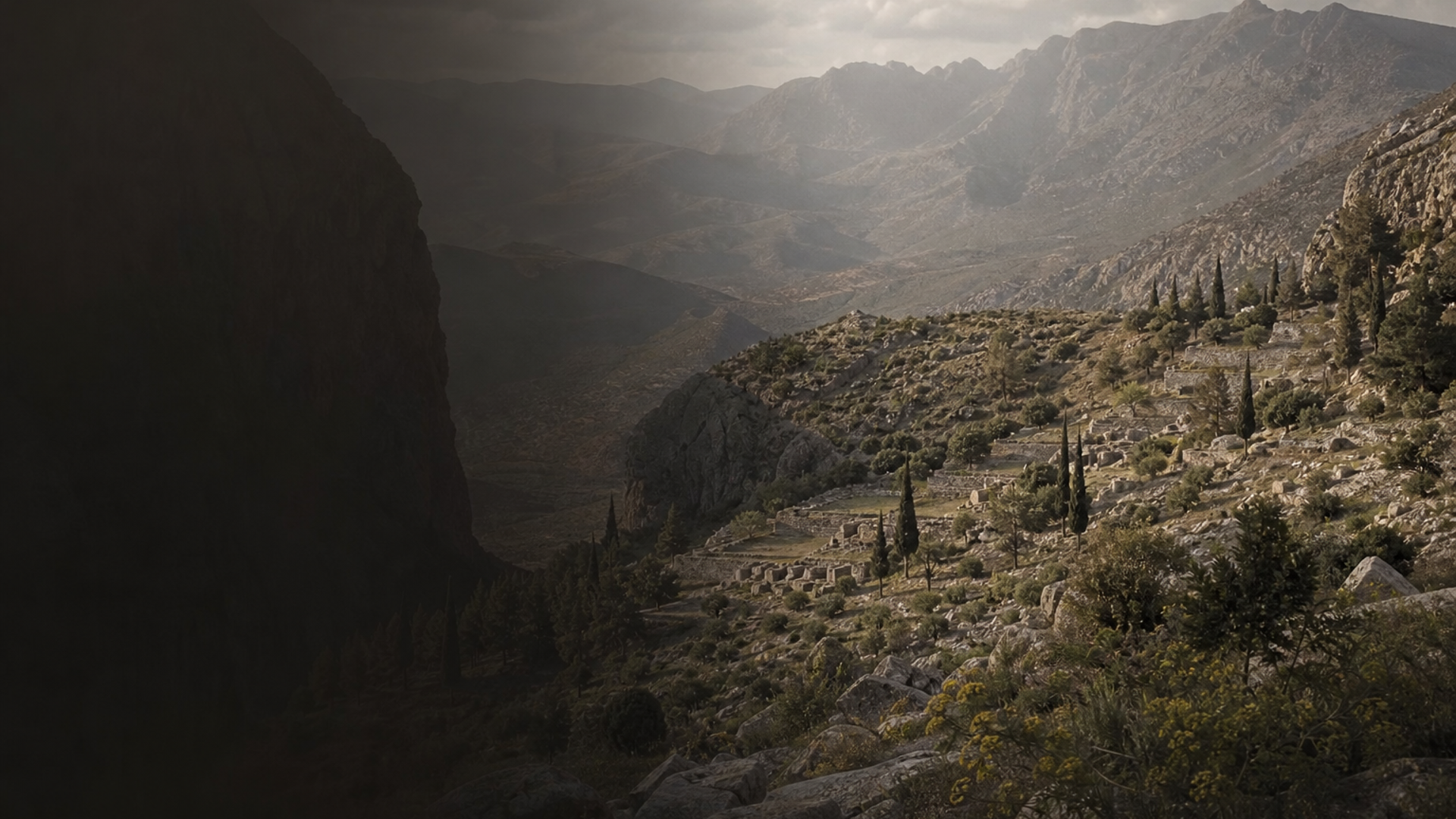
Nestled on the slopes beneath the famed sanctuary of Delphi, the settlement at Kastrouli (Desfina, Phokis) sits within a landscape shaped by pilgrimage, trade and seasonal herding. Archaeological data indicates occupation in the Iron Age, roughly 800–500 BCE, a time when small communities clustered around sanctuaries and arable pockets of the mainland. Material culture from nearby Delphi and surrounding Phokis — pottery styles, burial practices and fortification traces — show continuities with Late Bronze Age traditions alongside new regional expressions.

Visually, imagine low stone houses clinging to terraces, smoke rising from hearths, and pathways worn by ritual traffic toward the oracle. Limited evidence suggests local populations balanced farming, pastoralism and participation in sanctuary economies. The emergence of these Iron Age communities appears to be as much a story of persistence as of reorganization: people retained many inherited lifeways while adapting to shifting social networks across the Greek mainland.

Because the current genetic sample set is small (three individuals), any claims about origins must be cautious. Archaeological context, however, supports a picture of localized groups connected by exchange to broader Mediterranean and Aegean networks.

  • Settlement at Kastrouli active during 800–500 BCE
  • Material culture links to Late Bronze Age continuity and Iron Age regionalism
  • Communities likely combined farming, herding, and sanctuary-related activities

Daily Life & Society

Daily life in the Delphi hinterland can be reconstructed from archaeology as a sequence of tactile routines: grinding grain on querns, repairing pottery, tending small olive plots and herds, and moving seasonally across upland pasture. Excavations in the Delphi region reveal domestic structures and associated finds consistent with small household-based economies and inter-household cooperation. The social world was interwoven with the sacred: the oracle at Delphi and its festivals drew pilgrims and traders, creating episodic surges of activity that would have reshaped labor demands and exchange.

Burial evidence across central Greece in the Iron Age shows a mix of cremation and inhumation practices, suggesting varied local customs and identities. Craft specialization appears modest but present — metalworking scraps and imported ceramics attest to participation in long-distance networks. Everyday life thus blended the intimate rhythms of village households with the broader cultural dynamism of the Archaic era.

Careful interpretation is needed: Kastrouli contributes a local perspective, but its small sample of genetic and material data means we must avoid overgeneralizing across the entire Delphi micro-region.

  • Household economies centered on farming, herding, and craft
  • Interaction with the sanctuary economy of Delphi shaped seasonal rhythms

Genetic Profile

Three mitochondrial genomes recovered from Kastrouli (dated to ca. 800–500 BCE) yield haplogroups J1c, J1, and U (one individual each). These maternal lineages are broadly distributed in Europe and the Near East during the Bronze and Iron Ages. Haplogroup J (including J1 and J1c) is often associated with Neolithic and later Mediterranean gene flow from Anatolia and the Near East, while mtDNA U is a deeper European lineage found across millennia.

No robust Y-chromosome pattern can be reported from these samples: common Y-DNA haplogroups were not determined or were not preserved sufficiently for confident assignment. The very small sample count (n=3) makes population-level inferences preliminary; statistical power is limited and susceptible to sampling bias. Nevertheless, the maternal signal from these three individuals is consistent with archaeological expectations for the central Greek mainland — a mix of lineages reflecting long-term local continuity and connections to wider Mediterranean gene pools.

Comparative ancient DNA studies in Greece and the Aegean reveal mosaic ancestry patterns in the Iron Age, with varying proportions of local Bronze Age ancestry and incoming elements. The Kastrouli mtDNA results fit this nuanced picture: they neither demand wholesale migration models nor exclude episodes of gene flow. Future sampling (more individuals, Y-DNA, and genome-wide data) is essential to refine demographic narratives.

  • mtDNA: J1c (1), J1 (1), U (1) — three individuals total
  • No reliable Y-DNA reported; sample size (n=3) limits firm population conclusions

Legacy & Modern Connections

The human threads from Kastrouli weave into modern Greece in subtle ways. Maternal lineages like J and U persist in contemporary Mediterranean and European populations, reflecting long-standing genetic continuity as well as episodic mobility. Archaeology reminds us that the Iron Age landscapes around Delphi were dynamic meeting points for local communities and wider networks of exchange and belief.

For modern descendants and researchers alike, these three genomes act as a fragile bridge: evocative but incomplete. They invite broader sampling and integrated study — combining archaeology, isotopes, and genome-wide data — to reveal how the peoples around Delphi participated in the demographic and cultural currents of the early first millennium BCE. Until such data accumulates, conclusions must remain cautious, framed as provisional steps toward understanding a storied past.

  • Maternal lineages seen at Kastrouli persist in modern Mediterranean gene pools
  • Current genetic picture is a tentative bridge — further sampling is required

مساعد الذكاء الاصطناعي

مساعد الذكاء الاصطناعي من DNA Genics

فتح هذه الميزة
اطرح أسئلة عن ثقافة Delphi: Iron Age Echoes. يمكن للمساعد شرح النتائج الجينية والسياق التاريخي والأدلة الأثرية والصلات بالعصر الحديث.
مثال على تحليل بالذكاء الاصطناعي

لمحة عن ثقافة Delphi: Iron Age Echoes

تساعد عينات الحمض النووي القديم الباحثين على دراسة أنماط الهجرة والعلاقات الجينية بين المجموعات السكانية القديمة.

هذه معاينة للتحليل. يتيح المساعد الكامل استكشاف الموضوعات التالية:

  • التركيب الجيني والأصول
  • أنماط الهجرة والأصول
  • الحياة اليومية والممارسات الثقافية
  • الإرث الجيني المعاصر