



Paternal Haplogroup
Your father's father's father...
Tracing your paternal line...
Analyzing Y-chromosome DNA
Your haplogroup J-M92 emerged approximately 10,800 years ago in West Asia
Your root haplogroup J emerged approximately 42,900 years ago in West Asia
About Haplogroup J-M92
Detailed information about your paternal lineage and genetic heritage
Haplogroup Overview
Y-DNA haplogroup J is a major paternal lineage that has played a critical role in the genetic history of the Middle East, the Mediterranean, and parts of Europe, Africa, and Central Asia. It is closely associated with the spread of agricultural societies and the rise of ancient civilizations, including those in the Near East, Mesopotamia, and the Levant. Haplogroup J is thought to have originated in the Near East and is strongly linked to the diffusion of early farming cultures and Afro-Asiatic language speakers.
Origins and Evolution
Haplogroup J is believed to have originated approximately 45,000 years ago in the Near East, likely in the region encompassing the Levant or the Arabian Peninsula. It is a descendant of haplogroup IJ, which also gave rise to haplogroup I, primarily found in Europe. Haplogroup J and its subclades became prominent during the Neolithic Revolution, around 8,000 to 10,000 years ago, when farming practices spread from the Near East into Europe, North Africa, and South Asia.
The defining mutation for haplogroup J is M304, which marks its divergence from other branches of haplogroup IJ. Over time, haplogroup J diversified into two primary subclades, J1 and J2, each of which has its own distinct geographical and historical significance.
Major Subclades of Haplogroup J
Haplogroup J is divided into two major subclades, J1 and J2, each associated with different regions and migration patterns. These subclades provide insight into the complex demographic changes and migrations that shaped the ancient and modern populations of the Near East, Europe, North Africa, and beyond.
J1 (J-M267)
Haplogroup J1 is found primarily in the Arabian Peninsula, the Levant, and parts of North Africa. It is particularly associated with Semitic-speaking populations and has played a significant role in the genetic history of Arab populations, as well as in ancient Semitic civilizations such as the Akkadians, Amorites, and later Arab conquests.
J1a (J-P58): The most important and widespread subclade of J1, J1a is particularly common among populations in the Arabian Peninsula, including Saudi Arabia, Yemen, and Oman, as well as in the Levant (Palestine, Jordan, Syria) and North Africa. J1a is associated with the early Semitic-speaking peoples and the Arab conquests that spread from the Arabian Peninsula across the Middle East and North Africa during the early Islamic period.
J1b (J-Z1828): Found at lower frequencies in the Caucasus and parts of Central Asia, J1b is less common than J1a but provides evidence of the ancient presence of haplogroup J1 in these regions.
J2 (J-M172)
Haplogroup J2 is most commonly found in the eastern Mediterranean, including the Levant, Anatolia, Greece, Italy, and parts of South Asia. J2 is strongly associated with the rise of early agricultural societies in the Fertile Crescent and the spread of ancient civilizations such as the Sumerians, Minoans, Greeks, and Phoenicians.
J2a (J-M410): The most widespread subclade of J2, found throughout the Mediterranean, the Middle East, and parts of Central and South Asia. J2a is associated with the spread of Neolithic farming communities from the Near East into Europe and the development of early civilizations in Mesopotamia, the Levant, and the Aegean.
- J2a1 (J-L26): A significant subclade of J2a, found in high frequencies in the eastern Mediterranean, particularly among populations in Greece, Italy, Turkey, and the Levant. J2a1 is closely linked to the rise of ancient civilizations, including the Minoans and Mycenaeans in Greece and the Phoenicians in the Levant, who spread their culture and trade networks across the Mediterranean.
J2b (J-M12): Found primarily in the Balkans and parts of Italy, J2b is less common than J2a but still represents an important lineage for understanding the ancient peopling of southeastern Europe. J2b is associated with the spread of early agriculturalists into the Balkans during the Neolithic period.
Geographical Distribution
Haplogroup J is most commonly found in populations across the Middle East, the Mediterranean, North Africa, and parts of Central and South Asia. Its distribution reflects both ancient migration patterns and the diffusion of early agricultural practices, as well as the rise of several important ancient civilizations.
The Middle East
Haplogroup J is widespread in the Middle East, particularly in the Arabian Peninsula and the Levant. Subclade J1 is most common in the Arabian Peninsula, especially among populations in Saudi Arabia, Yemen, and Oman, where it is found at high frequencies. J1 is also prevalent among Bedouin populations in Jordan, Palestine, and Israel, as well as in Syria, Iraq, and parts of North Africa. The presence of J1 in these regions is closely linked to the spread of Semitic-speaking peoples and the rise of ancient Semitic civilizations, such as the Akkadians, Amorites, and later the Arab conquests during the early Islamic period.
Haplogroup J2, particularly J2a, is common in the Levant, Anatolia, and Mesopotamia. It is found at significant frequencies among populations in Turkey, Iraq, Syria, Lebanon, and Israel, reflecting the deep historical roots of this haplogroup in the region. J2 is associated with early Neolithic farmers in the Fertile Crescent and the rise of civilizations such as the Sumerians, Babylonians, and Phoenicians.
The Mediterranean
Haplogroup J2 is particularly common in the eastern Mediterranean, including Greece, Italy, and the islands of the Aegean Sea. In Greece, J2 is found at high frequencies, particularly among populations in Crete and other parts of the Aegean, where it reflects the ancient presence of the Minoans and Mycenaeans, two of the earliest civilizations in Europe.
In Italy, J2 is common in both the southern and northern parts of the country, where it reflects the influence of ancient Mediterranean cultures, including the Greeks, Phoenicians, and Etruscans. Haplogroup J2 is also found in high frequencies among Jewish populations, particularly among Sephardic and Mizrahi Jews, where it is associated with their ancient Levantine origins.
North Africa
Haplogroup J1 is found at moderate frequencies in North Africa, particularly among Berber-speaking populations in Morocco, Algeria, and Tunisia. Its presence in North Africa is linked to the Arab expansion during the early Islamic period, when Arab armies and settlers spread from the Arabian Peninsula across North Africa and the Iberian Peninsula.
Europe
In Europe, haplogroup J2 is found at significant frequencies in the Balkans, Italy, and Greece. In the Balkans, J2 is common among populations in Albania, Kosovo, and southern Italy, where it reflects the ancient spread of Neolithic farmers from the Near East and the later influence of Greek and Roman civilizations.
South Asia
Haplogroup J2 is also found at moderate frequencies in South Asia, particularly in northern India and Pakistan. The presence of J2 in South Asia is likely the result of ancient migrations from the Near East, as well as the spread of Indo-European speakers during the Bronze Age.
Historical and Cultural Significance
Haplogroup J has played a central role in the development of some of the world’s most important ancient civilizations. Its presence in the Near East and the Mediterranean is closely tied to the rise of agriculture and the spread of early farming communities during the Neolithic period, as well as the subsequent rise of complex societies in Mesopotamia, Egypt, and the Mediterranean.
The Neolithic Revolution
Haplogroup J, particularly subclade J2, is strongly associated with the spread of agriculture from the Near East into Europe during the Neolithic Revolution, which began around 8,000 years ago. As farming communities expanded from the Fertile Crescent into the Balkans and across the Mediterranean, they brought haplogroup J2 with them. The spread of agriculture led to the rise of settled communities, the development of new technologies, and the eventual emergence of ancient civilizations.
Ancient Civilizations of the Near East
Haplogroup J2 played a key role in the development of the early civilizations of the Near East, including the Sumerians, Babylonians, and Assyrians in Mesopotamia, as well as the Phoenicians in the Levant. The Phoenicians, in particular, spread haplogroup J2 throughout the Mediterranean as they established trade networks and colonies in places such as Carthage, Sicily, and southern Spain.
The Arab Expansion
Haplogroup J1 is closely associated with the spread of Semitic-speaking peoples, including the ancient Akkadians and Amorites, as well as the later Arab expansion during the early Islamic period. The spread of haplogroup J1 from the Arabian Peninsula across the Middle East, North Africa, and the Iberian Peninsula reflects the influence of Arab conquests and the spread of Islam during the 7th and 8th centuries CE.
Genetic Studies and Haplogroup J
Genetic studies on haplogroup J have provided valuable insights into the migration patterns and historical events that shaped the populations of the Near East, the Mediterranean, and Europe. Ancient DNA studies have shown that haplogroup J was present in early Neolithic populations in the Near East and Europe, confirming its role in the spread of
farming and the rise of ancient civilizations.
Ancient DNA: Studies of ancient DNA from Neolithic and Bronze Age archaeological sites in the Near East and Europe have confirmed the presence of haplogroup J, particularly J2, in early farming communities. These studies have shown that haplogroup J2 was one of the dominant paternal lineages among the first agriculturalists to spread into Europe from the Near East.
Modern Population Studies: Research on modern populations has mapped the distribution of haplogroup J and its subclades across the Middle East, the Mediterranean, and Europe. These studies have helped clarify the role of haplogroup J in the development of early civilizations and the diffusion of cultural and technological innovations, such as agriculture and metallurgy.
Conclusion
Y-DNA haplogroup J is one of the most important paternal lineages in the genetic history of the Near East, the Mediterranean, and Europe. Its presence in modern populations reflects the deep historical connections between these regions, particularly during the Neolithic Revolution and the rise of ancient civilizations in Mesopotamia, the Levant, and the Aegean. Haplogroup J1 is closely associated with Semitic-speaking populations and the Arab expansion, while haplogroup J2 is linked to the spread of early agriculturalists and the rise of ancient Mediterranean cultures such as the Greeks and Phoenicians.
The study of haplogroup J provides critical insights into the early migrations and cultural developments that shaped the genetic landscape of the Middle East, Europe, and North Africa. It highlights the role of haplogroup J in some of the most transformative periods in human history, from the advent of agriculture to the rise of great ancient civilizations and the spread of modern populations across Eurasia and Africa.
Historical Context
Your haplogroup is found in various populations around the world, reflecting ancient migration patterns and population movements.
Where This Lineage Is Found
- Middle Eastern populations (e.g., in Saudi Arabia, Yemen, Iraq, and Levant)
- North Africans (e.g., in Egypt, Libya, and Morocco)
- Some populations in the Caucasus (e.g., Armenians, Georgians)
- Jewish populations (both Ashkenazi and Sephardi Jews)
- Southern European populations (e.g., in Italy, Greece, and the Balkans)
- Some populations in Central Asia (in lower frequencies)
- Some populations in the Arabian Peninsula
- Some populations in Northeast Africa (e.g., Ethiopia)
When in Time
Your haplogroup in the context of human history
Haplogroup J-M92
Your Y-DNA haplogroup emerged in West Asia
Neolithic Revolution
Agriculture begins, settled communities form
Bronze Age
Metalworking, writing, and early civilizations
Iron Age
Iron tools, expanded trade networks
Classical Antiquity
Greek and Roman civilizations flourish
Present Day
Modern era
Ancient lineage evidence map
Follow parent clades toward this branch and explore where ancient carriers were found.
Loading ancient observations…
Reduced motion is enabled. Use the timeline or Show all to explore at your own pace.
Read observations as a table
| Branch | Period | Date range | Sample | Sample ID | Location | Haplogroup | Relationship |
|---|
Markers are archaeological find locations. A dashed connector is an uncertain, proposed geographic transition between consecutive branches supported by multiple dated observations; it is not an exact travel route, birthplace or proof of direct descent. Parent-clade samples may belong to other descendant branches. Gaps remain where evidence is insufficient. Sample dates differ from haplogroup formation dates.
Grouping by historical period reflects when each ancient individual lived, combined across every branch on this lineage chain; it is not a migration sequence or a personal timeline between periods.
Your Paternal Journey
Trace your paternal lineage through thousands of years of human history
Migrations of Your Paternal Line
About Your Paternal Journey
If every person with a Y chromosome living today could trace their paternal line back over thousands of generations, all of our lines would meet at a single man who lived in Africa approximately 200,000 years ago. Known as "Y-chromosomal Adam," he represents the most recent common ancestor of all living humans through the direct paternal line. The story of your paternal line begins with him.
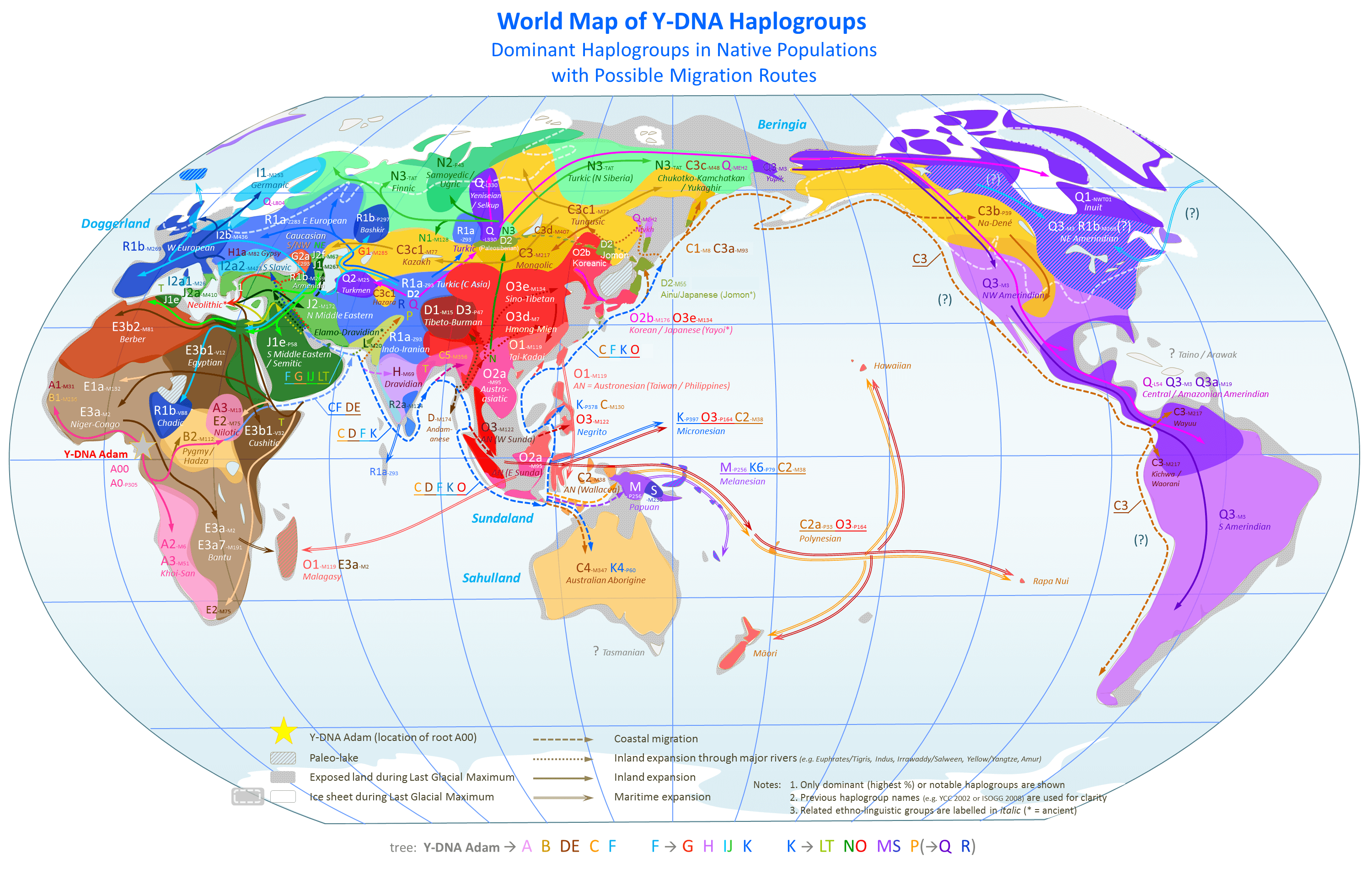
Origin and Migrations of Haplogroup J-M92
Your paternal line stems from a branch of haplogroup J-M92 that emerged approximately 42,900 years ago in West Asia.
Population Distribution
Where your haplogroup is found today and its connections to ancient migrations
Geographic Presence
Your paternal haplogroup J-M92 has spread across various regions through thousands of years of human migration. Its distribution today reflects both ancient population movements and more recent demographic changes.
- Middle Eastern populations (e.g., in Saudi Arabia, Yemen, Iraq, and Levant)
- North Africans (e.g., in Egypt, Libya, and Morocco)
- Some populations in the Caucasus (e.g., Armenians, Georgians)
Frequency Statistics
Based on our database of genetic samples, your haplogroup appears with the following frequency:
- 1 in 525 of our users share your haplogroup assignment
- Your haplogroup emerged approximately 10,800 years ago
- This represents a continuous paternal lineage spanning countless generations
Modern Connections
People who carry your paternal haplogroup today are connected through an unbroken chain of fathers and sons stretching back thousands of years. This shared lineage transcends modern national boundaries and cultural divisions.
Provider Compatibility Information
AncestryDNA is no longer providing MTDNA/YDNA data for tests taken since January 2026. Additionally, MyHeritage is no longer providing YDNA data for RAW files downloaded since January 2026 (note: MyHeritage never provided mtDNA data, only YDNA).
For accurate Y-DNA analysis, consider using data from compatible providers such as 23andMe, LivingDNA, ADNtro, TellMeGen, or ordering a dedicated Y-DNA test kit.
The Science Behind Your Results
Understanding the methodology and answering common questions
Technical Details & FAQ
Understanding the science behind your Y-DNA haplogroup prediction
SNP Analysis
Your haplogroup is determined by analyzing Single Nucleotide Polymorphisms (SNPs) on your Y chromosome, comparing them against known haplogroup-defining mutations.
ISOGG Classification
We use the International Society of Genetic Genealogy (ISOGG) Y-DNA Haplogroup Tree, the authoritative standard for paternal lineage classification.
Mutation Rate Analysis
Y-DNA accumulates mutations at a known rate, allowing scientists to estimate when haplogroups diverged. This molecular clock provides the timeline of your lineage.
Reference Population Data
Your haplogroup distribution is mapped using extensive population studies from peer-reviewed literature and our own user database.
Analyze Y chromosome SNPs from your DNA data
Compare patterns against ISOGG haplogroup tree
Determine phylogenetic placement and confidence
Provide context with historical population data
Y-DNA haplogroup prediction involves several sophisticated steps:
- SNP Analysis: Analysis of Y chromosome Single Nucleotide Polymorphisms (SNPs)
- Haplogroup Comparison: Comparison with known haplogroup-defining mutations
- Phylogenetic Analysis: Phylogenetic tree analysis to determine your specific paternal lineage
- Statistical Validation: Statistical validation of the prediction confidence
Prediction confidence is influenced by several key factors:
- SNP Coverage: Number of available Y-DNA SNPs in your data
- Data Quality: Quality of detected variants and sequencing accuracy
- Haplogroup Coverage: Coverage of haplogroup-defining SNPs
- Reference Data: Quality and completeness of reference databases
Your Confidence Level: High confidence indicates comprehensive SNP coverage and clear haplogroup assignment.
Population frequencies are calculated using:
- User Database: Current user database statistics
- Regional Studies: Regional population studies
- Academic Research: Published academic research data
Your Result: 1 in 525 users share your haplogroup assignment.
Testing providers have discontinued YDNA data provision:
As of January 2026, AncestryDNA is no longer providing MTDNA and YDNA haplogroup data in their raw DNA files for tests taken since this date. Additionally, MyHeritage is no longer providing YDNA data for RAW files downloaded since January 2026 (note: MyHeritage never provided mtDNA data, only YDNA). This means:
- AncestryDNA tests before January 2026: May still contain mtDNA/YDNA data if downloaded before the change
- AncestryDNA tests since January 2026: Will not contain Y-chromosome DNA markers
- MyHeritage RAW files since January 2026: Will not contain YDNA data (MyHeritage never provided mtDNA data)
- Alternative options: Consider using data from 23andMe, LivingDNA, ADNtro, TellMeGen, or ordering a dedicated Y-DNA test from FamilyTreeDNA
If you tested with AncestryDNA or MyHeritage recently and need Y-DNA analysis, we recommend uploading data from another provider or ordering a dedicated Y-DNA test kit.
Understanding Your Y-DNA Analysis
Learn how to read and interpret your Y-DNA SNP report
Y-DNA SNP Markers
Y-DNA haplogroups are determined by analyzing Single Nucleotide Polymorphisms (SNPs) on the Y chromosome. These mutations occur at specific positions and are passed down from father to son, creating a unique genetic signature for each paternal lineage.
ISOGG Classification System
The International Society of Genetic Genealogy (ISOGG) maintains the authoritative Y-DNA Haplogroup Tree, which classifies paternal lineages based on SNP mutations.
How ISOGG Classification Works
- Major Haplogroups: Letter designations (A, B, C, D, E, F, G, H, I, J, K, L, M, N, O, P, Q, R, S, T) represent the major branches
- Subclades: Numbers and letters following the major haplogroup indicate progressively more specific branches
- SNP Naming: Each branch is defined by specific SNP mutations (e.g., M269 defines R1b1a1a2)
- Terminal SNP: The most specific SNP in your Y-DNA determines your terminal haplogroup
Example: Your Haplogroup J-M92
Your haplogroup J-M92 is classified using the ISOGG system. The full ISOGG notation is J2a1a1a2b2a1a, which provides the complete path from Y-Adam to your specific branch.
Your Terminal SNP
Your terminal haplogroup is defined by the SNP marker J-M92:
This SNP distinguishes your paternal lineage from other branches of the human paternal tree.
Supporting SNP Markers
The SNP markers below are the specific mutations detected in your uploaded file that support your assigned haplogroup branch. The list starts with your terminal SNP when it was detected, then continues with the other matching markers from that branch back toward older branches of the same paternal line. These are SNP names (not rsIDs); rsIDs are not used or stored for Y-DNA haplogroup assignment, since the analysis compares genomic positions directly.
This marker evidence is provided for informational purposes to help you understand how your haplogroup was determined. It is not medical or diagnostic information.
Using SNPs in Genealogy
When comparing your Y-DNA results to those of others in Group Projects, you can see what similarities and differences you might have with other members. This helps you pinpoint where your mutations may have occurred and how other members fit within your family tree.
Understanding SNP Differences
SNP differences between individuals indicate when their paternal lines diverged. The more SNPs you share, the more recently your paternal ancestors shared a common ancestor.
AI-Powered Analysis
Get personalized insights about your paternal lineage
AI ASSISTANT by DNAGENICS
This AI analysis is limited to your Y-DNA haplogroup information only. No additional data or personal information is included in this analysis. Haplogroup lineage reflects a shared paternal-line branch, not proof of direct descent from any specific named ancient individual.
AI-generated interpretation of genetic similarity, not proof of ancestry. Informational only, not professional advice.
Read full notice
Before you continue: the analysis you are about to generate is produced by an AI model. AI output can be incomplete, inaccurate, or simply wrong. It describes statistical genetic similarity to reference populations and is not proof of ancestry, ethnicity, identity, or descent. It is provided for informational and educational purposes only, and is not medical, diagnostic, genealogical, legal, or other professional advice. Do not rely on it to make health, financial, legal, or family decisions. To the fullest extent permitted by applicable law, DNA Genics, S.L. accepts no liability for any loss or decision arising from your use of this AI output.
Try these questions:
Cultures Linked to Your Haplogroup
Ancient cultures associated with your paternal lineage based on archaeological DNA evidence
Cultural Heritage
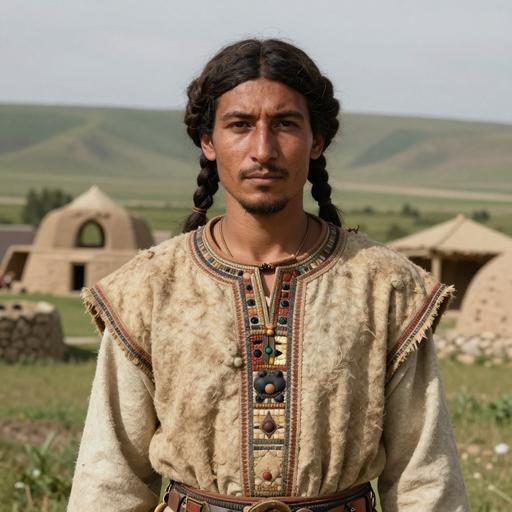
These ancient cultures have been linked to your haplogroup J-M92 based on matching ancient DNA samples from archaeological excavations.
Primary Cultures Exact Matches
Ancient individuals with your exact haplogroup assignment belonged to these cultures.




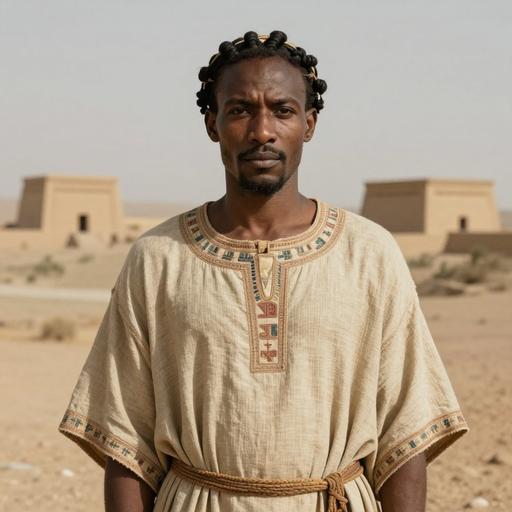

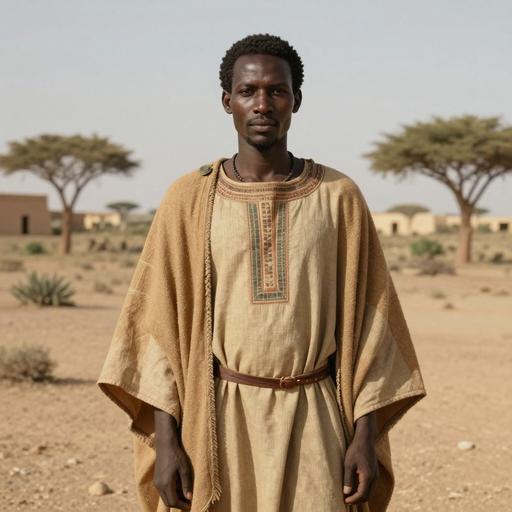

Related Cultures Subclade Route
Ancient individuals with closely related subclades of your haplogroup belonged to these cultures, representing your estimated migration path.

Ancient Samples Matching Your Haplogroup
Discover ancient individuals from archaeological sites who share your paternal lineage
Ancient DNA Matches
These ancient individuals from archaeological excavations share your Y-DNA haplogroup or closely related subclades. Matches are ranked by haplogroup similarity: exact matches first, followed by same base haplogroup, then close branches.
| Portrait | Sample | Country | Era | Date | Culture | Y-DNA | Match |
|---|---|---|---|---|---|---|---|
|
#1
|
|
Georgia | Kura-Araxes Culture - Georgia - Doghlauri (Shida Kartli, Kareli) | 3017-2888 calBCE (4321±32 BP, Ua-65810) | Georgia_Doghlauri_EBA_KuraAraxes | J-M92 |
Exact |
|
#2
|
|
Israel | Middle to Late Bronze Age Israel - Israel - Megiddo. Jezreel Valley | 1516-1436 calBCE (3220±20 BP, OS-139223) | Israel_MLBA | J-M92 |
Exact |
|
#3
|
|
Israel | Middle to Late Bronze Age Israel - Israel - Megiddo. Jezreel Valley | 1497-1302 calBCE (3135±30 BP, Poz-83433) | Israel_MLBA | J-M92 |
Exact |
|
|
|
Austria | CSK026 | 600-800 CE | Austria_Avar | J-M92 |
Exact |
|
|
|
Italy | Late Antique Sardinia, Italy - Italy - Sardinia. Sant'Elia Cape. Grotta Colombi | 607 CE - 660 CE | Byzantine Empire | J-M92 |
Exact |
|
|
|
Sudan | Early Christian Era in Sudan - Sudan - Nubia. Kulubnarti. Cemetery S | 669-820 calCE (1270±22 BP, UGAMS-34406) | Sudan_Kulubnarti21S46_KulubnartiS_Christian | J-M92 |
Exact |
|
|
|
Sudan | Early Christian Era in Sudan - Sudan - Nubia. Kulubnarti. Cemetery S | 706-884 calCE (1220±22 BP, UGAMS-34404) | Sudan_Kulubnarti21S46_KulubnartiS_Christian | J-M92 |
Exact |
|
|
|
Sudan | Early Christian Era in Sudan - Sudan - Nubia. Kulubnarti. Cemetery S | 750-900 CE | Sudan_KulubnartiS_Christian | J-M92 |
Exact |
|
|
|
Poland | Iron Age Poznań Culture - Poland - Poznań (Greater Poland Province, Poznań) | 1000-1200 CE | Poland_IA | CTS4230 |
Exact |
|
|
|
Armenia | Early Iron Age Armenia - Armenia - Bragdzor cemetery | 950-750 BCE | Armenia_Brardzryal_IA_Urartian | J-Z504 |
Subclade |
Understanding Match Types
Additional Resources
Research papers and publications related to your haplogroup
No Publications Available
Research publications related to your haplogroup will appear here when matching ancient DNA samples with linked publications are found.
Key Takeaways
What your paternal haplogroup means for you
Your haplogroup J-M92 connects you to a specific branch of the human paternal family tree that emerged approximately 10,800 years ago. This represents a direct genetic link to your paternal ancestors and their journey through human history.
What This Means
- Paternal Lineage: You carry genetic markers from your direct paternal line stretching back thousands of years
- Population History: Your haplogroup reflects the migration patterns of your paternal ancestors
- Genetic Diversity: Your specific haplogroup represents a unique branch of human genetic diversity
- Scientific Significance: You're part of ongoing research reshaping our understanding of human evolution
- One Lineage: Y-DNA represents your direct paternal line only, not your complete ancestry