


Success Traits
Cognitive patterns and potential
Discover what your genetics reveal about your success traits. These insights reflect tendencies, not certainties — possibilities shaped by both biology and life experience.
What Are Success Traits Traits?
Explore how your genetic variations influence characteristics related to success traits.
Genetic Markers
Each trait connects to specific genetic variants identified through research
Scientific Evidence
Results backed by peer-reviewed studies with transparent quality ratings
Personal Context
Your results compared to population averages for meaningful perspective
Clear Explanations
Each trait explained in accessible language with supporting details
Key Insights
Key Process: Key traits include hard work (dedicated effort toward goals), determination (steadfast pursuit despite obstacles), and adaptability (flexible response to change).
Practical Applications: Self‑discipline ensures consistent progress, while creativity fosters innovation in problem‑solving.
Your Traits Profile
A summary of your genetic tendencies across 7 traits

Research summary, not an individual result

Research summary, not an individual result

Research summary, not an individual result

Genetic association, tap to view

Genetic association, tap to view

Genetic association, tap to view
Lower verbal declarative memory tendency
How to Read Your Traits
Understanding genetic trait reports requires context. Here's what to keep in mind.
Genetics Influence, Not Determine
Your genes provide tendencies and inclinations, not fixed outcomes. Most traits emerge from complex interactions between multiple genes and life experiences.
Environment Matters Equally
Lifestyle, environment, and personal choices play crucial roles in how genetic tendencies express themselves. Biology provides possibilities; life shapes outcomes.
Results Are Associations
These findings represent statistical associations observed in research populations. They indicate tendencies and likelihoods, not certainties about any individual.
Science Continues to Evolve
Genetic research advances constantly. Results may be refined as new studies emerge. We update our database regularly to reflect current understanding.
These reports are for educational and informational purposes. They do not constitute medical advice or diagnosis. Consult healthcare professionals for medical decisions.
Your Success Traits Traits
Click on any trait to view detailed analysis and scientific information
7 traits found
Showing: Success Traits
Genetic Associations Studied In Empathic-Response Research
Presented as population-level genetic research, not an individual Low/High result. Open the report for the full evidence summary.
GWAS work has identified variants linked to self-reported empathy, with some overlap with autism-related traits and other social cognition measures.
This result reflects research-level variation in self-reported empathy and is not a clinical or social skills test.
Upbringing, life experience, mood, mental health, relationships, and current context all strongly shape how empathy actually shows up.
Presented as population-level genetic research, not an individual Low/High result. Open the report for the full evidence summary.
GWAS work has identified some variants linked to phoneme awareness and other reading-related traits.
This result reflects research-level variation in reading-related cognition and is not a reading assessment.
Early language exposure, education, hearing, and overall reading practice strongly affect actual phoneme awareness.
Presented as population-level genetic research, not an individual Low/High result. Open the report for the full evidence summary.
GWAS work has identified variants linked to RAN tasks, with overlap with reading and processing-speed traits.
This result reflects research-level variation in reading-related cognition and is not a reading test.
Education, practice, attention, sleep, and overall cognitive health strongly shape actual RAN performance.
Processing-Speed Tendency
Show genetic association
Genetic Association
Average genetic tendency
Weak, population-level genetic association, not a personal diagnosis.
GWAS work has identified variants linked to processing speed, with overlap with general cognitive ability.
This result reflects research-level variation in cognitive biology and is not a clinical or academic test.
Sleep, attention, age, alcohol, medications, mood, and overall health all strongly affect actual processing speed.
Stress-Response Tendency
The Val and Met variants in COMT have been associated with subtle differences in cognitive style under stress, with no single profile being globally better or worse.
This result reflects research-level variation in dopamine biology and is not a personality test or a performance prediction.
Stress, sleep, mood, training, task type, and overall health all strongly affect how this biology actually shows up in behavior.
Thrill-Seeking Tendency
Show genetic association
Genetic Association
Average genetic tendency
Weak, population-level genetic association, not a personal diagnosis.
GWAS work has identified variants linked to self-reported adventurousness, with overlap with personality traits like openness and risk tolerance.
This result reflects research-level variation in personality biology and is not a personality test.
Age, mood, peer group, life stage, and current context all strongly shape actual thrill-seeking behavior.
Verbal Declarative Memory
Your Result
Lower verbal declarative memory tendency
GWAS work has identified variants linked to memory performance in older adults, including signals near genes involved in synaptic biology.
This result reflects research-level variation in memory biology and is not a cognitive test or a diagnosis of memory problems.
Sleep, stress, age, education, mood, attention, alcohol, medications, and overall health all strongly shape actual memory performance.

Ankle Injury Susceptibility
Your Result
Higher ankle injury susceptibility
GWAS work has identified variants near collagen and elastin genes (such as COL1A1 and COL5A1) linked to ankle injury susceptibility.
This result reflects research-level variation in connective tissue biology and is not an injury-risk diagnosis.
Sport type, footwear, surface, prior injury, balance training, fatigue, and warm-up have a major impact on actual ankle injury risk.

Your Result
Average genetic tendency
Variants in taste receptor genes and reward-related genes have been studied for their links to artificially sweetened beverage preference.
This result reflects research-level variation in beverage preference and is not a recommendation about diet drinks.
Cuisine, weight goals, perceived taste, food environment, and overall dietary pattern strongly shape real intake.

Astigmatism Susceptibility
Your Result
Lower astigmatism susceptibility tendency
GWAS work has identified variants linked to corneal shape and astigmatism susceptibility.
This result reflects research-level variation in eye biology and is not an eye exam or a vision prescription.
Eye growth, age, and other refractive conditions also influence actual astigmatism.

Your Result
Average genetic tendency
Variants in the TAS2R38 bitter-taste receptor gene are the main inherited factor in PROP perception and influence sensitivity to many bitter foods.
This result reflects research from a specific clinical population studying bitter taste, not a general dietary tolerance measure.
Saliva composition, age, smoking, oral health, and cuisine exposure also affect how strongly bitter foods feel in everyday eating.
Your Result
Average genetic tendency
GWAS work has identified variants near taste receptor and alcohol-metabolism genes that influence preference for bitter alcoholic beverages.
This result reflects research-level variation in beverage preference and is not a recommendation about alcohol intake.
Cuisine, social context, age of first exposure, overall taste sensitivity, and other lifestyle factors strongly shape real consumption.

Your Result
Higher bitter beverage consumption tendency
Variants in bitter taste receptor genes (such as TAS2R38) influence sensitivity to bitter compounds and can shape beverage preference.
This result reflects research-level variation in taste biology and is not a recommended intake.
Cuisine, age, exposure history, and other taste preferences also strongly shape what bitter beverages people enjoy.
Bone Mineral Density
Your Result
Average genetic tendency
Hundreds of common variants near genes for bone formation and remodeling (such as WNT, RANK, and ESR pathways) have been linked to BMD.
This result reflects research-level variation in bone biology and is not a DEXA scan or a clinical fracture-risk assessment.
Calcium and vitamin D, weight-bearing exercise, weight, hormones, smoking, alcohol, age, and medications strongly influence actual bone density.

Bone Strength
Your Result
Average genetic tendency
GWAS work has identified variants linked to bone density, bone geometry, and collagen biology that affect fracture risk.
This result reflects research-level variation in bone biology and is not a clinical fracture-risk assessment.
Training load, calcium and vitamin D, hormones, body weight, footwear, surface, and recovery also strongly influence actual stress-fracture risk.
Bunions Susceptibility
Your Result
Average genetic tendency
GWAS work has identified variants linked to bunion susceptibility, often near genes involved in foot development.
This result reflects research-level variation in foot biology and is not a clinical diagnosis.
Footwear, foot biomechanics, body weight, age, and prior injuries all strongly affect actual bunion development.

Calcium Levels
Your Result
Average genetic tendency
GWAS studies of serum calcium have identified variants in genes that regulate calcium absorption, parathyroid signaling, and vitamin D metabolism.
This result reflects research-level variation in calcium-related biology and is not a serum calcium reading or a recommendation about supplements.
Diet, vitamin D status, age, hormones, kidney function, medications, and physical activity also strongly shape real calcium balance and bone health.

Your Result
Higher coffee consumption tendency
GWAS work has identified variants in CYP1A2, AHR, and other caffeine-related genes linked to differences in habitual coffee intake.
This result reflects research-level variation in coffee preference and is not a recommended daily intake.
Cuisine, work schedule, sleep needs, sensitivity, social context, and personal taste also strongly shape coffee intake.
Embarrassment-Recovery Tendency
Show genetic association
Genetic Association
Average genetic tendency
Weak, population-level genetic association, not a personal diagnosis.
GWAS work has identified variants linked to this self-report, with overlap with neuroticism and rumination traits.
This result reflects research-level variation in mood-related traits and is not a clinical assessment.
Personality, mental health, social context, and prior experiences strongly shape actual responses to embarrassment.

Environmental-Stress-Response Tendency
Show genetic association
Genetic Association
Average genetic tendency
Weak, population-level genetic association, not a personal diagnosis.
GWAS work has identified some variants linked to stress sensitivity, with overlap with neuroticism and depression traits.
This result reflects research-level variation in stress-related traits and is not a clinical assessment.
Type and severity of stressors, social support, prior experience, mental health, and coping strategies strongly shape actual responses.
Fed-Up-Feeling Tendency
Show genetic association
Genetic Association
Average genetic tendency
Weak, population-level genetic association, not a personal diagnosis.
GWAS work has identified variants linked to this self-report, with overlap with neuroticism and depression measures.
This result reflects research-level variation in mood-related traits and is not a clinical assessment.
Sleep, stress, life events, relationships, mental health support, and overall context strongly shape day-to-day mood.
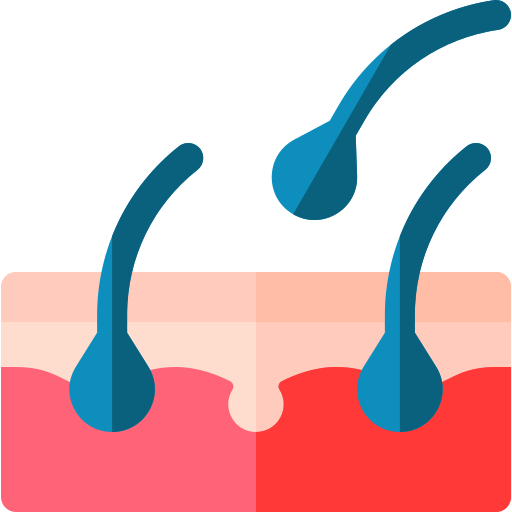
Frontal Fibrosing Alopecia Susceptibility
Your Result
Average genetic tendency
GWAS work has identified variants near HLA and immune genes (such as CYP1B1) linked to frontal fibrosing alopecia.
This result reflects research-level variation in this specific form of hair loss and is not a clinical diagnosis.
Hormones, environmental triggers, skin care, and other immune conditions also influence whether the condition develops.

Presented as population-level genetic research, not an individual Low/High result. Open the report for the full evidence summary.
GWAS work has identified variants linked to self-reported anxiety and tension, with overlap with broader neuroticism, depression, and well-being traits.
This result reflects research-level variation in personality-related traits and is not a clinical anxiety diagnosis.
Stress, sleep, life events, relationships, mental health support, and overall context strongly shape how anxiety actually appears.
Genetic Associations Studied In Empathic-Response Research
Presented as population-level genetic research, not an individual Low/High result. Open the report for the full evidence summary.
GWAS work has identified variants linked to self-reported empathy, with some overlap with autism-related traits and other social cognition measures.
This result reflects research-level variation in self-reported empathy and is not a clinical or social skills test.
Upbringing, life experience, mood, mental health, relationships, and current context all strongly shape how empathy actually shows up.

Presented as population-level genetic research, not an individual Low/High result. Open the report for the full evidence summary.
GWAS work has examined variants overlapping with addiction biology and reward circuit genes (such as DRD2, FTO).
This result reflects research-level variation linked to food addiction traits and is not a clinical diagnosis.
Food environment, stress, sleep, mood, learned habits, hormones, and access to support all strongly shape eating behavior in real life.

Presented as population-level genetic research, not an individual Low/High result. Open the report for the full evidence summary.
GWAS work has identified variants linked to self-reported mood swings, with overlap with neuroticism and depression-related traits.
This result reflects research-level variation in mood-related traits and is not a clinical assessment.
Sleep, stress, hormones, life events, relationships, mental health, and overall well-being strongly shape mood swings in practice.
Presented as population-level genetic research, not an individual Low/High result. Open the report for the full evidence summary.
GWAS work has identified some variants linked to phoneme awareness and other reading-related traits.
This result reflects research-level variation in reading-related cognition and is not a reading assessment.
Early language exposure, education, hearing, and overall reading practice strongly affect actual phoneme awareness.
Presented as population-level genetic research, not an individual Low/High result. Open the report for the full evidence summary.
GWAS work has identified variants linked to RAN tasks, with overlap with reading and processing-speed traits.
This result reflects research-level variation in reading-related cognition and is not a reading test.
Education, practice, attention, sleep, and overall cognitive health strongly shape actual RAN performance.

Presented as population-level genetic research, not an individual Low/High result. Open the report for the full evidence summary.
GWAS work has identified some variants linked to this behavior, often overlapping with personality and social traits.
This result reflects research-level variation in social behavior and is not a value judgment about religious participation.
Family upbringing, culture, life events, and personal beliefs strongly shape this behavior.
Presented as population-level genetic research, not an individual Low/High result. Open the report for the full evidence summary.
GWAS work has identified variants near MEIS1, BTBD9, and PTPRD that are robustly linked to RLS.
This result reflects research-level variation in RLS biology and is not a diagnosis.
Iron status, kidney function, pregnancy, certain medications, and underlying conditions also affect whether RLS symptoms appear.
Presented as population-level genetic research, not an individual Low/High result. Open the report for the full evidence summary.
Variants in MC1R, ASIP, TYR, and other pigmentation genes are strongly linked to skin sensitivity, hair color, and freckling.
This result reflects research-level variation in skin biology and is not a measurement of safe sun exposure for any individual.
Time of day, latitude, altitude, water reflection, sunscreen use, clothing, and prior tanning all strongly affect actual sunburn risk.

Gluten Tolerance
Your Result
Average genetic tendency
Most genetic signal in this area still comes from celiac-associated HLA variants, but additional variants tied to gut barrier and immune signaling have been studied.
This result reflects research-level variation and is not a diagnostic test for celiac disease, wheat allergy, or non-celiac gluten sensitivity.
Gut microbiome, FODMAP content, fiber intake, stress, infections, and other dietary components also shape how people feel after eating gluten.

Guilt-Feeling Tendency
Show genetic association
Genetic Association
Average genetic tendency
Weak, population-level genetic association, not a personal diagnosis.
GWAS work has identified variants linked to this self-report, with overlap with neuroticism and depression measures.
This result reflects research-level variation in mood-related traits and is not a clinical assessment.
Cultural background, upbringing, life events, mental health, and current context strongly shape feelings of guilt.

Help-Seeking From A Doctor
Your Result
Average genetic tendency
GWAS work has identified some variants linked to help-seeking behavior, with overlap with personality and mental health traits.
This result reflects research-level variation in health-related behavior and is not a clinical recommendation.
Access to care, stigma, culture, financial situation, severity of symptoms, and prior experience with healthcare strongly shape actual help-seeking.

Hurt-Feeling Tendency
Show genetic association
Genetic Association
Average genetic tendency
Weak, population-level genetic association, not a personal diagnosis.
GWAS work has identified variants linked to this self-report, with overlap with neuroticism.
This result reflects research-level variation in mood-related traits and is not a clinical assessment.
Relationships, life experience, mental health, and current context strongly shape how often someone feels hurt.

Iron Levels
Your Result
Average genetic tendency
Variants in HFE and TMPRSS6, among others, have been linked to differences in iron absorption, transport, and storage.
This result reflects research-level variation in iron-related biology and is not a blood test or a recommendation for iron supplementation.
Dietary iron intake, blood loss (including menstruation), pregnancy, inflammation, GI health, and medications also strongly influence real iron status.

Irritability Tendency
Show genetic association
Genetic Association
Average genetic tendency
Weak, population-level genetic association, not a personal diagnosis.
GWAS work has identified variants linked to self-reported irritability, with overlap with neuroticism and other mood-related traits.
This result reflects research-level variation in mood-related traits and is not a clinical assessment.
Sleep, stress, hunger, life events, mental health, and overall context strongly shape day-to-day irritability.

Lead Levels
Your Result
Average genetic tendency
Variants in genes that affect metal transport and detoxification (such as ALAD) have been linked to small differences in measured lead burden between people with similar exposure.
This result reflects research-level variation in how the body handles lead and is not a measurement of current exposure.
Environmental exposure (old paint, water pipes, contaminated soil, occupational settings) is by far the largest determinant of actual lead burden.

Left-Handedness
Your Result
Average genetic tendency
GWAS work has identified variants linked to left-handedness, including signals near genes involved in microtubule biology and brain development.
This result reflects research-level variation in handedness biology and is not direct observation of hand preference.
Cultural pressures, training, brain injury, and developmental factors also affect the hand actually used for various tasks.

Life Satisfaction
Your Result
Higher life satisfaction tendency
GWAS work has identified variants linked to life satisfaction, with overlap with happiness, personality, and mental health traits.
This result reflects research-level variation in well-being-related traits and is not a clinical assessment.
Relationships, work, finances, health, and life circumstances all strongly shape actual life satisfaction.

Low-Mood Tendency
Show genetic association
Genetic Association
Average genetic tendency
Weak, population-level genetic association, not a personal diagnosis.
GWAS work has identified variants linked to this self-report, with overlap with neuroticism and depression.
This result reflects research-level variation in mood-related traits and is not a clinical assessment.
Sleep, stress, life events, mental health support, and current context strongly shape day-to-day mood.

Mosquito Bite Itch Susceptibility
Your Result
Average genetic tendency
GWAS work has identified variants near immune and skin biology genes linked to itch intensity.
This result reflects research-level variation in skin and immune biology and is not a clinical evaluation.
Mosquito species, prior exposure, body location, scratching, and use of antihistamines all affect how strongly bites itch.

Motion Sickness Resistance
Your Result
Average genetic tendency
GWAS work has identified more than 30 variants linked to motion sickness susceptibility, with some overlap with migraine and balance traits.
This result reflects research-level variation in motion-sickness biology and is not a clinical evaluation.
Age, pregnancy, type of motion (car, sea, air), reading or screens during travel, dehydration, and medications all strongly affect actual motion sickness.

Nervousness Tendency
Show genetic association
Genetic Association
Average genetic tendency
Weak, population-level genetic association, not a personal diagnosis.
GWAS work has identified variants linked to this self-report, with overlap with anxiety and neuroticism.
This result reflects research-level variation in mood-related traits and is not a clinical anxiety assessment.
Stress, sleep, life events, mental health support, and current context strongly shape how nervous someone feels.
Omega-3 (ALA) Processing
Your Result
Higher omega-3 (ALA) processing tendency
Variants in the FADS gene cluster influence the activity of desaturase enzymes that perform this conversion, which differs across populations.
This result reflects research-level variation in fatty acid processing and is not a measurement of current omega-3 status or a supplement recommendation.
Dietary intake of plant and marine omega-3 sources is by far the strongest factor for actual omega-3 levels.
Omega-3 (DHA) Processing
Your Result
Average genetic tendency
Variants in the FADS gene cluster, which controls fatty acid desaturation, affect plasma DHA levels and the conversion of plant-based omega-3 into DHA.
This result reflects research-level variation in DHA processing and is not a measurement of current DHA levels or a supplement recommendation.
Fish and algae consumption are the dominant sources of DHA in real life, and overall diet and life stage (pregnancy, breastfeeding) also matter.
Omega-3 (DPA) Processing
Your Result
Average genetic tendency
Variants in the FADS gene cluster influence the desaturase enzymes that affect plasma DPA levels.
This result reflects research-level variation in DPA processing and is not a clinical measurement or a supplement recommendation.
Dietary marine omega-3 intake, broader diet quality, and life stage also play a large role in actual DPA status.
Omega-3 (EPA) Processing
Your Result
Average genetic tendency
Variants in the FADS gene cluster affect how efficiently shorter-chain fatty acids are converted to EPA, leading to differences in plasma EPA across people.
This result reflects research-level variation in EPA processing and is not a clinical measurement or a treatment plan.
Fish intake, supplements, and overall diet drive most of the real-world variation in EPA levels.

Phosphorus Levels
Your Result
Higher phosphorus levels
GWAS work has identified variants near genes regulating phosphorus absorption and renal handling that contribute to small differences in serum phosphorus.
This result reflects research-level variation in phosphorus biology and is not a serum phosphorus test or a recommendation about intake.
Diet, kidney function, vitamin D status, parathyroid hormone, medications, and age also strongly influence actual phosphorus levels.

Positive Affect
Your Result
Higher positive affect tendency
GWAS work has identified variants linked to positive affect, with overlap with well-being and personality traits.
This result reflects research-level variation in mood-related traits and is not a clinical assessment.
Sleep, relationships, life events, mental health, and overall context strongly shape day-to-day positive emotion.
Processing-Speed Tendency
Show genetic association
Genetic Association
Average genetic tendency
Weak, population-level genetic association, not a personal diagnosis.
GWAS work has identified variants linked to processing speed, with overlap with general cognitive ability.
This result reflects research-level variation in cognitive biology and is not a clinical or academic test.
Sleep, attention, age, alcohol, medications, mood, and overall health all strongly affect actual processing speed.
Your Result
Average genetic tendency
GWAS work has identified more than 60 variants linked to psoriasis, including strong signals in the HLA region (HLA-C*06:02) and in IL-23 signaling.
This result reflects research-level variation in immune biology and is not a clinical diagnosis of psoriasis.
Triggers (skin trauma, infections, stress, smoking, certain medications) and other autoimmune conditions also affect actual psoriasis course.

Your Result
Average genetic tendency
GWAS work has identified variants linked to self-reported physical activity, with overlap with other lifestyle traits.
This result reflects research-level variation in activity-related behavior and is not an exercise recommendation.
Schedule, finances, social environment, health, motivation, and access to facilities strongly shape actual gym attendance.
Your Result
Higher rosacea susceptibility tendency
GWAS work has identified variants near HLA, IL-13, and other immune-related genes linked to rosacea susceptibility and symptom severity.
This result reflects research-level variation in skin biology and is not a clinical diagnosis.
Triggers (sun, heat, alcohol, spicy food, stress) and skin care strongly affect actual rosacea symptoms.
Your Result
Average genetic tendency
Variants in taste-receptor and sodium-handling genes have been linked to how intense salty flavors feel, which can influence salt preference.
This result reflects research from a specific clinical population studying taste perception, not blood pressure salt sensitivity in the cardiovascular sense.
Salt intake habits, age, medications, kidney function, and overall diet also influence both how salt is perceived and how it affects the body.

Scar Healing Quality
Your Result
Average genetic tendency
GWAS work has identified variants linked to keloid susceptibility, with notably higher prevalence in people of African and Asian ancestry.
This result reflects research-level variation in scar biology and is not a diagnosis or a treatment recommendation.
Wound location (chest, shoulders, earlobes), wound depth, age, infections, and prior keloid history also play a large role.
Selenium Levels
Your Result
Average genetic tendency
Variants in SEPP1 and other selenium-handling genes have been linked to small differences in serum selenium between people with similar diets.
This result reflects research-level variation in selenium biology and is not a measurement of current selenium status or a supplement recommendation.
Geographic soil selenium, diet (Brazil nuts, seafood, organ meats), and absorption all play a large role in real selenium status.

Skin Youthfulness
Your Result
Average genetic tendency
GWAS work has identified variants near pigmentation, collagen, and DNA-repair genes linked to differences in visible skin aging.
This result reflects research-level variation in skin-aging traits and is not a forecast of how youthful skin will look.
Sun exposure, smoking, sleep, hydration, skincare, hormones, and overall health are major drivers of how skin actually ages over time.
Sleep Duration
Your Result
Average genetic tendency
GWAS work has identified variants in genes that influence circadian rhythm and sleep regulation that contribute to differences in habitual sleep length.
This result reflects research-level variation in sleep biology and is not a recommended sleep amount for any individual.
Work schedule, family demands, stress, light exposure, caffeine, screen use, and health all influence how much someone actually sleeps.
Sleep Quality
Your Result
Average genetic tendency
GWAS work has identified variants linked to insomnia traits, sleep continuity, and arousal regulation.
This result reflects research-level variation in sleep biology and is not a sleep study or a clinical diagnosis of insomnia.
Sleep environment, schedule consistency, stress, caffeine, alcohol, screens, exercise, and underlying health also strongly affect real sleep quality.
Smell Sensitivity
Your Result
Average genetic tendency
GWAS work has identified variants in olfactory receptor genes that influence detection thresholds for specific compounds.
This result reflects research-level variation in olfactory biology and is not a clinical smell test.
Age, smoking, head injury, recent illness (including viral infections), nasal health, and exposure history all strongly affect real smell sensitivity.

Speeding-Propensity Tendency
Show genetic association
Genetic Association
Average genetic tendency
Weak, population-level genetic association, not a personal diagnosis.
GWAS work has identified variants linked to this behavior, with overlap with risk tolerance and impulsivity traits.
This result reflects research-level variation in behavior and is not a driving assessment.
Personality, mood, peers, traffic conditions, vehicle, and life context all strongly shape actual driving behavior.

Strabismus Susceptibility
Your Result
Higher strabismus susceptibility tendency
GWAS work has identified variants linked to strabismus susceptibility, with some overlap with eye development genes.
This result reflects research-level variation in eye biology and is not a clinical diagnosis or vision evaluation.
Early childhood eye care, vision development, and treatment of refractive errors all strongly affect actual outcomes.
Stress-Response Tendency
The Val and Met variants in COMT have been associated with subtle differences in cognitive style under stress, with no single profile being globally better or worse.
This result reflects research-level variation in dopamine biology and is not a personality test or a performance prediction.
Stress, sleep, mood, training, task type, and overall health all strongly affect how this biology actually shows up in behavior.
Sweat Tendency
Your Result
Average genetic tendency
Genetic research has identified some variants linked to focal hyperhidrosis, with family history common in primary cases.
This result reflects research-level variation in sweat biology and is not a clinical diagnosis.
Heat, exertion, stress, hormones, weight, medications, and underlying medical conditions all strongly affect actual sweating.

Your Result
Higher tea consumption tendency
Variants near caffeine-metabolism and taste-related genes have been examined for their links to tea preference.
This result reflects research-level variation in beverage preference and is not a recommended intake.
Cuisine, family habits, age, time of day, and personal taste all strongly shape actual tea consumption.

Tension Tendency
Show genetic association
Genetic Association
Average genetic tendency
Weak, population-level genetic association, not a personal diagnosis.
GWAS work has identified variants linked to this self-report, with overlap with anxiety and neuroticism.
This result reflects research-level variation in mood-related traits and is not a clinical assessment.
Stress, sleep, life events, mental health support, and current context strongly shape how tense someone feels.
Thrill-Seeking Tendency
Show genetic association
Genetic Association
Average genetic tendency
Weak, population-level genetic association, not a personal diagnosis.
GWAS work has identified variants linked to self-reported adventurousness, with overlap with personality traits like openness and risk tolerance.
This result reflects research-level variation in personality biology and is not a personality test.
Age, mood, peer group, life stage, and current context all strongly shape actual thrill-seeking behavior.

Triglyceride Levels
Your Result
Average genetic tendency
GWAS work has identified many variants influencing triglyceride levels, including those in APOA5, LPL, and ANGPTL3.
This result reflects research-level variation in triglyceride biology and is not a lipid panel or treatment plan.
Recent meals, alcohol, weight, activity, blood sugar, and medications strongly affect actual triglyceride values.
Your Result
Average genetic tendency
GWAS work has identified variants near genes involved in vein wall structure and venous valve function (such as CASZ1 and EBF1) linked to varicose vein risk.
This result reflects research-level variation in vein biology and is not a clinical diagnosis.
Pregnancy, prolonged standing, body weight, age, hormones, and prior leg injuries all strongly affect actual varicose vein development.
Verbal Declarative Memory
Your Result
Lower verbal declarative memory tendency
GWAS work has identified variants linked to memory performance in older adults, including signals near genes involved in synaptic biology.
This result reflects research-level variation in memory biology and is not a cognitive test or a diagnosis of memory problems.
Sleep, stress, age, education, mood, attention, alcohol, medications, and overall health all strongly shape actual memory performance.

Vitamin A Levels
Your Result
Average genetic tendency
GWAS studies of plasma retinol have identified variants in genes that handle vitamin A transport and storage, including those near the BCMO1 region for carotenoid conversion.
This result reflects research-level variation in vitamin A handling and is not a clinical retinol test or a supplement recommendation.
Diet, fat absorption, liver health, and overall nutrition status are the main drivers of real vitamin A levels.

Vitamin C Levels
Your Result
Average genetic tendency
Variants in SLC23A1 and SLC23A2 (vitamin C transporters) have been linked to differences in plasma ascorbate.
This result reflects research-level variation in vitamin C handling and is not a clinical test or a supplement recommendation.
Daily intake from fruits and vegetables, smoking, infections, and overall stress on the body strongly affect real vitamin C status.
Vitamin D Levels
Your Result
Average genetic tendency
GWAS work has identified variants in DHCR7, GC, CYP2R1, and CYP24A1 that affect circulating 25-hydroxyvitamin D levels.
This result reflects research-level variation in vitamin D biology and is not a 25-hydroxyvitamin D blood test or a supplement plan.
Sun exposure, latitude, season, skin pigmentation, body weight, age, diet, and supplementation are the strongest factors in real-world vitamin D status.
Vitamin E Levels
Your Result
Average genetic tendency
GWAS studies have identified variants near genes that handle lipid transport and tocopherol metabolism, including CYP4F2 and SCARB1.
This result reflects research-level variation in vitamin E handling and is not a clinical test or a supplement recommendation.
Diet, fat absorption, liver health, and overall nutrition strongly affect real vitamin E status.
Water Retention
Your Result
Average genetic tendency
Variants in skin barrier genes (such as FLG and others in the epidermal differentiation complex) have been linked to higher TEWL and drier skin.
This result reflects research-level variation in skin barrier biology and is not a clinical assessment of dehydration.
Climate, humidity, skin care, soap use, age, and skin conditions all also strongly affect real-world skin barrier function.
Well-Being - Eudaimonic
Your Result
Average genetic tendency
GWAS work has identified variants linked to eudaimonic well-being, with substantial overlap with hedonic well-being and personality traits.
This result reflects research-level variation in well-being-related traits and is not a clinical assessment.
Relationships, work, life experience, mental health, and broader social context strongly shape actual well-being.

Well-Being - Subjective Well-Being
Your Result
Average genetic tendency
GWAS work has identified variants linked to subjective well-being, with overlap with personality traits and mental health.
This result reflects research-level variation in well-being-related traits and is not a clinical assessment.
Relationships, work, health, life events, and overall circumstances strongly shape actual well-being.
Worry Tendency
Show genetic association
Genetic Association
Average genetic tendency
Weak, population-level genetic association, not a personal diagnosis.
GWAS work has identified variants linked to self-reported worry, with overlap with anxiety and neuroticism traits.
This result reflects research-level variation in mood-related traits and is not a clinical assessment of anxiety.
Sleep, stress, life events, mental health support, and current context strongly shape day-to-day worry.
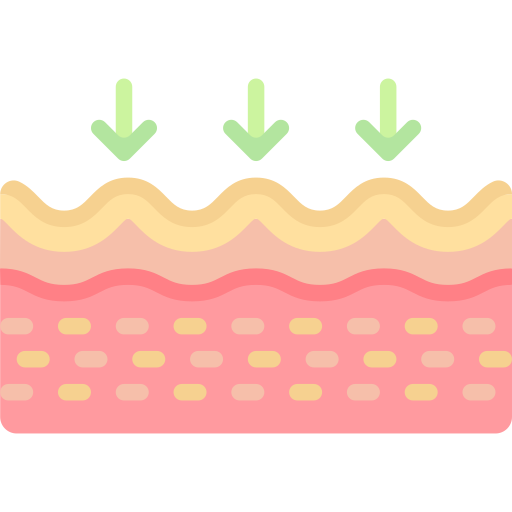
Wrinkle Resistance
Your Result
Average genetic tendency
GWAS work has identified variants near collagen, elastin, and pigmentation genes linked to differences in visible facial wrinkles.
This result reflects research-level variation in wrinkle biology and is not a forecast of future skin appearance.
Sun exposure, smoking, hydration, expression patterns, sleep position, skincare, and overall skin health all play a large role in how wrinkles develop.
Continue Exploring Your Genetic Story
Discover more about your traits across other categories or compare results between samples.