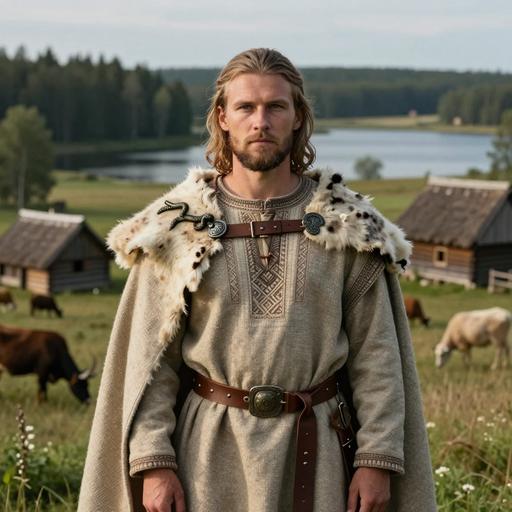
A man buried in Sweden in the Pre-Viking era

Download PDF creates a visual, rasterized copy. Use Print for selectable text and better assistive-technology support.

Loading Report

Preparing your ancestry journey

Preparing the available report content...

Your report will open automatically.

Skip to main content
Reference library / Sample profile

A man buried in Sweden in the Pre-Viking era

Explore the recorded context, genetic comparisons and research behind this reference sample.

SwedenVendel Culture

A reference profile describes this sample. It does not establish a personal or family relationship.

AI portrait reconstruction for A man buried in Sweden in the Pre-Viking era
AI-generated artistic reconstruction, not a photograph of the individual.
Record

Sample details

Recorded details and available lineage markers.

Individual

Viking individual, Sweden

Sample ID: als001

Date Range

575 CE - 600 CE

Cultural Period

Vendel Culture

Biological Sex

Male

mtDNA Haplogroup

H6a1a

Y-DNA Haplogroup

R-YP1370

Social Role

Farmer (AI estimate, era-typical)

Geography

Location

Where this individual was discovered

Country Sweden
Locality Alsike (Uppsala län, Knivsta)
Coordinates 59.8000, 17.8000
Chronology

Date range

When this individual lived in the broader context of human history

Viking individual, Sweden 575 CE - 600 CE
Context

Historical context

Background information associated with the reference record.

The Vendel Culture represents a significant era in the early medieval Scandinavian history, roughly spanning from the late 6th century to the early 8th century, primarily located in what is now modern-day Sweden. This period serves as a precursor to the well-documented Viking Age and is particularly notable for its rich archaeological finds, which provide insights into the social structure, economy, craft, and warfare of the time.

Geographic and Temporal Context

The Vendel Culture is named after the village of Vendel in Uppland, Sweden, where a wealth of archaeological materials have been discovered. The era is marked by the transition from the Migration Period to the Viking Age, sharing characteristics with other Germanic societies across Europe but exhibiting unique traits specific to Scandinavia.

Archaeological Evidence

The Vendel period is most vividly represented by the opulent boat graves found in various Uppland sites, most prominently at Vendel and Valsgärde. These burials contained not only the remains of the deceased but also a plethora of grave goods, which include weapons, helmets, shields, and ornate horse tack. These items provide critical evidence for understanding the material culture and social stratification of the time.

Grave Goods and Symbolism

The artifacts discovered in Vendel graves feature intricate designs and craftsmanship, showcasing ornamental styles that include interlacing animal art. Helmets with decorative nose guards and cheek plates, often inlaid with precious metals and gemstones, indicate a sophisticated metalworking tradition. The presence of weapons and armor signifies a warrior elite, while the placement of goods suggests beliefs in an afterlife where such possessions were deemed necessary.

Social Structure

The Vendel period society was hierarchical, with chieftains or leaders exerting control. The elaborate boat burials demonstrate the existence of a warrior aristocracy. These leaders were likely supported by a retinue of warriors, and their status was reinforced by martial prowess and wealth as reflected in their burials. Below the warrior class were free farmers and artisans who formed the backbone of the economy.

Economy and Trade

Economic activity during the Vendel period was largely agrarian, with farming and animal husbandry playing crucial roles. However, archaeological evidence points to a burgeoning trade network connecting Scandinavia to the broader European and even Eurasian world. Luxury items found in tombs, such as Byzantine or Eastern goods, indicate that trade routes were extensive and facilitated the exchange of ideas and technology.

Religion and Ritual

The religious practices of the Vendel Culture were polytheistic, with reverence for the pantheon of Norse gods that would later feature prominently in Viking spirituality. Ritualistic elements can be observed in burial practices, suggesting sophisticated beliefs about death and the afterlife. The prominence of certain symbols might indicate evolving mythologies or the importance of divine favor in legitimizing authority.

Influence and Legacy

The Vendel Culture significantly influenced the later Viking Age, both in terms of material culture and socio-political organization. Its emphasis on seafaring, metalwork, and martial traditions laid the groundwork for the expansionist activities of the Vikings. Moreover, elements of Norse mythology that began to take shape during this period were later codified in the Icelandic sagas and other lore.

Conclusion

In summary, the Vendel Culture of Norse Scandinavia is a crucial yet often underrepresented period that bridges the gap between the Migration Period and the Viking Age. Through its archaeological remains, the era provides a fascinating glimpse into the lives of a complex society that would be pivotal in shaping medieval Northern Europe. The wealth of burial finds, artistic development, and evidence of trade and social structure all contribute to our understanding of this formative time in Scandinavian history.

Analysis

Genetic comparisons

These comparisons show genetic similarity, not identity or origin. The populations listed are those whose genomes show statistical alignment to this ancient individual.

Similarity reflects shared history, not shared identity. These are analytical comparisons, not claims about who this person was.

Modern Genetic Admixture

This analysis compares the DNA profile with present-day reference populations, showing statistical similarity to modern reference populations from different regions. The excavation site records where this individual was found, not a fixed modern genetic identity.

Europe 99.2%
Northwestern European 86.9%
English 27.1%
Scandinavian 25.4%
Finnish 24.8%
Northwestern European 9.6%
Southern European 8.2%
Balkan 8.2%
Eastern European 4.1%
Africa 0.8%

Closest Modern Populations

These are the modern populations showing the closest statistical alignment to A man buried in Sweden in the Pre-Viking era, ranked by genetic distance. Lower distance values indicate closer statistical similarity. Cross-region similarity can reflect shared ancestry, population movement, continuity, or later admixture.

1
Swedish
1.9115
2
Norwegian
2.5964
3
Icelandic
2.6591
4
German Hamburg
2.6634
5
Danish
2.6803
6
Orcadian
3.2137
7
Shetlandic
3.2409
8
Scottish
3.3655
9
German East
3.3676
10
Dutch
3.4285
Context

Related Samples

This individual exists within a broader network of ancient samples. No ancient genome stands alone.

Individual Culture/Period Date Location Action
Medieval individual, Sweden Medieval Northern Swedish Culture 1016 CE Vasterhus (Jämtlands län, Östersund), Sweden View
Norse individual, Sweden Southern Swedish Pre-Viking Culture 450 CE Sandby Borg (Kalmar län, Mörbylånga), Sweden View
IA individual, Sweden Southern Swedish Pre-Viking Culture 450 CE Sandby Borg (Kalmar län, Mörbylånga), Sweden View
Medieval individual, Sweden Medieval Northern Swedish Culture 1016 CE Vasterhus (Jämtlands län, Östersund), Sweden View
Medieval individual, Sweden Medieval Northern Swedish Culture 1163 CE Vasterhus (Jämtlands län, Östersund), Sweden View
LN Viking individual, Sweden Late Viking Age Culture of Central Sweden 950 CE Gammelbyn Börstil (Uppsala län, Östhammar), Sweden View
Viking individual, Sweden Viking Age Gotlanders 800 CE Eksta Kvie (Gotlands län, Gotland), Sweden View
Viking individual, Sweden Pre-Viking Gotland Culture 600 CE Gannor (Gotlands län, Gotland), Sweden View
LN Viking individual, Sweden Late Viking Age Culture of Central Sweden 996 CE Norrsunda (Stockholms län, Sigtuna), Sweden View
Medieval individual, Sweden Medieval Northern Swedish Culture 1016 CE Vasterhus (Jämtlands län, Östersund), Sweden View
Pre Viking individual, Sweden Vendel Culture 560 CE Vendel (Uppsala), Sweden View
LN Viking individual, Sweden Late Viking Age Culture of Central Sweden 950 CE Alsike (Uppsala län, Knivsta), Sweden View
LN Viking individual, Sweden Late Viking Age Culture of Central Sweden 800 CE Alsike (Uppsala län, Knivsta), Sweden View
LN Viking individual, Sweden Northern Swedish Viking Culture 950 CE Frösön (Jämtlands län, Östersund), Sweden View
Viking individual, Sweden Vendel Culture 242 CE Fullero (Uppsala län, Uppsala), Sweden View
LN Viking individual, Sweden Late Viking Age Culture of Central Sweden 1000 CE Gorla (Stockholms län, Norrtälje), Sweden View
LN Viking individual, Sweden Late Viking Age Culture of Central Sweden 750 CE Gorla (Stockholms län, Norrtälje), Sweden View
Viking individual, Sweden Northern Swedish Pre-Viking Culture 450 CE Romback (Västernorrlands län, Ånge), Sweden View
Viking individual, Sweden Vendel Culture 475 CE Lovö (Stockholms län, Ekerö), Sweden View
IA individual, Sweden Southern Swedish Pre-Viking Culture 450 CE Sandby Borg (Kalmar län, Mörbylånga), Sweden View
LN Viking individual, Sweden Late Viking Age Culture of Central Sweden 750 CE Sasta (Stockholms län, Täby), Sweden View
LN Viking individual, Sweden Late Viking Age Culture of Gotland 1000 CE Hablingbo Havor (Gotlands län, Gotland), Sweden View
IA individual, Sweden Southern Swedish Pre-Viking Culture 450 CE Sandby Borg (Kalmar län, Mörbylånga), Sweden View
LN Viking individual, Sweden Late Viking Age Culture of Central Sweden 892 CE Sigtuna (Stockholms län, Upplands-Bro), Sweden View
LN Viking individual, Sweden Late Viking Age Culture of Central Sweden 950 CE Enbacken (Örebro län, Örebro), Sweden View
IA individual, Sweden Southern Swedish Pre-Viking Culture 450 CE Sandby Borg (Kalmar län, Mörbylånga), Sweden View
Medieval individual, Sweden Medieval Northern Swedish Culture 1016 CE Vasterhus (Jämtlands län, Östersund), Sweden View
LN Viking individual, Sweden Northern Swedish Viking Culture 1016 CE Vasterhus (Jämtlands län, Östersund), Sweden View
Pre Viking individual, Norway Northern Norwegian Pre-Viking Culture 60 CE Nordland, Alstahaug, Norway View
Viking individual, Sweden Vendel Culture 575 CE Alsike (Uppsala län, Knivsta), Sweden View
LN Viking individual, Sweden Late Viking Age Culture of Central Sweden 950 CE Alsike (Uppsala län, Knivsta), Sweden View
LN Viking individual, Sweden Late Viking Age Culture of Central Sweden 950 CE Sala (Västmanlands län, Sala), Sweden View
Page 1
Individual Culture/Period Date Location Action
Pre Viking individual, Sweden Vendel Culture 560 CE Vendel (Uppsala), Sweden View
Viking individual, Sweden Vendel Culture 242 CE Fullero (Uppsala län, Uppsala), Sweden View
Viking individual, Sweden Vendel Culture 475 CE Lovö (Stockholms län, Ekerö), Sweden View
Viking individual, Sweden Vendel Culture 575 CE Alsike (Uppsala län, Knivsta), Sweden View
Page 1
Sources

References

Scientific publications and genetic data that inform this profile.

G25 Coordinates

These coordinates represent a position in genetic space, a tool for comparison, not a conclusion. You can use these to perform custom admixture analysis in G25 Studio.

als001,0.13009744,0.12310736,0.0723044,0.05942336,0.04050056,0.02511192,0.00167344,0.00973968,0.00389928,-0.0118912,-0.00221576,-0.00226144,-0.00347376,0.00124384,0.01476328,-0.00050944,-0.01466896,0.0021344,0.00154536,-0.002622,0.001536,0.00140256,-0.00264624,0.01404544,0.00316665
Continue in G25 Studio
Use code for 30% off • Expires Nov 17