Menu
Store
Blog
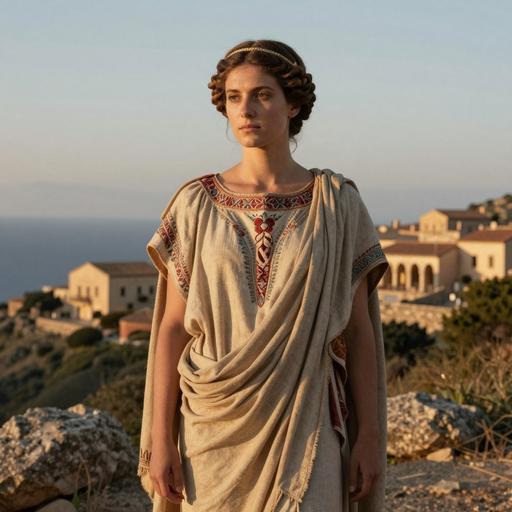
Portrait reconstruction of AMC005
Ancient Individual

A woman buried in Italy in the Middle Ages era

AMC005
100 CE - 250 CE
Female
Roman Period Sardinia, Italy
Italy
Scroll to begin
Chapter I

Identity

The biological and cultural markers that define this ancient individual

Sample ID

AMC005

Date Range

100 CE - 250 CE

Biological Sex

Female

mtDNA Haplogroup

L2a1

Cultural Period

Roman Period Sardinia, Italy

Chapter II

Place

Where this individual was discovered

Country Italy
Locality Alghero. SS. Aho M. Carru
Coordinates 40.5666, 8.3479
Chapter III

Time

When this individual lived in the broader context of human history

AMC005 100 CE - 250 CE
Chapter IV

Story

The narrative of this ancient life

The Roman period in Sardinia is a fascinating era that marked profound changes in the socio-economic, political, and cultural life of the island. Sardinia, known as Sardinia in Latin, became part of the Roman Empire in 238 BC, following the end of the First Punic War when it was taken from the Carthaginians. This period in Sardinia lasted until the fall of the Western Roman Empire in 476 AD and even beyond, as the Byzantine Empire maintained control for some time after.

Geographical and Strategic Importance

Sardinia's strategic position in the Mediterranean made it an essential asset for the Romans, serving both as a military foothold and a crucial supply zone for the empire. Its ports facilitated trade and military logistics, while fertile lands made it a significant supplier of grain and other agricultural products to Rome. The island's natural resources, like silver, lead, and iron, were also exploited by the Romans.

Administrative and Political Structure

Under Roman rule, Sardinia was initially integrated into the Roman provincial system, either as a single province with Corsica (Corsica et Sardinia) or occasionally administered separately. Proconsuls and praetors governed the island, and Roman law was instituted, which gradually replaced local legal systems. During the Roman Empire, Sardinia was structured under a more developed administrative system that included a Roman Senate presence which ensured better integration into the empire's economic and military networks.

Economic Transformation

The Roman period ushered in significant economic development. Sardinia's economy became increasingly diversified; agriculture, mining, and trade expanded under Roman influence. Villas and large agricultural estates (latifundia) emerged, focusing on producing wheat, wine, and olive oil. These commodities were highly valued and exported throughout the Roman Empire.

Roman infrastructural advancements, like roads, aqueducts, and ports, facilitated trade and communication. Urban centers such as Turris Libisonis (modern Porto Torres), Olbia, Carales (Cagliari), and Nora grew and prospered as commercial and administrative hubs.

Society and Culture

The Romanization of Sardinia introduced profound changes in its cultural landscape. Latin became the official language, and Roman culture, lifestyle, and religion gradually permeated the local populations. Traditional Sardinian customs did not disappear entirely but coexisted and blended with Roman practices to create a unique hybrid culture.

Roman towns in Sardinia featured typical elements of urban planning: forums, baths, temples, and amphitheaters. Public buildings and infrastructures manifest the architectural style and technological capabilities of the Romans, providing places for social interaction, entertainment, and worship.

Religious practices in Sardinia also reflected Roman influences, with the introduction of Roman gods alongside indigenous deities. The imperial cult became widespread, and Christianity gradually gained followers, especially after Constantine's Edict of Milan in 313 AD, leading to the establishment of early Christian communities and bishoprics by the late imperial period.

Military Presence

Due to its strategic position, Sardinia hosted several Roman military units to protect the island from piracy and external threats. Roman legions and auxiliary troops were stationed at various locations, often collaborating with local militias.

The military roads and fortifications built during this period were crucial for maintaining Roman control and facilitating rapid troop movement across the island. The enduring legacy of these structures became part of Sardinia’s historical fabric.

Decline and Transition

As the Western Roman Empire began to decline in the 4th and 5th centuries AD, Sardinia suffered from economic instability and increased vulnerability to external invasions, including raids by the Vandals in the early 5th century. In 456 AD, the island fell into the hands of the Vandal Kingdom, marking the end of Roman political dominance. However, even after this period, Roman cultural and architectural influences continued to be felt, especially during the Byzantine period.

In conclusion, the Roman period in Sardinia was characterized by a fusion of local and Roman elements that shaped the island's subsequent historical trajectory. The infrastructure, economic developments, and cultural influences of this era left a lasting imprint, evident even in modern Sardinian society.

Chapter V

Genetics

The genetic ancestry of this ancient individual

Ancient Genetic Admixture

This analysis compares the DNA profile of AMC005 with ancient reference populations, showing the genetic composition in terms of prehistoric ancestral groups.

Neolithic Farmers 58.2%
European Hunter-Gatherers 29.8%
Western Steppe Pastoralists 12.0%

Modern Genetic Admixture

This analysis compares the DNA profile with present-day reference populations, showing what percentage of genetic makeup resembles modern populations from different regions.

Europe 92.1%
Southern European 87.8%
Italian 44.8%
Sardinian 24.6%
Iberian 18.4%
Northwestern European 4.3%
Scandinavian 2.2%
Northwestern European 2.1%
Africa 5.3%
North African 5.3%
Egyptian 5.3%
Asia 2.6%
Northern West Asian 2.6%
Mesopotamian 2.6%

Closest Modern Populations

These are the modern populations showing the closest statistical alignment to A woman buried in Italy in the Middle Ages era, ranked by genetic distance. Lower distance values indicate closer statistical similarity.

1
French Corsica
2.7888
2
Italian Lombardy
4.1071
3
Italian Bergamo
4.3870
4
Spanish Menorca
4.4430
5
Italian Tuscany
4.4991
6
Spanish Murcia
4.5424
7
Italian Umbria
4.5567
8
Italian Emilia
4.5626
9
Italian Piedmont
4.6644
10
Spanish Andalucia
4.6822
Chapter VI

Context

Other ancient individuals connected to this sample

Sources

References

Scientific publications and genetic data

Scientific Publication

Genetic history from the Middle Neolithic to present on the Mediterranean island of Sardinia

Authors Marcus JH, Posth C, Ringbauer H
Abstract

The island of Sardinia has been of particular interest to geneticists for decades. The current model for Sardinia's genetic history describes the island as harboring a founder population that was established largely from the Neolithic peoples of southern Europe and remained isolated from later Bronze Age expansions on the mainland. To evaluate this model, we generate genome-wide ancient DNA data for 70 individuals from 21 Sardinian archaeological sites spanning the Middle Neolithic through the Medieval period. The earliest individuals show a strong affinity to western Mediterranean Neolithic populations, followed by an extended period of genetic continuity on the island through the Nuragic period (second millennium BCE). Beginning with individuals from Phoenician/Punic sites (first millennium BCE), we observe spatially-varying signals of admixture with sources principally from the eastern and northern Mediterranean. Overall, our analysis sheds light on the genetic history of Sardinia, revealing how relationships to mainland populations shifted over time.

G25 Coordinates

The G25 coordinates for sample AMC005 can be used for detailed admixture analysis in our G25 Studio tool.

AMC005,0.11635858,0.14977532,0.0202778,-0.0316866,0.04097696,-0.01429878,-0.00151098,0.00262066,0.0231014,0.04743864,-0.00395768,0.01143038,-0.02194776,-0.01227676,-0.00427754,-0.00086956,0.01051716,-0.00051266,-0.00112726,-0.00061036,0.00186324,0.00219124,-0.00870294,-0.01284142,0.00192544
Analyze in G25 Studio
Use code for 40% off Expires Feb 27