Menu
Store
Blog
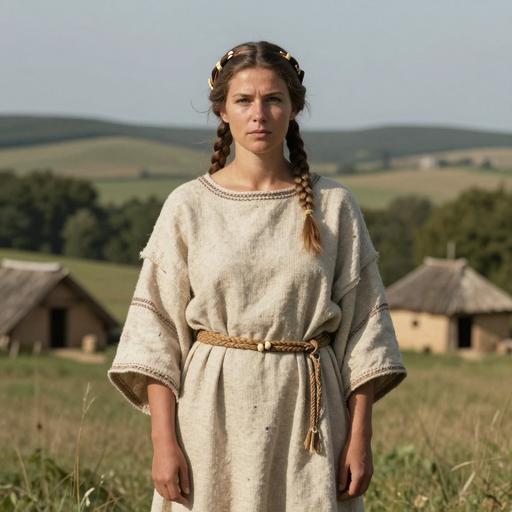
Portrait reconstruction of BR1
Ancient Individual

A woman buried in Hungary in the Early Bronze Age era

BR1
2195 BCE - 1973 BCE
Female
Early Bronze Age Makó Culture, Hungary
Hungary
Scroll to begin
Chapter I

Identity

The biological and cultural markers that define this ancient individual

Sample ID

BR1

Date Range

2195 BCE - 1973 BCE

Biological Sex

Female

mtDNA Haplogroup

K1c1

Cultural Period

Early Bronze Age Makó Culture, Hungary

Chapter II

Place

Where this individual was discovered

Country Hungary
Locality Kompolt-Kigyoser (Jász-Nagykun-Szolnok County, Karcag)
Coordinates 47.1670, 20.8330
Chapter III

Time

When this individual lived in the broader context of human history

BR1 2195 BCE - 1973 BCE
Chapter IV

Story

The narrative of this ancient life

The Early Bronze Age Makó culture, which thrived approximately between 2500 and 2000 BCE in present-day Hungary, is a fascinating archaeological culture distinguished by its European and Indo-European connections. This era marks a period of significant cultural transformations and interactions as local communities engaged in more complex social, economic, and technological exchanges.

Geographical Context

The Makó culture was situated in the Carpathian Basin, a geographically advantageous location that facilitated trade and cultural interactions between various European regions. The basin's rich soil and favorable climate provided ideal conditions for agricultural development, supporting the sustenance and growth of early communities.

Origins and Influences

The Makó culture exhibits influences from both indigenous European populations and Indo-European migrations. This period is characterized by the amalgamation of local Neolithic traditions with new cultural elements introduced by Indo-European groups, leading to the development of distinct social and cultural traits.

Material Culture

Pottery

The pottery from the Makó culture is typified by its unique decorative styles and manufacturing techniques. It often features geometric designs, including incised or stamped patterns. These ceramics were both functional and ceremonial, indicating their central role in domestic and ritual life.

Metallurgy

The Makó culture saw the introduction and proliferation of metalworking, especially in copper and bronze. Metallurgical advancements facilitated the creation of tools, weapons, and ornaments that played significant roles in daily life and trade. The presence of metal items, including daggers, axes, and ornaments, indicates a society that was becoming more stratified and complex.

Settlement Patterns

Communities during the Makó era typically inhabited small, dispersed settlements. These were usually located near rivers or fertile plains, which allowed for effective agriculture and trade. Some archaeological evidence also suggests the existence of fortifications, implying a need for defense and organized communal settlements.

Economy

With agriculture as their primary economic activity, people of the Makó culture cultivated cereals and legumes. The fertile lands of the Carpathian Basin supported diverse agriculture, allowing for surplus production which facilitated trade. Herding and pastoralism also played crucial roles, as cattle, sheep, and goats were common livestock.

Social Structure

The advent of metallurgy and surplus agriculture may have led to more pronounced social hierarchies within the Makó culture. The emergence of elite classes is suggested by the distribution of wealth items in burials, which indicates differentiated statuses within the society. Leaders likely controlled trade networks and resource distribution.

Burial Practices

Makó culture burial practices provide significant insight into their belief systems and social organization. Burials often included grave goods such as pottery, tools, and ornaments, indicating beliefs concerning the afterlife and the importance of social status. Variations in grave offerings suggest a stratified society with complex social roles.

Indo-European Connections

The Makó culture is an important component in understanding the spread of Indo-European languages and peoples across Europe. The cultural attributes and artifacts found in Makó sites reflect a synthesis of local and wider influences, highlighting the mobility and connectivity of early Bronze Age populations. Linguistic studies suggest that the movements during this period contributed to the dispersal and establishment of Indo-European languages in the region.

Legacy and Impact

The Makó culture played a crucial role in the larger context of the Early Bronze Age in Europe. It acted as a cultural bridge, facilitating exchanges between the Balkans, the Central European plains, and the steppes. Its advancements in metallurgy, trade, and social organization paved the way for subsequent cultures, setting the stage for continued cultural evolution and technological innovations.

In sum, the Early Bronze Age Makó culture of Hungary represents a pivotal period of cultural synthesis and transformation. Through its material culture, settlement patterns, and socio-economic structures, the Makó culture provides invaluable insights into the early Indo-European populations in Central Europe and their interactions with indigenous communities.

Chapter V

Context

Other ancient individuals connected to this sample

Sources

References

Scientific publications and genetic data

Scientific Publication

Genome flux and stasis in a five millennium transect of European prehistory

Authors Gamba C, Jones ER, Teasdale MD
Abstract

The Great Hungarian Plain was a crossroads of cultural transformations that have shaped European prehistory. Here we analyse a 5,000-year transect of human genomes, sampled from petrous bones giving consistently excellent endogenous DNA yields, from 13 Hungarian Neolithic, Copper, Bronze and Iron Age burials including two to high (~22 × ) and seven to ~1 × coverage, to investigate the impact of these on Europe's genetic landscape. These data suggest genomic shifts with the advent of the Neolithic, Bronze and Iron Ages, with interleaved periods of genome stability. The earliest Neolithic context genome shows a European hunter-gatherer genetic signature and a restricted ancestral population size, suggesting direct contact between cultures after the arrival of the first farmers into Europe. The latest, Iron Age, sample reveals an eastern genomic influence concordant with introduced Steppe burial rites. We observe transition towards lighter pigmentation and surprisingly, no Neolithic presence of lactase persistence.

Use code for 40% off Expires Feb 27