Menu
Store
Blog
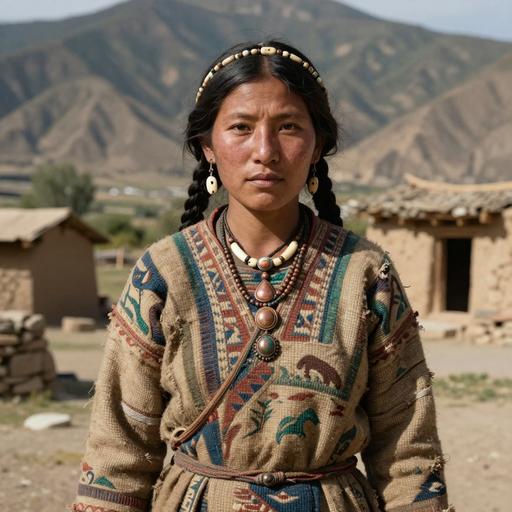
Portrait reconstruction of C2
Ancient Individual

An individual buried in Nepal in the Iron Age era

C2
850 BCE - 700 BCE
Not known
Iron Age Nepal
Nepal
Scroll to begin
Chapter I

Identity

The biological and cultural markers that define this ancient individual

Sample ID

C2

Date Range

850 BCE - 700 BCE

Biological Sex

Not known

mtDNA Haplogroup

Not available

Cultural Period

Iron Age Nepal

Chapter II

Place

Where this individual was discovered

Country Nepal
Locality Mustang. Chokhopani
Coordinates 28.7200, 83.6700
Chapter III

Time

When this individual lived in the broader context of human history

C2 850 BCE - 700 BCE
Chapter IV

Story

The narrative of this ancient life

The Iron Age in Nepal, particularly in regions like Mustang and areas associated with Indic civilization dynamics, represents a fascinating period marked by diverse cultural, technological, and socio-political developments. Though specific archaeological and historical details about \Chokhopani" in Mustang are scarce, the broader context of Iron Age Nepal can be explored by understanding its interaction with the larger Indic world and regional dynamics.

Geographical and Historical Context

Mustang is a region in the north-central part of Nepal, historically serving as a strategic passageway between the Indian subcontinent and Tibet. Its unique position along the Kali Gandaki River facilitated trade and cultural exchanges, particularly in the Iron Age (roughly 1200 BCE to 400 CE, though local variations may apply). The terrain is characterized by arid landscapes, high-altitude environments, and dramatic mountain vistas, leading to unique adaptations in settlement patterns and lifestyles.

Cultural and Technological Developments

  1. Iron Metallurgy: The Iron Age is defined by the widespread use of iron, which revolutionized tools and weapons. In Nepal, this period saw the development of iron smelting techniques, likely influenced by Indian practices. This technological advancement supported agricultural productivity, warfare, and crafts.

  2. Settlements and Architecture: Villages appeared along trade routes with structures built using stone, wood, and clay. Architectural styles reflect both indigenous practices and influences through interactions with Tibetan and Indian groups. This era marked a transition from nomadic lifestyles to more permanent settlements.

  3. Art and Craftsmanship: The Iron Age saw a flourishing of artistic endeavors, including pottery, weaving, and metalworking. Intricate designs and motifs indicate a vibrant culture with religious and social symbology.

  4. Trade and Economy: Mustang's location allowed it to become a hub for trade between India and Tibet. Goods like salt, wool, grains, and metal artifacts were commonly exchanged. This trade network facilitated cultural and technological exchanges, affecting local economies and lifestyles.

Religious and Social Structures

  1. Religion and Beliefs: The period likely witnessed the interplay of indigenous beliefs with incoming influences from Hindu and later Buddhist practices as contacts expanded. Ritual practices and the reverence for nature and ancestral spirits were likely prevalent.

  2. Social Hierarchy and Politics: Societies during this period were structured around kinship and chieftaincy. The emergence of fortified settlements suggests the development of more complex social hierarchies and political organization, likely influenced by larger polities in the Indian subcontinent.

  3. Linguistic and Ethnic Diversity: The Iron Age contributed to the ethnolinguistic landscape of Nepal, with migrations contributing to a tapestry of languages and cultures. This diversity was a precursor to the formation of various ethnic groups seen in the historical periods that followed.

Interaction with the Indic Civilization

The cultural milieu of Iron Age Nepal was deeply intertwined with the larger Indic civilization. While direct evidence in the Mustang area is limited, there are indications of cultural diffusion through:

  • Literary and Scriptural References: Oral traditions and later texts might reflect cultural exchanges with the broader Indic world.

  • Archaeological Findings: Artifacts such as beads, coins, and pottery styles align with those found in northern India, suggesting trade and cultural influences.

  • Influence on Himalayan Culture: This era laid the groundwork for Himalayan Buddhism and the later synthesis of Indic and Tibetan Buddhist elements, contributing to the development of Tibetan Buddhist art and philosophy.

Conclusion

The Iron Age in regions like Mustang in Nepal remains an exciting and complex chapter in South Asian archaeology. While direct evidence, especially without specific archaeological projects named "Chokhopani," remains sporadic, understanding the broader socio-cultural dynamics through its geographical and technological context provides a glimpse into this formative era. Further archaeological exploration and interdisciplinary research are vital for uncovering more nuanced details about this period in the Himalayas."

Chapter V

Genetics

The genetic ancestry of this ancient individual

Modern Genetic Admixture

This analysis compares the DNA profile with present-day reference populations, showing what percentage of genetic makeup resembles modern populations from different regions.

Asia 63.6%
Chinese & Southeast Asian 63.6%
Chinese 49.8%
Tibetan 13.8%
Europe 17.1%
Northwestern European 17.1%
Finnish 17.1%
America 9.6%
America 9.6%
Native American 9.6%
Africa 8.5%
African Hunter-Gatherer 8.5%
Oceania 1.2%
Melanesian 1.2%
Papuan 1.2%

Closest Modern Populations

These are the modern populations showing the closest statistical alignment to An individual buried in Nepal in the Iron Age era, ranked by genetic distance. Lower distance values indicate closer statistical similarity.

1
Dongxiang
15.5090
2
Burmese
15.8962
3
Salar
15.9123
4
Jamatia
15.9836
5
Mon
16.1328
6
Tripuri
16.1338
7
Dungan
16.1391
8
Riang
16.1654
9
Baoan
16.3858
10
Thai
16.4756
Chapter VI

Context

Other ancient individuals connected to this sample

Sources

References

Scientific publications and genetic data

Scientific Publication

Ancient genomes from the Himalayas illuminate the genetic history of Tibetans and their Tibeto-Burman speaking neighbors

Authors Liu CC, Witonsky D, Gosling A
Abstract

Present-day Tibetans have adapted both genetically and culturally to the high altitude environment of the Tibetan Plateau, but fundamental questions about their origins remain unanswered. Recent archaeological and genetic research suggests the presence of an early population on the Plateau within the past 40 thousand years, followed by the arrival of subsequent groups within the past 10 thousand years. Here, we obtain new genome-wide data for 33 ancient individuals from high elevation sites on the southern fringe of the Tibetan Plateau in Nepal, who we show are most closely related to present-day Tibetans. They derive most of their ancestry from groups related to Late Neolithic populations at the northeastern edge of the Tibetan Plateau but also harbor a minor genetic component from a distinct and deep Paleolithic Eurasian ancestry. In contrast to their Tibetan neighbors, present-day non-Tibetan Tibeto-Burman speakers living at mid-elevations along the southern and eastern margins of the Plateau form a genetic cline that reflects a distinct genetic history. Finally, a comparison between ancient and present-day highlanders confirms ongoing positive selection of high altitude adaptive alleles.

G25 Coordinates

The G25 coordinates for sample C2 can be used for detailed admixture analysis in our G25 Studio tool.

C2,0.01252924,-0.31946436,0.01095958,-0.00777876,0.0389265,0.0323255,-0.07719464,-0.09617024,-0.00834734,-0.01594906,-0.00452976,-0.00074244,-0.00023584,0.00056092,0.00290734,-0.0004014,0.00482406,0.00152562,-0.0005665,-0.01071038,0.00761854,0.00946668,0.01139612,0.00231924,0.0016624
Analyze in G25 Studio
Use code for 35% off Expires Apr 20