Menu
Store
Blog
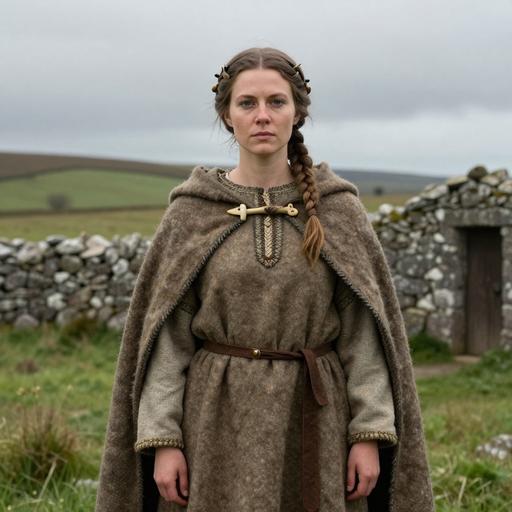
Portrait reconstruction of CAK530
Ancient Individual

A woman buried in Ireland in the Late Neolithic era

CAK530
2884 BCE - 2631 BCE
Female
Late Neolithic Ireland
Ireland
Scroll to begin
Chapter I

Identity

The biological and cultural markers that define this ancient individual

Sample ID

CAK530

Date Range

2884 BCE - 2631 BCE

Biological Sex

Female

mtDNA Haplogroup

W5b

Cultural Period

Late Neolithic Ireland

Chapter II

Place

Where this individual was discovered

Country Ireland
Locality Ireland. Sligo. Carrowkeel
Coordinates 54.0586, -8.3821
Chapter III

Time

When this individual lived in the broader context of human history

CAK530 2884 BCE - 2631 BCE
Chapter IV

Story

The narrative of this ancient life

The Late Neolithic period in Ireland, spanning roughly from 3000 to 2500 BCE, represents a time of significant transition and cultural evolution. This era pre-dates the arrival of the Celts, who are believed to have reached Ireland much later, during the Iron Age. While Celtic influences are absent during the Late Neolithic, this period is notable for its own distinct characteristics and developments.

Society and Lifestyle

The people of Late Neolithic Ireland were primarily agrarian, engaging in both farming and pastoral activities. They cultivated wheat and barley and raised domesticated animals such as cattle, sheep, and pigs. The society was likely organized into tribal or clan-based groups, with social structures that facilitated communal living and shared responsibilities. Evidence suggests these communities had complex social networks, possibly involving trade and exchange of goods, ideas, and technologies with neighboring regions.

Settlements and Architecture

Settlements of this era were typically composed of small, scattered farmsteads rather than large, centralized towns. Houses were generally round or rectangular structures built using timber frames and wattle and daub, with thatched or sod roofs. The arrangement of dwellings and ancillary structures like storage pits and enclosure ditches indicates a keen understanding of agricultural practices and domestic needs.

A key feature of Late Neolithic architecture in Ireland is the construction of monumental tombs, primarily megalithic structures such as passage tombs, court tombs, and wedge tombs. Notable examples include Newgrange, Knowth, and Dowth in the Boyne Valley, which are part of the Brú na Bóinne UNESCO World Heritage Site. These tombs often served as ceremonial and communal burial sites and are remarkable for their engineering, artwork, and astronomical alignments.

Art and Symbolism

Art from the Late Neolithic period is predominantly seen in the carvings and decorations found on megalithic tombs. Motifs such as spirals, lozenges, and concentric circles are common, often interpreted as expressions of cosmological beliefs or rituals. These designs may hold symbolic meanings related to life, death, and rebirth, reflecting an intricate spiritual or religious belief system.

Technology and Tools

The technological advancements of Late Neolithic Ireland are evident in the stone tools and implements discovered from this period. The Neolithic people were skilled in flint knapping, producing a variety of tools including axes, scrapers, and arrowheads. Grinding stones and querns found at archaeological sites indicate advanced practices in food processing, particularly in cereal grinding.

Rituals and Beliefs

The construction and use of monumental tombs suggest a deep spiritual or religious significance, with rituals likely centered around ancestor worship or the veneration of deities linked to nature and the cycles of the sun and moon. The alignment of some tombs with astronomical events, such as the winter solstice at Newgrange, indicates an advanced understanding of celestial cycles and their incorporation into spiritual practices.

Conclusion

The Late Neolithic period in Ireland was a dynamic time marked by significant developments in agriculture, social organization, and monumental architecture. While the Celts had not yet arrived, this era laid the foundations for later cultural and societal changes. The legacy of the Late Neolithic is particularly embodied in Ireland's megalithic monuments, which continue to be celebrated as masterpieces of prehistoric engineering and artistry.

Chapter V

Genetics

The genetic ancestry of this ancient individual

Ancient Genetic Admixture

This analysis compares the DNA profile of CAK530 with ancient reference populations, showing the genetic composition in terms of prehistoric ancestral groups.

Neolithic Farmers 52.5%
European Hunter-Gatherers 31.8%
Western Steppe Pastoralists 15.7%

Modern Genetic Admixture

This analysis compares the DNA profile with present-day reference populations, showing what percentage of genetic makeup resembles modern populations from different regions.

Europe 97.2%
Southern European 94.8%
Iberian 39.8%
Italian 34.2%
Sardinian 20.7%
Northwestern European 2.5%
Africa 1.4%
North African 1.3%
North African 1.3%
Asia 1.3%
Chinese & Southeast Asian 1.3%
Chinese 1.3%

Closest Modern Populations

These are the modern populations showing the closest statistical alignment to A woman buried in Ireland in the Late Neolithic era, ranked by genetic distance. Lower distance values indicate closer statistical similarity.

1
Sardinian
3.1450
2
French Corsica
5.4745
3
Spanish La Rioja
5.6840
4
Spanish Castilla La Mancha
5.9770
5
Spanish Castello
6.0323
6
Spanish Pirineu
6.0633
7
Spanish Menorca
6.0868
8
Spanish Aragon
6.0957
9
Spanish Cantabria
6.1174
10
Spanish Murcia
6.1252
Chapter VI

Context

Other ancient individuals connected to this sample

Sources

References

Scientific publications and genetic data

Scientific Publication

A dynastic elite in monumental Neolithic society

Authors Cassidy LM, Maoldúin RÓ, Kador T
Abstract

The nature and distribution of political power in Europe during the Neolithic era remains poorly understood1. During this period, many societies began to invest heavily in building monuments, which suggests an increase in social organization. The scale and sophistication of megalithic architecture along the Atlantic seaboard, culminating in the great passage tomb complexes, is particularly impressive2. Although co-operative ideology has often been emphasised as a driver of megalith construction1, the human expenditure required to erect the largest monuments has led some researchers to emphasize hierarchy3-of which the most extreme case is a small elite marshalling the labour of the masses. Here we present evidence that a social stratum of this type was established during the Neolithic period in Ireland. We sampled 44 whole genomes, among which we identify the adult son of a first-degree incestuous union from remains that were discovered within the most elaborate recess of the Newgrange passage tomb. Socially sanctioned matings of this nature are very rare, and are documented almost exclusively among politico-religious elites4-specifically within polygynous and patrilineal royal families that are headed by god-kings5,6. We identify relatives of this individual within two other major complexes of passage tombs 150 km to the west of Newgrange, as well as dietary differences and fine-scale haplotypic structure (which is unprecedented in resolution for a prehistoric population) between passage tomb samples and the larger dataset, which together imply hierarchy. This elite emerged against a backdrop of rapid maritime colonization that displaced a unique Mesolithic isolate population, although we also detected rare Irish hunter-gatherer introgression within the Neolithic population.

G25 Coordinates

The G25 coordinates for sample CAK530 can be used for detailed admixture analysis in our G25 Studio tool.

CAK530,0.12035128,0.1603809,0.03057044,-0.0320013,0.05738696,-0.01669144,-0.00192486,0.00600002,0.03725516,0.06459448,-0.0052962,0.01456854,-0.02576772,-0.01298142,-0.00585588,0.00387094,0.00639126,-0.0006426,-0.0007507,-0.00341302,0.0014506,0.00509798,-0.01218084,-0.01794552,0.00417943
Analyze in G25 Studio
Use code for 40% off Expires Feb 27