Menu
Store
Blog
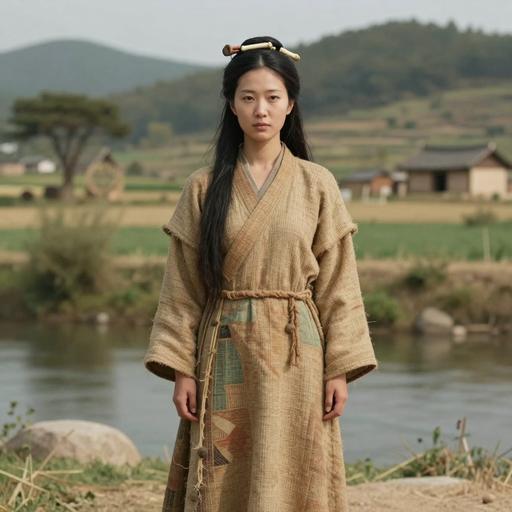
Portrait reconstruction of GDI002
Ancient Individual

A woman buried in South Korea in the Copper Age era

GDI002
4696 BCE - 4505 BCE
Female
The Changhang Culture of Korea
South Korea
Scroll to begin
Chapter I

Identity

The biological and cultural markers that define this ancient individual

Sample ID

GDI002

Date Range

4696 BCE - 4505 BCE

Biological Sex

Female

mtDNA Haplogroup

Not available

Cultural Period

The Changhang Culture of Korea

Chapter II

Place

Where this individual was discovered

Country South Korea
Locality Changhang
Chapter III

Time

When this individual lived in the broader context of human history

GDI002 4696 BCE - 4505 BCE
Chapter IV

Story

The narrative of this ancient life

The Changhang Culture, a lesser-known but fascinating aspect of Korea's extensive historical tapestry, is often overshadowed by more prominently studied cultures such as the Gojoseon or the subsequent Three Kingdoms period. Situated in the broader spectrum of East Asian history, the Changhang Culture represents a significant period that contributes to the understanding of Korea’s prehistoric cultural developments. While specific documentation on the Changhang Culture remains sparse compared to more established cultures, a synthesis of archaeological findings and historical analyses allows us to piece together a comprehensive picture.

Historical Context

The Changhang Culture is understood to have thrived during the prehistoric era of the Korean Peninsula. This period is marked by the transition from the Neolithic Age into the Bronze Age, roughly spanning from around 2000 BCE to 800 BCE. This was a time of significant transformation, characterized by the gradual shift in human lifestyle from nomadic, hunter-gatherer communities to more settled agricultural societies.

Geographical Setting

The cultural remains associated with Changhang have been found in various parts of the Korean Peninsula, particularly in areas that provide strategic advantages such as fertile plains, river basins, and coastal regions. These locations facilitated agricultural production, fishing, and trade, activities that were integral to the culture’s development.

Social and Political Structure

The social structure of the Changhang Culture was likely organized around clan or tribal models, typical of many Neolithic and early Bronze Age societies. Hierarchical differentiation was possibly based on roles within agricultural production, craftsmanship, and emerging leadership positions. Although there is limited direct evidence of complex political structures, the presence of coordinated community activities suggests a level of social organization indicative of communal decision-making processes.

Economic Activities

Agriculture formed the backbone of the Changhang economy, with rice and millet considered staple crops. The introduction and cultivation of rice mark a significant development, suggesting advanced knowledge of irrigation and crop management. Supplementary economic activities included hunting, fishing, and gathering, which provided dietary diversity and supported population sustainability during less productive agricultural seasons.

Artifacts and Material Culture

Archaeological excavations have uncovered a range of artifacts that provide insight into the cultural and technological developments of the Changhang people. Pottery from this era, often characterized by comb-patterned designs, serves not only as a utilitarian commodity but also as a form of artistic expression. Additionally, tools and weapons made from stone and early metal alloy exemplify the technological advancements and resource utilization within the culture.

Religion and Beliefs

While concrete evidence of religious practices specific to the Changhang Culture is limited, it is likely that spiritual beliefs were closely tied to nature and agricultural cycles, as seen in other contemporary East Asian cultures. Rituals related to crop fertility, ancestor worship, and possibly shamanistic practices could have played a role in the community's spiritual life.

Interaction with Neighboring Cultures

The Changhang Culture, similar to other ancient Korean cultures, likely engaged in trade and interaction with neighboring regions, including those in present-day China and Japan. These interactions facilitated cultural exchange, particularly in the realms of technology, agriculture, and social organization.

Legacy and Significance

The Changhang Culture’s legacy lies in its contribution to the foundation of Korean civilization. It represents a critical evolutionary stage in Korea, bridging the gap between prehistoric lifestyles and the more organized states of later periods. Understanding this culture helps elucidate the origins of later cultural developments and underscores the complex tapestry of human societies in prehistoric Korea.

In summary, while the Changhang Culture might not be as well-documented or renowned as later Korean historical periods, its role in laying the foundations of Korean society is undeniably crucial. Ongoing archaeological research and interdisciplinary studies continue to shed light on this fascinating era, enhancing our comprehension of ancient Korea and its place within the broader East Asian context.

Chapter V

Genetics

The genetic ancestry of this ancient individual

Ancient Genetic Admixture

This analysis compares the DNA profile of GDI002 with ancient reference populations, showing the genetic composition in terms of prehistoric ancestral groups.

Ancient Asians 77.4%
European Hunter-Gatherers 7.1%
Neolithic Farmers 4.8%
Western Steppe Pastoralists 4.3%
Ancient Native Americans 3.4%
Ancient Africans 3.0%

Modern Genetic Admixture

This analysis compares the DNA profile with present-day reference populations, showing what percentage of genetic makeup resembles modern populations from different regions.

Asia 75.4%
Japanese & Korean 59.8%
Japanese 59.8%
Chinese & Southeast Asian 15.7%
Chinese 15.7%
Europe 20.8%
Northwestern European 13.6%
Northwestern European 10.5%
Finnish 3.1%
Southern European 7.2%
Balkan 6.7%
Africa 2.4%
North African 1.2%
Egyptian 1.2%
African Hunter-Gatherer 1.2%
America 1.4%
America 1.4%
Native American 1.4%

Closest Modern Populations

These are the modern populations showing the closest statistical alignment to A woman buried in South Korea in the Copper Age era, ranked by genetic distance. Lower distance values indicate closer statistical similarity.

1
Dongxiang
5.9104
2
Salar
6.4829
3
Dungan
6.6012
4
Baoan
7.4709
5
Yuku
7.8115
6
Hui
8.1128
7
Tibetan Gannan
8.6634
8
Bonan
8.6780
9
Hui Guizhou
9.4694
10
Tu
9.6988
Chapter VI

Context

Other ancient individuals connected to this sample

Sources

References

Scientific publications and genetic data

Scientific Publication

Triangulation supports agricultural spread of the Transeurasian languages

Authors Robbeets M, Bouckaert R, Conte M
Abstract

The origin and early dispersal of speakers of Transeurasian languages-that is, Japanese, Korean, Tungusic, Mongolic and Turkic-is among the most disputed issues of Eurasian population history1-3. A key problem is the relationship between linguistic dispersals, agricultural expansions and population movements4,5. Here we address this question by 'triangulating' genetics, archaeology and linguistics in a unified perspective. We report wide-ranging datasets from these disciplines, including a comprehensive Transeurasian agropastoral and basic vocabulary; an archaeological database of 255 Neolithic-Bronze Age sites from Northeast Asia; and a collection of ancient genomes from Korea, the Ryukyu islands and early cereal farmers in Japan, complementing previously published genomes from East Asia. Challenging the traditional 'pastoralist hypothesis'6-8, we show that the common ancestry and primary dispersals of Transeurasian languages can be traced back to the first farmers moving across Northeast Asia from the Early Neolithic onwards, but that this shared heritage has been masked by extensive cultural interaction since the Bronze Age. As well as marking considerable progress in the three individual disciplines, by combining their converging evidence we show that the early spread of Transeurasian speakers was driven by agriculture.

G25 Coordinates

The G25 coordinates for sample GDI002 can be used for detailed admixture analysis in our G25 Studio tool.

GDI002,0.0367653,-0.32375582,0.01560662,-0.03431948,0.04514502,0.01831384,-0.0043273,-0.00842768,-0.00485052,0.00038988,-0.0473689,-0.00287862,0.00516926,-0.00922052,-0.00269246,-0.00319462,-0.0001307,-0.00037684,-0.00066306,-0.0050439,0.01301258,-0.00426134,0.0062989,0.00377754,-0.01742762
Analyze in G25 Studio
Use code for 40% off Expires Feb 27