Menu
Store
Blog
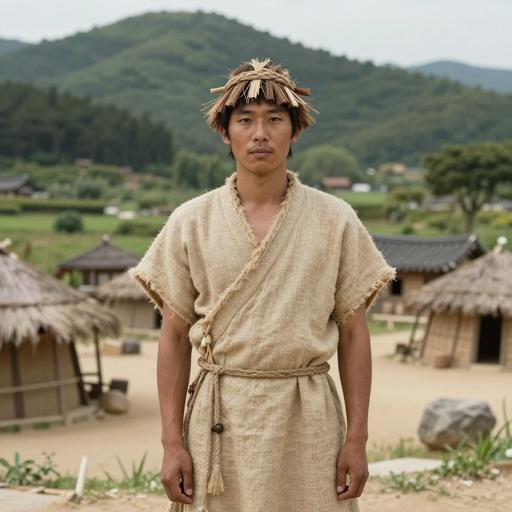
Portrait reconstruction of AND001
Ancient Individual

A man buried in South Korea in the Mesolithic era

AND001
6300 BCE - 3000 BCE
Male
Ancient Korea
South Korea
Scroll to begin
Chapter I

Identity

The biological and cultural markers that define this ancient individual

Sample ID

AND001

Date Range

6300 BCE - 3000 BCE

Biological Sex

Male

mtDNA Haplogroup

Not available

Y-DNA Haplogroup

Not available

Cultural Period

Ancient Korea

Chapter II

Place

Where this individual was discovered

Country South Korea
Locality Ando
Chapter III

Time

When this individual lived in the broader context of human history

AND001 6300 BCE - 3000 BCE
Chapter IV

Story

The narrative of this ancient life

Ancient Korea is a significant period in East Asian history, known for its rich cultural heritage, dynamic inter-regional interactions, and remarkable advancements in art, technology, and society. The history of ancient Korea is typically divided into several key periods: the Gojoseon, the Three Kingdoms of Korea, the Silla and Baekje periods, and eventually the Unified Silla and Balhae states.

Gojoseon Era (c. 2333 BCE – 108 BCE)

Origins and Mythology:

  • Foundation Myth: Gojoseon is considered the first Korean kingdom, traditionally founded by Dangun Wanggeom in 2333 BCE. According to Korean mythology, Dangun was the grandson of heaven, highlighting the divine origins attributed to Korean civilization.
  • Location and Society: Early Gojoseon was located in northern Korea and parts of Manchuria. It evolved from tribal entities to a more centralized society.

Development:

  • Bronze Age Culture: Gojoseon is noted for its advancements in bronze technology, reflected in the distinct Gojoseon-style bronze daggers and mirror artifacts.
  • Agricultural Practices: Evidence of rice cultivation and use of iron tools suggests a shift towards a more agrarian economy.
  • Conflicts and Diplomacy: Gojoseon had interactions with neighboring Chinese states. It engaged in trade and at times conflict, which influenced its political landscape.

The Three Kingdoms Era (c. 57 BCE – 668 CE)

This era marks the emergence of significant states that competed for dominance over the Korean Peninsula: Goguryeo, Baekje, and Silla.

Goguryeo:

  • Territorial Expansion: Goguryeo was the largest and northernmost of the three kingdoms, extending its influence into Manchuria and parts of the Korean Peninsula.
  • Military Prowess: Known for its powerful military and fortress architecture, Goguryeo engaged in frequent conflicts with Chinese dynasties.
  • Cultural Flourishing: The kingdom housed magnificent tomb complexes and developed its distinct Goguryeo art.

Baekje:

  • Cultural Influence: Located in the southwestern part of the peninsula, Baekje was a center of cultural exchange, particularly with Japan. Its contributions to Korean Buddhist art and architecture are notable.
  • Diplomatic Endeavors: Baekje maintained strong diplomatic and cultural connections with both China and Japan, facilitating the spread of Buddhism to Japan.

Silla:

  • Economic Growth and Buddhism: Silla, initially the least powerful, capitalized on its rich resources and trade routes. It played a pivotal role in the spread of Buddhism across Korea.
  • Hwarang Warriors: Silla is famed for its Hwarang, an elite group of young warriors who were deeply influenced by Buddhist and Confucian philosophies.

The Unified Silla and Balhae Era (668 CE – 935 CE)

Unified Silla:

  • Unification and Prosperity: Silla achieved unification of most of the Korean Peninsula by 668 CE with the help of the Tang Dynasty. This ushered in a golden age for Korean art, science, and culture.
  • Cultural Achievements: This period saw the construction of architectural masterpieces like Bulguksa Temple and Seokguram Grotto.
  • Cultural Diffusion: Buddhism flourished with the artistic promotion of the religion through sculptures and temple architecture.

Balhae:

  • Northern Influence: Following the fall of Goguryeo, the Balhae kingdom (698 CE – 926 CE) emerged in the north, embodying the Goguryeo and local cultures.
  • Cultural Synthesis: Balhae was characterized by a blending of Korean, Chinese, and indigenous elements, maintaining relations with neighboring states.
  • Trade and Economy: Balhae prospered through agricultural production and trade, linking the Korean Peninsula with Northeast Asia.

Art and Culture:

  • Artistic Heritage: Throughout ancient Korea, there was an emphasis on intricate ceramics, metalwork, and stone sculpture. Pilgrimages to China led to the incorporation of Chinese artistic trends, particularly during the later stages of ancient Korea.
  • Buddhism and Confucianism: These philosophies profoundly shaped Korean culture, influencing art, governance, and daily life.

Conclusion:

Ancient Korea laid the foundation for the peninsula's rich cultural and historical tapestry. The periods of Gojoseon, the Three Kingdoms, and Unified Silla and Balhae illustrate Korea's evolving societies, which engaged in dynamic cultural exchanges and created a unique Korean identity in the area. The innovations in governance, technology, art, and philosophy during this time command appreciation and are seen as essential components of Korea's historical narrative, marking its place within the broader spectrum of East Asian history.

Chapter V

Genetics

The genetic ancestry of this ancient individual

Ancient Genetic Admixture

This analysis compares the DNA profile of AND001 with ancient reference populations, showing the genetic composition in terms of prehistoric ancestral groups.

Ancient Asians 100.0%

Modern Genetic Admixture

This analysis compares the DNA profile with present-day reference populations, showing what percentage of genetic makeup resembles modern populations from different regions.

Asia 100.0%
Japanese & Korean 74.4%
Japanese 74.4%
Chinese & Southeast Asian 21.1%
Chinese 10.8%
Tibetan 5.8%
Indonesian Khmer Thai Myanma 4.6%
Northern Asian 4.5%
Mongolian 4.5%

Closest Modern Populations

These are the modern populations showing the closest statistical alignment to A man buried in South Korea in the Mesolithic era, ranked by genetic distance. Lower distance values indicate closer statistical similarity.

1
Manchu
4.3693
2
Manchu Jinzhou
4.3986
3
Han Shandong
4.6980
4
Manchu Liaoning
4.7595
5
Han Shanxi
4.8077
6
Tibetan Xinlong
4.9364
7
Bai
4.9708
8
Han Henan
5.0385
9
Han Jiangsu
5.0523
10
Han Hubei
5.1601
Chapter VI

Context

Other ancient individuals connected to this sample

Sources

References

Scientific publications and genetic data

Scientific Publication

Triangulation supports agricultural spread of the Transeurasian languages

Authors Robbeets M, Bouckaert R, Conte M
Abstract

The origin and early dispersal of speakers of Transeurasian languages-that is, Japanese, Korean, Tungusic, Mongolic and Turkic-is among the most disputed issues of Eurasian population history1-3. A key problem is the relationship between linguistic dispersals, agricultural expansions and population movements4,5. Here we address this question by 'triangulating' genetics, archaeology and linguistics in a unified perspective. We report wide-ranging datasets from these disciplines, including a comprehensive Transeurasian agropastoral and basic vocabulary; an archaeological database of 255 Neolithic-Bronze Age sites from Northeast Asia; and a collection of ancient genomes from Korea, the Ryukyu islands and early cereal farmers in Japan, complementing previously published genomes from East Asia. Challenging the traditional 'pastoralist hypothesis'6-8, we show that the common ancestry and primary dispersals of Transeurasian languages can be traced back to the first farmers moving across Northeast Asia from the Early Neolithic onwards, but that this shared heritage has been masked by extensive cultural interaction since the Bronze Age. As well as marking considerable progress in the three individual disciplines, by combining their converging evidence we show that the early spread of Transeurasian speakers was driven by agriculture.

G25 Coordinates

The G25 coordinates for sample AND001 can be used for detailed admixture analysis in our G25 Studio tool.

AND001,0.02478508,-0.44964582,0.01443142,-0.05892862,0.04426868,0.01478814,0.00745366,0.0036636,-0.00830058,0.0041554,-0.0316962,-0.00259624,0.00244252,-0.0054119,-0.00393884,-0.00304228,0.00052364,0.00191294,0.00012842,-0.00408842,0.01530358,0.00132746,0.01284254,-0.00038638,0.00649513
Analyze in G25 Studio
Use code for 40% off Expires Feb 27