Menu
Store
Blog
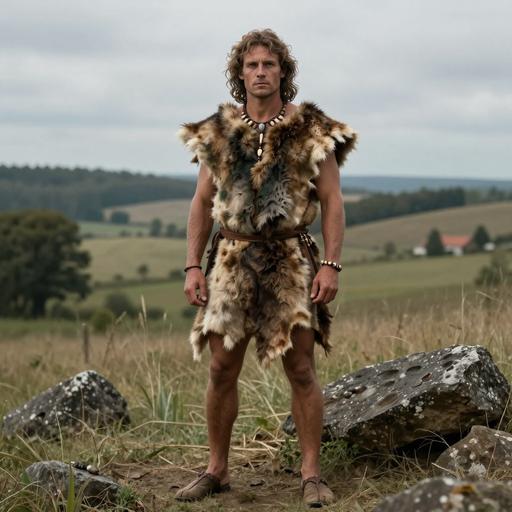
Portrait reconstruction of I0001
Ancient Individual

A man buried in Luxembourg in the Mesolithic era

I0001
6221 BCE - 5986 BCE
Male
Loschbour Site, Luxembourg
Luxembourg
Scroll to begin
Chapter I

Identity

The biological and cultural markers that define this ancient individual

Sample ID

I0001

Date Range

6221 BCE - 5986 BCE

Biological Sex

Male

mtDNA Haplogroup

U5b1a

Y-DNA Haplogroup

I-V4921

Cultural Period

Loschbour Site, Luxembourg

Chapter II

Place

Where this individual was discovered

Country Luxembourg
Locality Echternach
Coordinates 49.8100, 6.4000
Chapter III

Time

When this individual lived in the broader context of human history

I0001 6221 BCE - 5986 BCE
Chapter IV

Story

The narrative of this ancient life

The Loschbour site, located in Luxembourg, is a significant archaeological site associated with the Mesolithic period and offers invaluable insight into the Western European hunter-gatherer lifestyle. This site is named after the Loschbour rock shelter, which is situated near the confluence of the Alf and Sauer rivers, amidst the rolling landscapes that characterize the region. The site provides a glimpse into a prehistoric era dating back approximately 8,000 years, revealing aspects of human adaptation, technology, and socio-cultural practices during the Mesolithic period in Western Europe.

Environment and Geography

During the Mesolithic era, following the last glacial period, Europe's environment underwent significant changes, leading to the spread of dense forests across the continent. The Loschbour site is nestled in a valley that would have been part of a temperate forest environment, rich in flora and fauna. This habitat provided abundant resources for human sustenance, with access to diverse plant life, game animals, and aquatic resources from nearby rivers.

Archaeological Significance

The Loschbour site gained significant archaeological attention following the discovery of a well-preserved human skeleton in 1935, known as the Loschbour Man. This find is crucial for understanding the physical anthropology of Mesolithic peoples in Western Europe. The Loschbour skeleton, dated to around 8,000 years ago, provides exceptional insights into the health, diet, and lifestyle of its era.

Cultural and Technological Aspects

Tool Use and Technology:

The Western European hunter-gatherers of this period were adept at crafting tools from stone, bone, and wood. Flint was commonly used for creating arrowheads, blades, and other hunting implements. Microliths, small stone blades affixed to wooden shafts or handles as composite tools, exemplify the sophisticated technological adaptations of these communities.

Subsistence Strategies:

The Loschbour inhabitants practiced a hunter-gatherer lifestyle, relying heavily on hunting, fishing, and gathering for survival. Faunal remains discovered at the site indicate a diet that included red deer, boar, and possibly aurochs. The presence of fish remains suggests that aquatic resources were a vital part of their diet. The varied diet reflects adaptability and a deep understanding of their environment.

Social Organization:

While direct evidence of social structure is limited, the burial practices observed at the Loschbour site provide some insight. The careful placement of the Loschbour Man's remains suggests ceremonial burial practices, indicating a degree of social complexity and possibly a belief system or ritual behavior.

Genetic and Anthropological Insights

Intriguingly, genetic studies on the Loschbour remains have contributed to the understanding of the genomic diversity of early European populations. The Loschbour individual's genetic profile provides evidence of features common among European hunter-gatherers, including dark skin pigmentation and blue eyes, challenging previous assumptions about the appearance of prehistoric peoples.

Conclusion

The Loschbour site stands as a testament to the adaptability and resilience of Mesolithic hunter-gatherers in Western Europe. The intersection of environmental resources, technological innovation, and social complexity reflects a culture deeply attuned to its surroundings. As a significant archaeological find, the Loschbour site continues to illuminate the intricacies of human prehistory in Europe, offering a window into the lifeways of our distant ancestors. Through continued study and excavation, the site remains a focal point for understanding the broader narrative of human evolution and cultural development during the Mesolithic era.

Chapter V

Context

Other ancient individuals connected to this sample

Sources

References

Scientific publications and genetic data

Scientific Publication

Ancient human genomes suggest three ancestral populations for present-day Europeans

Authors Lazaridis I, Patterson N, Mittnik A
Abstract

We sequenced the genomes of a ∼7,000-year-old farmer from Germany and eight ∼8,000-year-old hunter-gatherers from Luxembourg and Sweden. We analysed these and other ancient genomes with 2,345 contemporary humans to show that most present-day Europeans derive from at least three highly differentiated populations: west European hunter-gatherers, who contributed ancestry to all Europeans but not to Near Easterners; ancient north Eurasians related to Upper Palaeolithic Siberians, who contributed to both Europeans and Near Easterners; and early European farmers, who were mainly of Near Eastern origin but also harboured west European hunter-gatherer related ancestry. We model these populations' deep relationships and show that early European farmers had ∼44% ancestry from a 'basal Eurasian' population that split before the diversification of other non-African lineages.

Use code for 40% off Expires Feb 26