Menu
Store
Blog
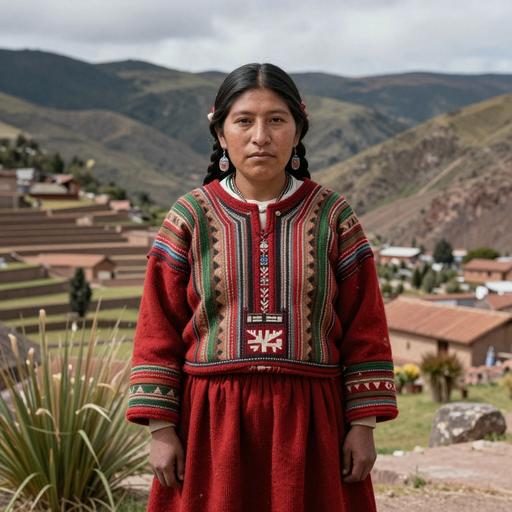
Portrait reconstruction of I0042
Ancient Individual

A woman buried in Peru in the Pre-Columbian South America era

I0042
1215 CE - 1280 CE
Female
Late Intermediate Period Botigiriayocc, Peru 600 Years Ago
Peru
Scroll to begin
Chapter I

Identity

The biological and cultural markers that define this ancient individual

Sample ID

I0042

Date Range

1215 CE - 1280 CE

Biological Sex

Female

mtDNA Haplogroup

C1b

Cultural Period

Late Intermediate Period Botigiriayocc, Peru 600 Years Ago

Chapter II

Place

Where this individual was discovered

Country Peru
Locality Ayachucho. Lucanas. Laramate. Botigiriayocc
Chapter III

Time

When this individual lived in the broader context of human history

I0042 1215 CE - 1280 CE
Chapter IV

Story

The narrative of this ancient life

The Late Intermediate Period (LIP) of Andean civilizations, approximately spanning from AD 1000 to 1400, was characterized by a high degree of regional diversity and the development of numerous small, dominant polities across the Andes. During this time, many groups that thrived adapted to the collapse of the earlier Wari and Tiwanaku states, as decentralized societies emerged, paving the way for the eventual consolidation of power by the Inca Empire.

Geographical Setting

Botigiriayocc, situated in present-day Peru, lies within the highland region of the Andes, featuring a variety of microenvironments including high-altitude grasslands or puna, fertile valleys, and rugged mountains. This geography dictated the lifestyle and organization of the local populace, influencing their agriculture, settlement patterns, and interaction with neighboring groups.

Sociopolitical Structure

The LIP marked a fragmentation of larger polities into smaller, autonomous, and often competitive chiefdoms or señoríos. These groups focused on local concerns such as the management of agricultural resources and defense. The political organization of Botigiriayocc likely involved complex social hierarchies with local leaders or kurakas wielding power over segmented communities. These leaders coordinated agricultural practices, redistribution of resources, and any necessary warfare with neighboring polities.

Economy and Subsistence

In Botigiriayocc, societies were predominantly agrarian, cultivating crops such as potatoes, quinoa, and maize, adapted to the highland environment. They practiced terrace farming to maximize arable land use on steep slopes and utilized sophisticated irrigation systems to support their crops. Additionally, camelid herding, particularly of llamas and alpacas, played a vital role in the economy, providing meat, wool, and a means of transporting goods across difficult terrains.

Religion and Cosmology

Religious practices in Botigiriayocc during the LIP were likely localized, focusing on the worship of ancestors and deities associated with natural elements, such as mountains and water sources, believed to hold sacred powers. The construction of shrines or huacas, along with ceremonial sites, would have been important for ritualistic events, serving both spiritual and community cohesion roles. The maintenance of these religious ties strengthened social bonds within the community and emphasized collective identity.

Art and Craftsmanship

The artistic expression of Botigiriayocc, like many Andean cultures during the LIP, would have involved intricate textile production, pottery, and metalwork. The complex textiles, woven using traditional backstrap looms, often featured vibrant colors and geometric patterns symbolizing cultural motifs. Pottery likely functioned a utilitarian role for storage and cooking but remained decorated with motifs that conveyed cultural narratives.

Military Organization

The period was marked by increased militarization, resulting in fortifications and the need for warriors. Settlements like Botigiriayocc would have featured defensive structures such as pukaras (hilltop forts) as protective measures against neighboring conflicts. Warfare was often conducted for resource access, territorial control, or prestige, and warriors likely played significant roles within society, linked closely to regional power dynamics.

Impact and Legacy

The societal developments during the LIP, including those in Botigiriayocc, set the stage for the later rise of the Inca Empire, which integrated or subdued many of these local polities. The traditions, agricultural practices, and social structures, however, laid the groundwork for the regional diversity seen in the Andes even during the expansive Inca period. This era highlights the adaptability and resilience of Andean cultures in the face of changing political and environmental landscapes.

In summary, the Late Intermediate Period in regions like Botigiriayocc illustrates a time of adaptation, innovation, and regional identity formation that contributed to the dynamic and complex cultural tapestry of pre-Columbian Peru.

Chapter V

Genetics

The genetic ancestry of this ancient individual

Ancient Genetic Admixture

This analysis compares the DNA profile of I0042 with ancient reference populations, showing the genetic composition in terms of prehistoric ancestral groups.

Ancient Native Americans 79.0%
Ancient Asians 19.0%
Western Steppe Pastoralists 2.1%

Modern Genetic Admixture

This analysis compares the DNA profile with present-day reference populations, showing what percentage of genetic makeup resembles modern populations from different regions.

America 93.4%
America 93.4%
Native American 93.4%
Asia 6.6%
Chinese & Southeast Asian 3.5%
Tibetan 2.5%
Indonesian Khmer Thai Myanma 1.0%
Northern Asian 3.1%
Mongolian 2.8%

Closest Modern Populations

These are the modern populations showing the closest statistical alignment to A woman buried in Peru in the Pre-Columbian South America era, ranked by genetic distance. Lower distance values indicate closer statistical similarity.

1
Piapoco
1.7091
2
Wichi
2.0404
3
Aymara
2.3385
4
Yukpa
2.4044
5
Karitiana
2.6955
6
Bolivian Lapaz
3.6398
7
Surui
3.7717
8
Colla
4.1105
9
Cachi
4.7526
10
Mixe
4.9644
Chapter VI

Context

Other ancient individuals connected to this sample

Sources

References

Scientific publications and genetic data

Scientific Publication

A Paleogenomic Reconstruction of the Deep Population History of the Andes

Authors Nakatsuka N, Lazaridis I, Barbieri C
Abstract

There are many unanswered questions about the population history of the Central and South Central Andes, particularly regarding the impact of large-scale societies, such as the Moche, Wari, Tiwanaku, and Inca. We assembled genome-wide data on 89 individuals dating from ∼9,000-500 years ago (BP), with a particular focus on the period of the rise and fall of state societies. Today's genetic structure began to develop by 5,800 BP, followed by bi-directional gene flow between the North and South Highlands, and between the Highlands and Coast. We detect minimal admixture among neighboring groups between ∼2,000-500 BP, although we do detect cosmopolitanism (people of diverse ancestries living side-by-side) in the heartlands of the Tiwanaku and Inca polities. We also highlight cases of long-range mobility connecting the Andes to Argentina and the Northwest Andes to the Amazon Basin. VIDEO ABSTRACT.

G25 Coordinates

The G25 coordinates for sample I0042 can be used for detailed admixture analysis in our G25 Studio tool.

I0042,0.05649826,-0.31908432,0.11199732,0.10193806,-0.1147691,-0.0095709,-0.30974248,-0.36403532,-0.01567962,-0.01743682,0.00105844,-0.00109682,-0.00114148,0.02570428,-0.0056641,-0.00058378,0.00625338,0.00266924,0.0002918,-0.00196808,-0.00113402,0.00818938,-0.00235954,-0.00553188,-0.00631702
Analyze in G25 Studio
Use code for 40% off Expires Feb 27