Menu
Store
Blog
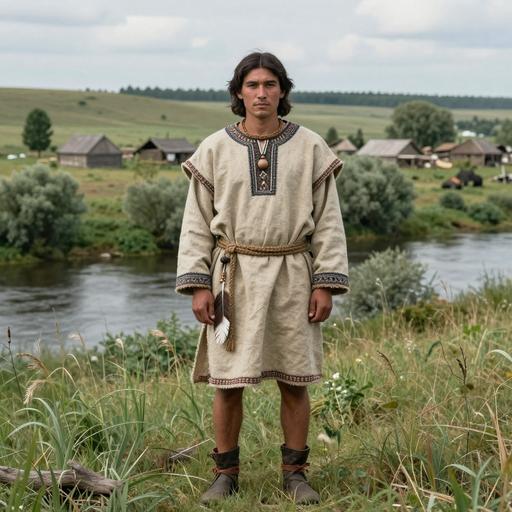
Portrait reconstruction of I0246
Ancient Individual

A man buried in Russia in the Bronze Age era

I0246
2468 BCE - 1925 BCE
Male
Potapovka Culture
Russia
Scroll to begin
Chapter I

Identity

The biological and cultural markers that define this ancient individual

Sample ID

I0246

Date Range

2468 BCE - 1925 BCE

Biological Sex

Male

mtDNA Haplogroup

C1

Y-DNA Haplogroup

R-Z2124

Cultural Period

Potapovka Culture

Chapter II

Place

Where this individual was discovered

Country Russia
Locality Samara Oblast. Volga River Valley. Samara River. Utyevka VI
Coordinates 52.9128, 50.9906
Chapter III

Time

When this individual lived in the broader context of human history

I0246 2468 BCE - 1925 BCE
Chapter IV

Story

The narrative of this ancient life

The Potapovka culture, dating from the late Bronze Age around 2500–2000 BCE, is one of the ancient cultures associated with the Indo-European migrations into the Eurasian steppes. It is primarily located in the Volga-Ural steppe region of present-day Russia, situated between the more well-known Yamna culture to the south and the Abashevo culture to the north. This cultural complex represents a transition between the steppe societies of the earlier and subsequent periods, serving as a bridge in the ever-evolving dynamics of the Indo-European expansion.

Archaeological Context

Settlement Patterns

Potapovka settlements were typically established on river terraces, which provided strategic advantages such as access to water, fertile land for agriculture, and corridors for trade and migration. Unlike the more permanent settlements of other contemporaneous cultures, Potapovka sites often show evidence of semi-nomadic pastoralism. This is consistent with a lifestyle that balanced between mobility and the need for stable community centers.

Burial Practices

One of the key characteristics of the Potapovka culture, as with many Indo-European associated cultures, is their burial practices. Burial mounds, or kurgans, were prominent features of this culture. These mounds often contained multiple burials with individual grave goods, including pottery, weapons, and ornaments. The use of ochre in graves, a practice inherited from the Yamna culture, was also prevalent, possibly indicating ritualistic meanings such as a belief in an afterlife or a practice to sanctify the dead.

Economy and Subsistence

The economy of the Potapovka culture was primarily based on pastoralism, with cattle, horses, and sheep being the principal livestock. The domestication and use of horses not only facilitated the movement across vast distances but also revolutionized warfare and trade, allowing for greater interaction with neighboring cultures. Additionally, there is evidence to suggest limited agriculture, likely supplemented by hunting and fishing, contributing to a diverse subsistence strategy.

Material Culture

The Potapovka people produced a range of pottery that was both functional and decorative, typically found in burial contexts. Their ceramic style is characterized by specific patterns and shapes which imply both utilitarian and ceremonial uses. Metalwork, particularly in bronze, was another significant aspect. Items such as spearheads, knives, and ornaments denoted both daily life necessities and social status indicators.

Sociopolitical Structure

The Potapovka culture likely had a tribal organization, with social hierarchies informed by wealth and skill in pastoral activities and warfare. Leaders or chieftains possibly held both political and religious authority, acting as mediators between the people and the divine. Intertribal relations were probably governed by both conflict and cooperation, as evidenced by the presence of fortified settlements and trade goods from distant cultures.

Cultural Interactions and Legacy

Interaction with neighboring cultures such as the Abashevo and Sintashta societies, which also inhabited the steppe regions, were likely characterized by both conflict and exchange. These interactions facilitated the spread of innovations such as metallurgy and contributed to the genetic and cultural mosaic of the region. The Potapovka culture is considered an important link in the development of later cultures such as the Andronovo, which played a crucial role in the further spread of Indo-European languages.

Conclusion

The Potapovka culture represents a formative era in the history of the Eurasian steppes, encapsulating the traits of mobility, pastoral economy, and complex social structures. By bridging earlier and later cultural phases, Potapovka contributed to the rich tapestry of prehistoric societies, influencing both contemporary and successive cultures in the region. Understanding its nuances offers insights into the broader patterns of Indo-European migration and cultural development.

Chapter V

Genetics

The genetic ancestry of this ancient individual

Ancient Genetic Admixture

This analysis compares the DNA profile of I0246 with ancient reference populations, showing the genetic composition in terms of prehistoric ancestral groups.

Western Steppe Pastoralists 50.2%
European Hunter-Gatherers 23.3%
Ancient Asians 13.0%
Neolithic Farmers 10.2%
Ancient Native Americans 3.3%

Modern Genetic Admixture

This analysis compares the DNA profile with present-day reference populations, showing what percentage of genetic makeup resembles modern populations from different regions.

Europe 70.4%
Eastern European 38.0%
Northwestern European 32.4%
English 13.2%
Scandinavian 12.3%
Finnish 4.2%
Northwestern European 2.7%
Asia 23.3%
Central Asian, Northern Indian & Pakistani 18.5%
Pakistan 17.9%
Indian 0.6%
Northern West Asian 4.8%
Caucasian 4.8%
America 6.4%
America 6.4%
Native American 6.4%

Closest Modern Populations

These are the modern populations showing the closest statistical alignment to A man buried in Russia in the Bronze Age era, ranked by genetic distance. Lower distance values indicate closer statistical similarity.

1
Tatar Kazan
5.7123
2
Tatar Mishar
5.8624
3
Besermyan
7.6263
4
Komi A
7.6416
5
Pamiri Rushan
7.7643
6
Pamiri Shugnan
8.2313
7
Tajik Yaghnobi
8.4825
8
Tatar Lipka
8.5420
9
Tajik Tajikistan Hisor
8.6705
10
Russian Leshukonsky
8.7712
Chapter VI

Context

Other ancient individuals connected to this sample

Sources

References

Scientific publications and genetic data

Scientific Publication

The formation of human populations in South and Central Asia

Authors Narasimhan VM, Patterson N, Moorjani P
Abstract

By sequencing 523 ancient humans, we show that the primary source of ancestry in modern South Asians is a prehistoric genetic gradient between people related to early hunter-gatherers of Iran and Southeast Asia. After the Indus Valley Civilization's decline, its people mixed with individuals in the southeast to form one of the two main ancestral populations of South Asia, whose direct descendants live in southern India. Simultaneously, they mixed with descendants of Steppe pastoralists who, starting around 4000 years ago, spread via Central Asia to form the other main ancestral population. The Steppe ancestry in South Asia has the same profile as that in Bronze Age Eastern Europe, tracking a movement of people that affected both regions and that likely spread the distinctive features shared between Indo-Iranian and Balto-Slavic languages.

G25 Coordinates

The G25 coordinates for sample I0246 can be used for detailed admixture analysis in our G25 Studio tool.

I0246,0.1088776,0.04218108,0.0323254,0.04734074,-0.01764014,0.01346906,-0.00566596,-0.00977318,-0.01816514,-0.02575328,0.00389678,-0.00289818,0.00264196,-0.0070543,0.00070846,-0.00612396,-0.01171678,-0.0004252,-0.00672002,-0.0096958,-0.00182278,0.00454094,-0.00769958,0.00762926,-0.00282137
Analyze in G25 Studio
Use code for 40% off Expires Feb 26