Menu
Store
Blog
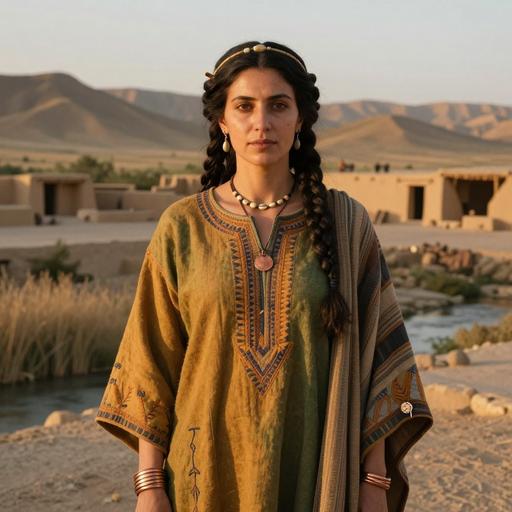
Portrait reconstruction of I1661
Ancient Individual

A woman buried in Iran in the Copper Age era

I1661
4700 BCE - 4461 BCE
Female
Chalcolithic Iran
Iran
Scroll to begin
Chapter I

Identity

The biological and cultural markers that define this ancient individual

Sample ID

I1661

Date Range

4700 BCE - 4461 BCE

Biological Sex

Female

mtDNA Haplogroup

H29

Cultural Period

Chalcolithic Iran

Chapter II

Place

Where this individual was discovered

Country Iran
Locality Seh Gabi
Coordinates 34.5000, 47.9600
Chapter III

Time

When this individual lived in the broader context of human history

I1661 4700 BCE - 4461 BCE
Chapter IV

Story

The narrative of this ancient life

The Chalcolithic era, also known as the Copper Age, represents a significant period in the history of Iran, falling between the Neolithic and the Bronze Age, approximately from 5500 to 3000 BCE. During this time, significant cultural, technological, and societal advancements took place which laid the groundwork for the complex civilizations that would later develop in the region.

Geography and Environment:

Chalcolithic Iran was characterized by a diverse range of environmental zones including mountains, plains, and river valleys which influenced the distribution and lifestyle of its inhabitants. The Zagros Mountains, the central plateau, and the coastal plains of the Persian Gulf and Caspian Sea all provided varied resources and challenges. This period saw human communities increasingly settled alongside permanent water sources, leading to the development of more stable agricultural societies.

Technological Developments:

A defining feature of the Chalcolithic era was the introduction and use of copper alongside traditional stone tools. This was the first time humans began experimenting with metallurgy, and in Iran, this led to the bolstering of craft specialization and technological innovation. Artisans learned to cold-hammer native copper and eventually developed techniques for smelting. While copper tools and ornaments were not widespread among common populations due to the complexities of production, their presence indicates the beginnings of social stratification.

Settlements and Architecture:

This era saw the growth of villages into more complex settlements. Archaeological sites such as Tepe Sialk, Tepe Hissar, and Tepe Yahya provide key insights into the architectural advancements of the time which included mud-brick homes, communal storage facilities, and religious or communal buildings. These settlements were often fortified, suggesting a need for defense and hinting at emerging socio-political complexities.

Economy and Agriculture:

Agriculture during the Chalcolithic period in Iran became more sophisticated. The domestication of plants such as wheat, barley, and legumes, alongside animals like cattle, sheep, and goats, allowed for more reliable food production. This in turn supported larger populations and more permanent settlements. There was also a notable rise in trade networks which facilitated the exchange of raw materials like obsidian, lapis lazuli, and, later, copper. This inter-regional trade indicates not only economic growth but also the movement of ideas and technologies.

Social Structure and Culture:

The Chalcolithic era in Iran is marked by increasing social stratification. This is evidenced by burials with grave goods indicating wealth differentiation and possibly the beginnings of a class system. Religious practices and rituals became more pronounced, as seen in the construction of temples and usage of symbolic artifacts which possibly indicates the presence of religious or ritual specialists. Artifacts such as pottery, figurines, and seals reflect the artistic expression and religious beliefs of the era, often depicting deities, animals, and abstract designs.

Challenges and Changes:

Populations during the Chalcolithic faced environmental challenges such as fluctuating climates and resource depletion, as well as potential conflicts caused by increasing population densities and competition for resources. These pressures may have driven technological and social innovations, leading to the more hierarchical and structured societies that characterized the later Bronze Age.

In conclusion, Chalcolithic Iran was a transformative period that laid crucial foundations for the development of more complex societies in the Ancient Near East. Its advancements in metallurgy, agriculture, social organization, and trade set the stage for the rise of memorable civilizations such as Elam, showcasing an era of significant transition and cultural flowering.

Chapter V

Genetics

The genetic ancestry of this ancient individual

Ancient Genetic Admixture

This analysis compares the DNA profile of I1661 with ancient reference populations, showing the genetic composition in terms of prehistoric ancestral groups.

Neolithic Farmers 95.7%
Ancient Asians 4.3%

Modern Genetic Admixture

This analysis compares the DNA profile with present-day reference populations, showing what percentage of genetic makeup resembles modern populations from different regions.

Asia 100.0%
Northern West Asian 54.7%
Mesopotamian 29.0%
Caucasian 20.4%
Cypriot 3.5%
Anatolian 1.8%
Central Asian, Northern Indian & Pakistani 24.7%
Pakistan 14.0%
Indian 10.8%
Arab, Egyptian & Levantine 20.6%
Levantine 20.6%

Closest Modern Populations

These are the modern populations showing the closest statistical alignment to A woman buried in Iran in the Copper Age era, ranked by genetic distance. Lower distance values indicate closer statistical similarity.

1
Turkish Erzurum
2.4326
2
Talysh Azerbaijan
2.4329
3
Azerbaijani Republic Shaki
2.7551
4
Kurd USSR
2.7888
5
Udi
2.8041
6
Kurd Zaza Turkey
2.8127
7
Alevi Dersim
2.8366
8
Ezid
3.0208
9
Kurd Sorani Iran Mukriyan
3.0226
10
Kurd Kurmanji Turkey
3.0321
Chapter VI

Context

Other ancient individuals connected to this sample

Sources

References

Scientific publications and genetic data

Scientific Publication

Genomic insights into the origin of farming in the ancient Near East

Authors Lazaridis I, Nadel D, Rollefson G
Abstract

We report genome-wide ancient DNA from 44 ancient Near Easterners ranging in time between ~12,000 and 1,400 bc, from Natufian hunter-gatherers to Bronze Age farmers. We show that the earliest populations of the Near East derived around half their ancestry from a 'Basal Eurasian' lineage that had little if any Neanderthal admixture and that separated from other non-African lineages before their separation from each other. The first farmers of the southern Levant (Israel and Jordan) and Zagros Mountains (Iran) were strongly genetically differentiated, and each descended from local hunter-gatherers. By the time of the Bronze Age, these two populations and Anatolian-related farmers had mixed with each other and with the hunter-gatherers of Europe to greatly reduce genetic differentiation. The impact of the Near Eastern farmers extended beyond the Near East: farmers related to those of Anatolia spread westward into Europe; farmers related to those of the Levant spread southward into East Africa; farmers related to those of Iran spread northward into the Eurasian steppe; and people related to both the early farmers of Iran and to the pastoralists of the Eurasian steppe spread eastward into South Asia.

G25 Coordinates

The G25 coordinates for sample I1661 can be used for detailed admixture analysis in our G25 Studio tool.

I1661,0.09365984,0.1119279,-0.06384204,-0.0412019,-0.04264532,-0.00796468,0.00662896,-0.003603,-0.03564434,-0.01343014,0.00274928,0.00225926,-0.00519182,0.00130696,-0.00018256,-0.00385494,0.00659354,-0.0018185,-0.00350388,0.00243414,0.00611466,-5.04E-06,0.00108178,-0.0090555,-0.00286312
Analyze in G25 Studio
Use code for 40% off Expires Feb 26