Menu
Store
Blog
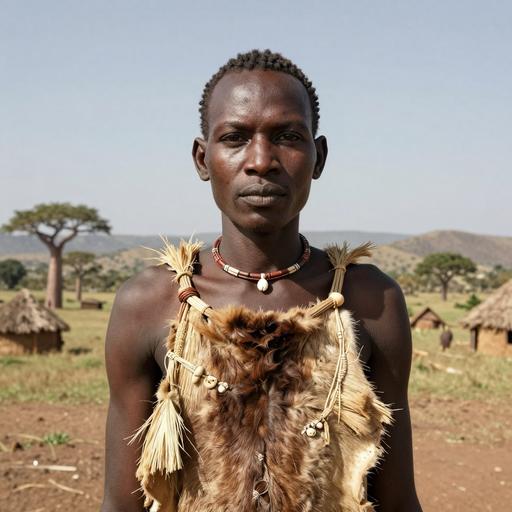
Portrait reconstruction of I19529
Ancient Individual

A man buried in Malawi in the Pleistocene era

I19529
15050 BCE - 12050 BCE
Male
Late Stone Age Malawi
Malawi
Scroll to begin
Chapter I

Identity

The biological and cultural markers that define this ancient individual

Sample ID

I19529

Date Range

15050 BCE - 12050 BCE

Biological Sex

Male

mtDNA Haplogroup

L5b

Y-DNA Haplogroup

Not available

Cultural Period

Late Stone Age Malawi

Chapter II

Place

Where this individual was discovered

Country Malawi
Locality Mzimba District. Hora
Chapter III

Time

When this individual lived in the broader context of human history

I19529 15050 BCE - 12050 BCE
Chapter IV

Story

The narrative of this ancient life

The Late Stone Age (LSA) in Malawi, particularly around 15,500 BP (Before Present), represents a significant period in prehistoric African archaeology. During this time, human groups in the region were making notable advancements in tool technology, subsistence practices, and social organization. Here’s an extensive overview of this era and culture:

Environmental Context

During this period, Malawi's environment was transitioning as the last Ice Age ended. The climate was generally cooler and drier than today but was gradually becoming warmer and more humid. This changing climate influenced the habitats available in the region, impacting the flora and fauna and subsequently the human activities. The area encompassing present-day Malawi featured lakes, riverine systems, and savannahs, providing diverse resources for human occupation.

Subsistence Strategies

The people of the Late Stone Age in Malawi were predominantly hunter-gatherers. Their subsistence strategies were adapted to the varied environments they inhabited:

  • Hunting: They hunted a range of animals that lived in savannah and open grassland ecosystems. Evidence from archaeological sites suggests they targeted both small and large game, employing complex hunting strategies possibly involving traps and targeted ambushes.

  • Foraging and Fishing: The communities harnessed a wide array of plant resources, nuts, tubers, fruits, and seeds, contributing to a diverse diet. Those near water bodies, particularly Lake Malawi, also relied heavily on fishing, using advanced techniques suitable for catching various fish species.

Tool Technology

The LSA in Malawi is marked by significant developments in lithic technology:

  • Microliths: The hallmark of this period is the production of microliths – small, often finely retouched stone tools that were likely mounted on wooden hafts to create composite tools. These were used as spear tips, arrowheads, and in cutting tools.

  • Bone Tools: In addition to stone, there’s evidence of tools made from bone and ivory, broadening the functional repertoire available to these communities.

  • Grinding Stones: The presence of grinding stones suggests the processing of plant materials, perhaps for consumption or other uses like pigment production.

Social Organization and Cultural Expressions

While direct evidence of social organization is scarce, certain inferences can be made:

  • Mobile Lifestyles: The mobile way of living is suggested by the temporary, seasonal campsites discovered, indicating a semi-nomadic lifestyle adapting to resource availability.

  • Artistic Expression: Although less documented than in some other regions of Africa, it’s plausible that there were forms of artistic and symbolic expressions, possibly including rock art, body adornment, or portable art forms made from readily available local materials.

  • Trade and Exchange: The presence of non-local materials in some archaeological contexts implies long-distance trade or exchange networks, though the extent and complexity of these networks remain a subject of study.

Genetic and Linguistic Implications

The Late Stone Age in Malawi is also critical for understanding human population movements and interactions across southern and eastern Africa. Genetic evidence suggests this era involved complex demographic processes, including migrations and admixture events, contributing to the modern genetic landscape of African populations. Additionally, linguistic diversity in the wider region points to long-standing cultural and social interactions.

Archaeological Sites

Several key sites in Malawi contribute to our understanding of the LSA:

  • Mwanganda’s Village and Chencherere: These sites have yielded significant archaeological finds, including stone tools and faunal remains, aiding in reconstructing the lifestyles of these prehistoric communities.

In summary, the Late Stone Age in Malawi around 15,500 BP was characterized by adaptive strategies in tool-making, subsistence, and social organization in response to environmental changes. The people of this era contributed significantly to the cultural and genetic tapestry of Africa, laying foundations that would influence subsequent human societies in the region.

Chapter V

Genetics

The genetic ancestry of this ancient individual

Ancient Genetic Admixture

This analysis compares the DNA profile of I19529 with ancient reference populations, showing the genetic composition in terms of prehistoric ancestral groups.

Ancient Africans 81.2%
Neolithic Farmers 11.0%
Ancient Asians 7.8%

Modern Genetic Admixture

This analysis compares the DNA profile with present-day reference populations, showing what percentage of genetic makeup resembles modern populations from different regions.

Africa 92.6%
African Hunter-Gatherer 65.1%
Northern East African 22.8%
Eastern African 12.1%
Ethiopian 10.6%
Congolese & Southern East African 2.4%
South East African 2.4%
West African 2.3%
Senegambian & Guinean 2.3%
Oceania 5.3%
Melanesian 5.3%
Papuan 5.3%
Asia 2.1%
Chinese & Southeast Asian 1.4%
Vietnamese 1.4%
Northern West Asian 0.7%
Anatolian 0.7%

Closest Modern Populations

These are the modern populations showing the closest statistical alignment to A man buried in Malawi in the Pleistocene era, ranked by genetic distance. Lower distance values indicate closer statistical similarity.

1
Ethiopian Anuak
2.3005
2
Sudanese
2.4223
3
Dinka
2.7701
4
Sudan Nuba Koalib
5.0201
Chapter VI

Context

Other ancient individuals connected to this sample

Sources

References

Scientific publications and genetic data

Scientific Publication

Ancient DNA and deep population structure in sub-Saharan African foragers

Authors Lipson M, Sawchuk EA, Thompson JC
Abstract

Multiple lines of genetic and archaeological evidence suggest that there were major demographic changes in the terminal Late Pleistocene epoch and early Holocene epoch of sub-Saharan Africa1-4. Inferences about this period are challenging to make because demographic shifts in the past 5,000 years have obscured the structures of more ancient populations3,5. Here we present genome-wide ancient DNA data for six individuals from eastern and south-central Africa spanning the past approximately 18,000 years (doubling the time depth of sub-Saharan African ancient DNA), increase the data quality for 15 previously published ancient individuals and analyse these alongside data from 13 other published ancient individuals. The ancestry of the individuals in our study area can be modelled as a geographically structured mixture of three highly divergent source populations, probably reflecting Pleistocene interactions around 80-20 thousand years ago, including deeply diverged eastern and southern African lineages, plus a previously unappreciated ubiquitous distribution of ancestry that occurs in highest proportion today in central African rainforest hunter-gatherers. Once established, this structure remained highly stable, with limited long-range gene flow. These results provide a new line of genetic evidence in support of hypotheses that have emerged from archaeological analyses but remain contested, suggesting increasing regionalization at the end of the Pleistocene epoch.

G25 Coordinates

The G25 coordinates for sample I19529 can be used for detailed admixture analysis in our G25 Studio tool.

I19529,-0.5702777,0.05270726,-0.00396976,-0.00380316,-0.00173278,-0.00663868,0.00259166,0.0039576,0.07672792,-0.0883956,-0.0162168,0.03016076,-0.03015846,-0.0005504,0.00757764,-0.01294864,0.02359038,-0.01152628,0.01893278,-0.02003808,-0.00080314,0.00233762,-0.0028195,-0.00029826,0.00405778
Analyze in G25 Studio
Use code for 40% off Expires Feb 27