Menu
Store
Blog
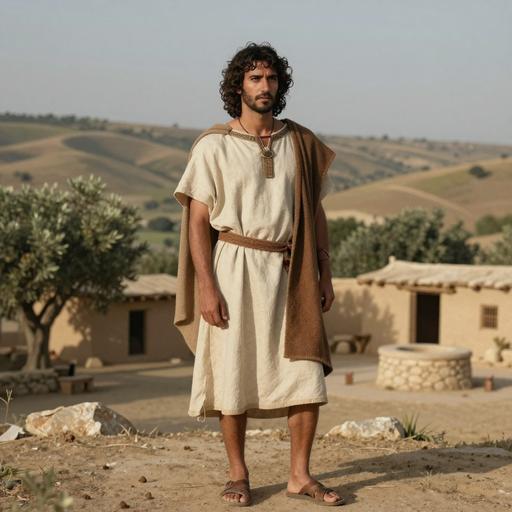
Portrait reconstruction of I2201
Ancient Individual

A man buried in Israel in the Iron Age era

I2201
1014 BCE - 836 BCE
Male
Iron Age Israel
Israel
Scroll to begin
Chapter I

Identity

The biological and cultural markers that define this ancient individual

Sample ID

I2201

Date Range

1014 BCE - 836 BCE

Biological Sex

Male

mtDNA Haplogroup

X2b

Y-DNA Haplogroup

T-CTS6280

Cultural Period

Iron Age Israel

Chapter II

Place

Where this individual was discovered

Country Israel
Locality Abel Beth Maacah
Coordinates 33.2603, 35.5803
Chapter III

Time

When this individual lived in the broader context of human history

I2201 1014 BCE - 836 BCE
Chapter IV

Story

The narrative of this ancient life

The Iron Age in ancient Israel, spanning approximately from 1200 to 586 BCE, marks a significant period in the history of the Ancient Near Eastern civilizations. This era is characterized by the transition from the late Bronze Age collapse into newer sociopolitical structures, the emergence of the Israelite identity, and considerable cultural and technological development.

Historical Context

The Iron Age in Israel is typically divided into three main periods:

  1. Iron Age I (c. 1200–1000 BCE): This initial phase follows the decline of major Bronze Age civilizations, including the Egyptian and Hittite empires, leading to a power vacuum and significant societal changes. It was a time of settlement and transition, marked by the influx of the Sea Peoples, including the Philistines, and the gradual settlement of Israelite tribes.

  2. Iron Age II (c. 1000–586 BCE): This period is further divided into Iron Age IIA (c. 1000–925 BCE), Iron Age IIB (c. 925–720 BCE), and Iron Age IIC (c. 720–586 BCE). It encompasses the rise of the Israelite monarchies, including the United Kingdom under Saul, David, and Solomon, followed by the division into the northern Kingdom of Israel and the southern Kingdom of Judah. This era ends with the Assyrian and Babylonian conquests.

  3. Iron Age III (specifically 7th to 6th century BCE in other Near Eastern contexts): Not commonly used as a standalone phase in Israeli archeology but relevant in understanding the wider regional dynamics leading up to the Babylonian exile.

Sociopolitical Structure

In the early Iron Age, Israel's sociopolitical landscape was tribal and semi-nomadic, gradually transitioning to settled communities. With the establishment of the monarchy, Israel developed into centralized states with complex bureaucracies. The united monarchy (c. 1020–930 BCE) established strong administrations and conducted substantial building projects, many associated with King Solomon, like the Temple in Jerusalem.

Following the schism into the northern and southern kingdoms (c. 930 BCE), political dynamics shifted. Both kingdoms experienced varying degrees of prosperity and conflict, often dominated by external threats from larger empires—most notably, the Neo-Assyrian Empire and later the Neo-Babylonian Empire.

Cultural and Religious Developments

The Iron Age is crucial for the development of Israelite religion, which began diverging distinctly from Canaanite influences. The worship of Yahweh became central, amidst ongoing tensions with polytheistic practices. The religious evolution during this era laid the foundations for Judaism and contributed significantly to the Hebrew Bible's composition, though much of its text as we have it was compiled later.

The period saw a shift in religious practices, with increased importance placed on literacy and the written word as evidenced by archaeological finds of early Hebrew inscriptions and administrative records. The development of the Bible's Deuteronomistic history likely finds its roots in this era, reflecting the political and theological concerns of the time.

Material Culture and Technological Advances

Iron Age Israel witnessed significant advancements in material culture, with the introduction and widespread use of iron metallurgy, leading to more effective tools and weapons. Pottery styles advanced, reflecting greater artistry and functionality, often used as a timeline marker in archaeological studies.

Architectural feats during this period include the construction of fortified cities, administrative buildings, and religious structures, many of which have been unearthed in key archaeological sites such as Jerusalem, Samaria, Megiddo, and Lachish.

Economy and Trade

The economy during the Iron Age in Israel was largely agrarian, but trade progressively became vital due to Israel's position as a crossroad of ancient trade routes connecting Egypt, Mesopotamia, and Anatolia. Agricultural products, textiles, and metallurgy were significant commodities, with olive oil and wine being notable exports.

Conclusion

Iron Age Israel was a formative period that shaped the cultural and religious foundations of modern Judaism and left a lasting legacy on Western civilization. Despite external pressures and eventual conquests, the cultural and religious developments of this era have exerted significant influence over subsequent historical narratives in the region. The archaeological and textual records from this age remain crucial to understanding the broader Ancient Near Eastern context and the origins of Israelite society.

Chapter V

Genetics

The genetic ancestry of this ancient individual

Ancient Genetic Admixture

This analysis compares the DNA profile of I2201 with ancient reference populations, showing the genetic composition in terms of prehistoric ancestral groups.

Neolithic Farmers 79.3%
European Hunter-Gatherers 17.9%
Western Steppe Pastoralists 2.8%

Modern Genetic Admixture

This analysis compares the DNA profile with present-day reference populations, showing what percentage of genetic makeup resembles modern populations from different regions.

Asia 77.5%
Arab, Egyptian & Levantine 37.3%
Arabian 27.6%
Levantine 9.7%
Northern West Asian 37.1%
Mesopotamian 32.2%
Cypriot 4.8%
Central Asian, Northern Indian & Pakistani 3.1%
Indian 3.1%
Europe 19.8%
Southern European 19.8%
Italian 19.8%
Africa 2.7%
North African 2.7%
Egyptian 2.7%

Closest Modern Populations

These are the modern populations showing the closest statistical alignment to A man buried in Israel in the Iron Age era, ranked by genetic distance. Lower distance values indicate closer statistical similarity.

1
Lebanese Christian
1.9329
2
Samaritan
2.4669
3
Palestinian Beit Sahour
2.7664
4
Lebanese Druze
2.8851
5
Druze
3.0081
6
Cochin Jews Paradesi
3.2014
7
Alawite
3.2668
8
Karaite Egypt
3.3194
9
Lebanese Muslim
3.3932
10
Karaite Iraq
3.4437
Chapter VI

Context

Other ancient individuals connected to this sample

Sources

References

Scientific publications and genetic data

Scientific Publication

The Genomic History of the Bronze Age Southern Levant

Authors Agranat-Tamir L, Waldman S, Martin MAS
Abstract

We report genome-wide DNA data for 73 individuals from five archaeological sites across the Bronze and Iron Ages Southern Levant. These individuals, who share the "Canaanite" material culture, can be modeled as descending from two sources: (1) earlier local Neolithic populations and (2) populations related to the Chalcolithic Zagros or the Bronze Age Caucasus. The non-local contribution increased over time, as evinced by three outliers who can be modeled as descendants of recent migrants. We show evidence that different "Canaanite" groups genetically resemble each other more than other populations. We find that Levant-related modern populations typically have substantial ancestry coming from populations related to the Chalcolithic Zagros and the Bronze Age Southern Levant. These groups also harbor ancestry from sources we cannot fully model with the available data, highlighting the critical role of post-Bronze-Age migrations into the region over the past 3,000 years.

G25 Coordinates

The G25 coordinates for sample I2201 can be used for detailed admixture analysis in our G25 Studio tool.

I2201,0.08131924,0.1448408,-0.05196858,-0.08310656,-0.01073644,-0.03633732,-0.00218748,-0.01082782,0.01351214,0.01027516,0.0072054,-0.01055956,0.01159526,-0.0001558,-0.008958,0.0118963,-0.00704898,0.00171256,0.00111666,0.0005829,0.00337444,0.00713318,-0.00066436,0.00021778,-0.00012351
Analyze in G25 Studio
Use code for 40% off Expires Feb 27