Menu
Store
Blog
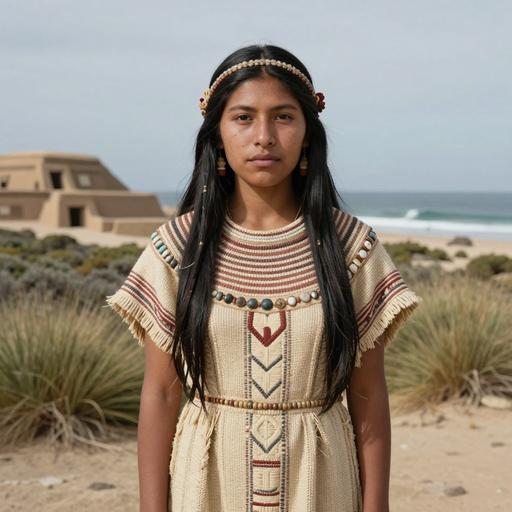
Portrait reconstruction of I2268
Ancient Individual

A woman buried in Peru in the Ancient South America era

I2268
2400 BCE - 2015 BCE
Female
Late Archaic Huaca Prieta, Peru 4,500 Years Ago
Peru
Scroll to begin
Chapter I

Identity

The biological and cultural markers that define this ancient individual

Sample ID

I2268

Date Range

2400 BCE - 2015 BCE

Biological Sex

Female

mtDNA Haplogroup

B2

Cultural Period

Late Archaic Huaca Prieta, Peru 4,500 Years Ago

Chapter II

Place

Where this individual was discovered

Country Peru
Locality El Brujo
Chapter III

Time

When this individual lived in the broader context of human history

I2268 2400 BCE - 2015 BCE
Chapter IV

Story

The narrative of this ancient life

The Late Archaic period at Huaca Prieta, located on the northern coast of Peru, represents a fascinating and formative epoch in pre-Columbian Andean history. This time frame, roughly 4,500 years ago, corresponds to a significant period of cultural and technological development among the indigenous peoples of the region. Huaca Prieta is one of the oldest and most important archaeological sites in the New World, offering rich insights into the complexities of early Andean societies.

Geography and Environment

Huaca Prieta is situated on a terrace overlooking the Chicama River Valley, near the Pacific Ocean. This strategic location provided a diverse array of resources and influenced the lifestyles of its inhabitants. The region's environment included coastal plains, fertile river valleys, and access to abundant marine resources. These features supported early agricultural practices and facilitated trade and cultural exchanges with nearby areas.

Subsistence and Economy

By 4,500 years ago, the people of Huaca Prieta were engaged in a mixed subsistence strategy that included hunting, gathering, fishing, and early forms of agriculture. Evidence suggests that they cultivated crops such as gourds, squash, beans, and cotton, utilizing the fertile floodplains of the Chicama Valley. Marine resources were equally important, with shellfish, fish, and marine mammals contributing significantly to their diet. The utilization of both terrestrial and marine resources indicates an advanced understanding of the surrounding environment and resource management.

Social Organization and Culture

The society at Huaca Prieta likely consisted of relatively complex social structures for the time, as indicated by the presence of elaborate architecture and craftsmanship. The construction of platform mounds and other communal structures suggests organized labor and possibly some level of social stratification. These structures were used for ceremonial purposes, indicating a society with spiritual or religious practices.

The people of Huaca Prieta are also known for their innovative textile production. They created intricate textiles using cotton and natural dyes, showcasing sophisticated weaving techniques. The presence of these textiles indicates not only technical skill but also the development of symbolic and possibly communicative aspects of their culture, as textiles often held cultural and social significance.

Art and Material Culture

Artifacts from Huaca Prieta reveal a rich material culture. Beyond textiles, archaeologists have uncovered a range of tools crafted from stone and bone, such as fishing implements and hunting tools. Decorative artifacts, including carved gourds, suggest aesthetic values and artistic expression. The complexity of these items is indicative of a society that placed importance on both functionality and art.

Interaction and Exchange

The evidence from Huaca Prieta suggests that the site was part of larger networks of interaction and exchange. This is inferred from the presence of non-local materials at the site, which indicates trade or communication with other regions. Such interactions would have facilitated the exchange of goods, ideas, and technologies, contributing to the overall development of this and neighboring cultures.

Archaeological Significance

Huaca Prieta is crucial for understanding the development of early Andean civilizations. The site's well-preserved remains provide a window into the social, economic, and cultural dynamics during the Late Archaic period. Ongoing archaeological investigations continue to shed light on how the inhabitants adapted to their environment and laid the groundwork for the subsequent cultural achievements in the Andean region, including the rise of more complex societies like the Moche and the Inca.

In summary, Huaca Prieta during the Late Archaic period was a center of early cultural and technological innovation. The inhabitants harnessed their diverse environment to develop a mixed economy and complex social systems, leaving a legacy that would influence later Andean civilizations. Their advancements in agriculture, textiles, architecture, and social organization marked a pivotal step in the region's pre-Columbian history.

Chapter V

Genetics

The genetic ancestry of this ancient individual

Ancient Genetic Admixture

This analysis compares the DNA profile of I2268 with ancient reference populations, showing the genetic composition in terms of prehistoric ancestral groups.

Ancient Native Americans 71.6%
Ancient Asians 20.4%
Western Steppe Pastoralists 6.0%
Neolithic Farmers 2.0%

Modern Genetic Admixture

This analysis compares the DNA profile with present-day reference populations, showing what percentage of genetic makeup resembles modern populations from different regions.

America 80.3%
America 80.3%
Native American 80.3%
Asia 19.3%
Northern Asian 17.4%
Siberian 17.4%
Chinese & Southeast Asian 1.9%
Chinese 1.9%

Closest Modern Populations

These are the modern populations showing the closest statistical alignment to A woman buried in Peru in the Ancient South America era, ranked by genetic distance. Lower distance values indicate closer statistical similarity.

1
Mixe
2.3148
2
Huichol
2.8416
3
Mayan
2.9546
4
Pima
2.9571
5
Cachi
3.0420
6
Bolivian Lapaz
3.0822
7
Zapotec
3.3345
8
Nahua
3.3964
9
Colla
3.5047
10
Mixtec
3.5286
Chapter VI

Context

Other ancient individuals connected to this sample

Sources

References

Scientific publications and genetic data

Scientific Publication

A Paleogenomic Reconstruction of the Deep Population History of the Andes

Authors Nakatsuka N, Lazaridis I, Barbieri C
Abstract

There are many unanswered questions about the population history of the Central and South Central Andes, particularly regarding the impact of large-scale societies, such as the Moche, Wari, Tiwanaku, and Inca. We assembled genome-wide data on 89 individuals dating from ∼9,000-500 years ago (BP), with a particular focus on the period of the rise and fall of state societies. Today's genetic structure began to develop by 5,800 BP, followed by bi-directional gene flow between the North and South Highlands, and between the Highlands and Coast. We detect minimal admixture among neighboring groups between ∼2,000-500 BP, although we do detect cosmopolitanism (people of diverse ancestries living side-by-side) in the heartlands of the Tiwanaku and Inca polities. We also highlight cases of long-range mobility connecting the Andes to Argentina and the Northwest Andes to the Amazon Basin. VIDEO ABSTRACT.

G25 Coordinates

The G25 coordinates for sample I2268 can be used for detailed admixture analysis in our G25 Studio tool.

I2268,0.05736172,-0.31552384,0.11411032,0.09514874,-0.11560172,-0.01391178,-0.28398024,-0.33317576,-0.01219258,-0.01503856,0.0042622,-0.00045408,-0.00177148,0.02535844,-0.0055734,-0.00073892,0.00614268,0.00324436,0.00135476,-0.00161524,0.00142672,0.00582908,-0.00176044,-0.00469454,-0.00468389
Analyze in G25 Studio
Use code for 40% off Expires Feb 27