Menu
Store
Blog
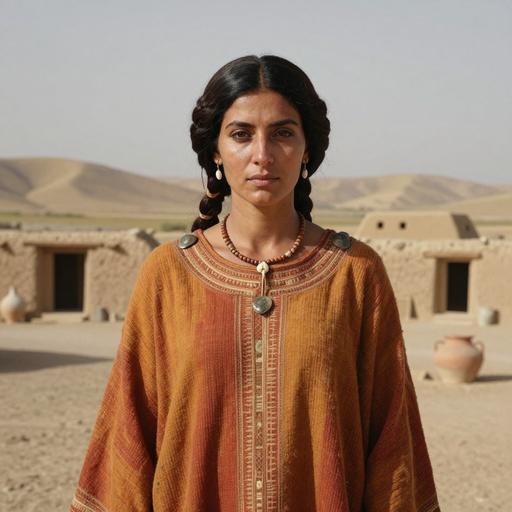
Portrait reconstruction of I2918
Ancient Individual

A woman buried in Iran in the Copper Age era

I2918
3705 BCE - 3530 BCE
Female
Chalcolithic Tepe Hissar
Iran
Scroll to begin
Chapter I

Identity

The biological and cultural markers that define this ancient individual

Sample ID

I2918

Date Range

3705 BCE - 3530 BCE

Biological Sex

Female

mtDNA Haplogroup

U7

Cultural Period

Chalcolithic Tepe Hissar

Chapter II

Place

Where this individual was discovered

Country Iran
Locality Tepe Hissar
Coordinates 36.1544, 54.3836
Chapter III

Time

When this individual lived in the broader context of human history

I2918 3705 BCE - 3530 BCE
Chapter IV

Story

The narrative of this ancient life

Tepe Hissar, located in northeastern Iran near the modern city of Damghan, is an archaeological site that provides significant insights into the Chalcolithic era and early Bronze Age cultures of the region. This site was first excavated in the early 20th century by the American archaeologist Erich Schmidt, and subsequent excavations have shed more light on its cultural significance and development.

Chronology and Cultural Phases:

Tepe Hissar's occupation spans several millennia, roughly from the late fifth millennium BCE to the early second millennium BCE. The site can be divided into three main cultural phases, designated Hissar I, II, and III, each exhibiting distinct characteristics.

Hissar I (Late Chalcolithic, c. 4300–3700 BCE):

  • Economy and Subsistence: During this phase, the inhabitants practiced mixed farming, with evidence of wheat, barley, and legumes cultivation. They also domesticated animals such as cattle, sheep, and goats.
  • Architecture: Archaeological findings suggest the use of mud-brick construction for residential buildings, indicating a shift from purely nomadic traditions to more settled life.
  • Material Culture: Pottery from this phase is primarily handmade, featuring simple designs and shapes. Tools and implements crafted from stone, bone, and copper are also prevalent, marking the emergence of metallurgy.

Hissar II (Early Bronze Age, c. 3700–2800 BCE):

  • Economic Intensification: There is evidence of increased agricultural production, possibly driven by population growth or climate change. Trade flourished, with materials such as lapis lazuli and turquoise suggesting long-distance exchanges.
  • Architectural Developments: More complex architectural structures appear, including fortified buildings, indicative of social stratification and organized community planning.
  • Craftsmanship: Pottery becomes more diverse and technologically advanced, with the introduction of the potter’s wheel. Metalworking improves, with evidence of bronze production alongside copper. This period shows increased artistic expression in the form of intricate jewelry and metalwork.

Hissar III (Middle Bronze Age, c. 2800–2000 BCE):

  • Cultural Flourishing: This phase marks the peak of Tepe Hissar's cultural development, with significant urban growth. Craft specialization is evident, and there is a broader range of occupational roles within the society.
  • Urbanization and Fortifications: The site shows signs of fortified walls, public buildings, and possibly religious or administrative centers. Settlement organization reflects advanced planning and social hierarchy.
  • Art and Iconography: Artifacts from this phase include painted pottery with geometric and figurative motifs, cylinder seals, and elaborately crafted metal items. These suggest a society with complex symbolic systems and connections with the broader Mesopotamian and Central Asian regions.
  • Decline and Transformation: Towards the end of this phase, there is evidence of a decline, possibly due to environmental factors, resource depletion, or invasions, leading to cultural transformations and migrations.

Social and Cultural Aspects:

  • Society and Hierarchy: Throughout its phases, Tepe Hissar exhibits increasing social stratification. Evidence from burial sites—ranging from simple interments to elaborate tombs with a wealth of grave goods—indicates the emergence of an elite class.
  • Religion and Rituals: While specific religious beliefs remain speculative, the presence of ritualistic items and special architectural features points to the importance of religious practices.
  • Trade and Interaction: The site’s location suggests it was a significant node in trans-regional trade networks, bridging cultures in Mesopotamia, Central Asia, and the Iranian plateau.

Technological Innovations:

  • Metallurgy: The Chalcolithic phase marks the onset of metallurgy with the working of copper, and by the Bronze Age, alloys such as bronze are in use. This technological advancement significantly impacts the culture and economy of Tepe Hissar.
  • Pottery: The evolution of pottery techniques, from hand-made to wheel-thrown, highlights technological and artistic advancements, reflecting both daily utility and ceremonial purposes.

Conclusion:

Tepe Hissar is a testament to the dynamic cultural transitions that occurred in the Near East during the Chalcolithic and early Bronze Age. It illustrates the rise of complex societies characterized by technological innovation, social stratification, and regional interaction. The archaeological findings from Tepe Hissar not only provide a window into the diverse lifestyles and practices of its ancient inhabitants but also enhance our understanding of broader prehistoric developments across the Iranian plateau and beyond.

Chapter V

Genetics

The genetic ancestry of this ancient individual

Ancient Genetic Admixture

This analysis compares the DNA profile of I2918 with ancient reference populations, showing the genetic composition in terms of prehistoric ancestral groups.

Neolithic Farmers 68.7%
European Hunter-Gatherers 11.5%
Western Steppe Pastoralists 11.3%
Ancient Asians 8.5%

Modern Genetic Admixture

This analysis compares the DNA profile with present-day reference populations, showing what percentage of genetic makeup resembles modern populations from different regions.

Asia 100.0%
Northern West Asian 49.9%
Caucasian 37.6%
Mesopotamian 12.4%
Central Asian, Northern Indian & Pakistani 48.8%
Pakistan 29.9%
Indian 18.9%
Arab, Egyptian & Levantine 1.3%
Arabian 1.3%

Closest Modern Populations

These are the modern populations showing the closest statistical alignment to A woman buried in Iran in the Copper Age era, ranked by genetic distance. Lower distance values indicate closer statistical similarity.

1
Karachay
5.4664
2
North Ossetian
5.4905
3
Iranian Mazandarani O
5.5254
4
Azerbaijani Dagestan
5.6229
5
Ossetian
5.7465
6
Abazin
5.8354
7
Tat Dagestan Nyugdi
5.8712
8
Tat Azerbaijan
5.8913
9
Kumyk
5.9103
10
Iranian Persian Khorasan
5.9419
Chapter VI

Context

Other ancient individuals connected to this sample

Sources

References

Scientific publications and genetic data

Scientific Publication

The formation of human populations in South and Central Asia

Authors Narasimhan VM, Patterson N, Moorjani P
Abstract

By sequencing 523 ancient humans, we show that the primary source of ancestry in modern South Asians is a prehistoric genetic gradient between people related to early hunter-gatherers of Iran and Southeast Asia. After the Indus Valley Civilization's decline, its people mixed with individuals in the southeast to form one of the two main ancestral populations of South Asia, whose direct descendants live in southern India. Simultaneously, they mixed with descendants of Steppe pastoralists who, starting around 4000 years ago, spread via Central Asia to form the other main ancestral population. The Steppe ancestry in South Asia has the same profile as that in Bronze Age Eastern Europe, tracking a movement of people that affected both regions and that likely spread the distinctive features shared between Indo-Iranian and Balto-Slavic languages.

G25 Coordinates

The G25 coordinates for sample I2918 can be used for detailed admixture analysis in our G25 Studio tool.

I2918,0.09526852,0.0779092,-0.071887,-0.01002152,-0.05425856,0.003687,0.00917966,-0.00282128,-0.04451172,-0.01992248,-0.00409252,0.00594444,-0.0162242,0.00507504,0.00770434,-0.01448024,0.01675756,-0.00513958,-0.00702198,0.0121389,0.01122072,-0.00062566,0.00709614,-0.00716114,-0.0058347
Analyze in G25 Studio
Use code for 40% off Expires Feb 26