Menu
Store
Blog
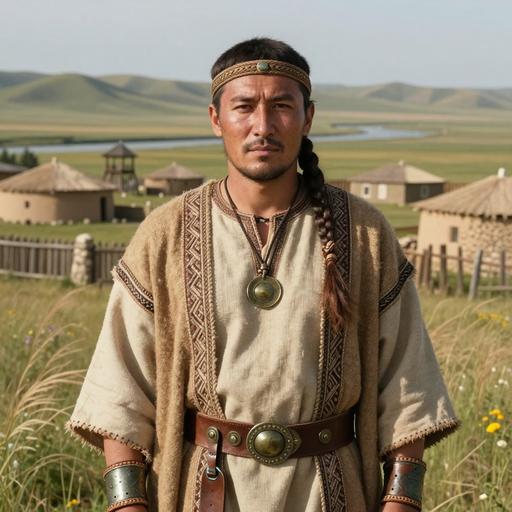
Portrait reconstruction of I3767
Ancient Individual

A man buried in Kazakhstan in the Middle Late Bronze Age era

I3767
1872 BCE - 1636 BCE
Male
Ak-Moustafa Mid-Late Bronze Age
Kazakhstan
Scroll to begin
Chapter I

Identity

The biological and cultural markers that define this ancient individual

Sample ID

I3767

Date Range

1872 BCE - 1636 BCE

Biological Sex

Male

mtDNA Haplogroup

U5b2b

Y-DNA Haplogroup

R-S23592

Cultural Period

Ak-Moustafa Mid-Late Bronze Age

Chapter II

Place

Where this individual was discovered

Country Kazakhstan
Locality Ak-Moustafa
Coordinates 47.7780, 72.0097
Chapter III

Time

When this individual lived in the broader context of human history

I3767 1872 BCE - 1636 BCE
Chapter IV

Story

The narrative of this ancient life

The Ak-Moustafa phase of the Mid-Late Bronze Age is a significant period within the Andronovo culture, which spanned across the steppes of Central Asia. This era is roughly dated between 1800 to 1400 BCE and is characterized by unique developments in social structure, technology, and cultural practices among the peoples inhabiting modern-day Kazakhstan and surrounding regions.

Geographic Context

The Andronovo culture, including the Ak-Moustafa phase, was primarily located in the vast steppes of Central Asia. These regions offered fertile lands and resources necessary for pastoral nomadism, which was a predominant way of life. The Ak-Moustafa communities were part of a broader cultural network that extended from the Ural Mountains in the west to the Yenisei River in the east, and from Siberia in the north to Central Asia in the south.

Social Structure

The Ak-Moustafa phase featured a complex social hierarchy primarily driven by kinship and clan-based systems. Society was likely composed of extended familial groups and tribes, each led by a chieftain or a council of elders. These leaders governed not only through hereditary positions but also demonstrated prowess in areas such as warfare, diplomacy, and spiritual leadership. There is evidence suggesting that burial practices were elaborate and reflected the social status of individuals, with grave goods indicating wealth and influence.

Economy and Subsistence

The economy of the Ak-Moustafa period was largely based on transhumant pastoralism. This involved the seasonal movement of livestock, including cattle, sheep, and horses, to find suitable pasturelands. The people of this era were expert horsemen, and horses played a crucial role not only in agriculture but also in trade, transport, and warfare. There is also evidence of limited agriculture that complemented their pastoral lifestyle, with communities cultivating crops such as barley and wheat.

Trade was significant in this period, as the Ak-Moustafa people engaged in long-distance exchange of goods such as metal artifacts, textiles, and pottery, linking them with distant cultures. It was through these networks that they acquired tin and copper, essential resources for bronze-making.

Technological and Cultural Achievements

Technologically, the Ak-Moustafa phase saw significant advancements in metallurgy. The people were proficient in bronze work, creating tools, weapons, and ornaments that reflected both functional and ceremonial purposes. The metalwork from this era is noted for its intricate design, showcasing the craftsmanship and artistic skills of the culture.

Pottery of this period exhibited a transformation with more sophisticated forms and decorative patterns. The ceramics often featured geometric motifs and were used in both daily life and ritual contexts.

Culturally, the Ak-Moustafa phase was rich with traditions and practices that involved spiritual and religious elements. Ancestor worship and belief in a pantheon of deities governing natural forces were likely prevalent. Ritualistic sites, possibly used for communal gatherings and spiritual ceremonies, have been identified, underscoring the cultural and religious depth of the society.

Interaction and Influence

The Ak-Moustafa people were part of the larger Andronovo culture, which itself interacted with other contemporary cultures across Eurasia. These interactions were facilitated by trade routes that connected them with the civilizations of the Indus Valley, Mesopotamia, and even areas of Eastern Europe. Through these contacts, the Ak-Moustafa phase experienced both influences from and contributions to neighboring cultures, leading to a dynamic exchange of ideas and practices.

Architectural Practices

Archaeological evidence from the Ak-Moustafa period suggests that the people constructed various forms of dwellings, ranging from temporary tent-like structures suited for their nomadic lifestyle to more permanent stone or timber structures for settled communities. Defensive architecture, such as fortified settlements, may also have been developed in response to inter-tribal conflicts or external threats.

Conclusion

The Ak-Moustafa phase of the Mid-Late Bronze Age represents a vibrant and dynamic period within the Andronovo culture. It showcases an era of significant social organization, technological prowess, and cultural richness. The legacy of this era is embedded in the archaeological record, offering insights into the life, beliefs, and achievements of these ancient peoples who played a pivotal role in the cultural evolution of Central Asia.

Chapter V

Genetics

The genetic ancestry of this ancient individual

Ancient Genetic Admixture

This analysis compares the DNA profile of I3767 with ancient reference populations, showing the genetic composition in terms of prehistoric ancestral groups.

Western Steppe Pastoralists 43.4%
European Hunter-Gatherers 35.2%
Neolithic Farmers 19.1%
Ancient Asians 2.3%

Modern Genetic Admixture

This analysis compares the DNA profile with present-day reference populations, showing what percentage of genetic makeup resembles modern populations from different regions.

Europe 85.1%
Northwestern European 85.1%
Scandinavian 85.1%
Asia 14.9%
Central Asian, Northern Indian & Pakistani 14.9%
Pakistan 14.9%

Closest Modern Populations

These are the modern populations showing the closest statistical alignment to A man buried in Kazakhstan in the Middle Late Bronze Age era, ranked by genetic distance. Lower distance values indicate closer statistical similarity.

1
Swedish
4.7954
2
Hungarian
4.8387
3
Moksha
4.8432
4
German Hamburg
4.8764
5
Czech
5.0285
6
Afrikaner
5.0676
7
Moldovan O
5.0932
8
Finnish Southwest
5.1161
9
Ukrainian Zakarpattia
5.1648
10
Norwegian
5.1890
Chapter VI

Context

Other ancient individuals connected to this sample

Sources

References

Scientific publications and genetic data

Scientific Publication

The formation of human populations in South and Central Asia

Authors Narasimhan VM, Patterson N, Moorjani P
Abstract

By sequencing 523 ancient humans, we show that the primary source of ancestry in modern South Asians is a prehistoric genetic gradient between people related to early hunter-gatherers of Iran and Southeast Asia. After the Indus Valley Civilization's decline, its people mixed with individuals in the southeast to form one of the two main ancestral populations of South Asia, whose direct descendants live in southern India. Simultaneously, they mixed with descendants of Steppe pastoralists who, starting around 4000 years ago, spread via Central Asia to form the other main ancestral population. The Steppe ancestry in South Asia has the same profile as that in Bronze Age Eastern Europe, tracking a movement of people that affected both regions and that likely spread the distinctive features shared between Indo-Iranian and Balto-Slavic languages.

G25 Coordinates

The G25 coordinates for sample I3767 can be used for detailed admixture analysis in our G25 Studio tool.

I3767,0.1270795,0.09708054,0.0556933,0.04918934,0.01990902,0.01335924,0.00729688,0.00933414,-0.0056239,-0.01488408,-0.00375712,-0.00184166,-0.00072402,-0.00404698,0.00585552,-0.0044395,-0.01231298,0.00274262,-0.0036066,-0.00180408,-0.00162326,0.0052304,-0.0025854,0.01119234,-0.00237256
Analyze in G25 Studio
Use code for 40% off Expires Feb 26