Menu
Store
Blog
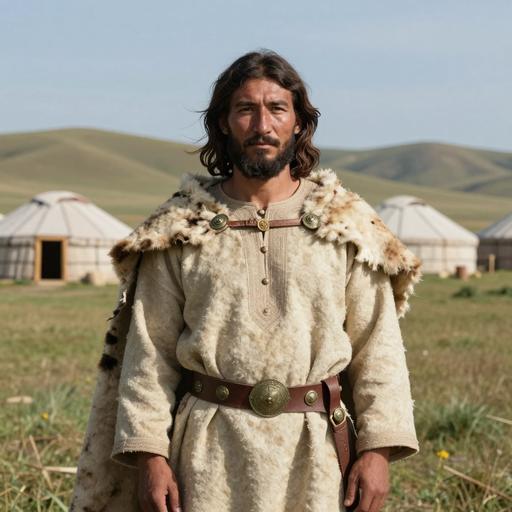
Portrait reconstruction of I6794
Ancient Individual

A man buried in Kazakhstan in the Middle Late Bronze Age era

I6794
1876 BCE - 1687 BCE
Male
Mid-Late Bronze Maitan Alakul
Kazakhstan
Scroll to begin
Chapter I

Identity

The biological and cultural markers that define this ancient individual

Sample ID

I6794

Date Range

1876 BCE - 1687 BCE

Biological Sex

Male

mtDNA Haplogroup

U4b1a1a1

Y-DNA Haplogroup

R-Z2124

Cultural Period

Mid-Late Bronze Maitan Alakul

Chapter II

Place

Where this individual was discovered

Country Kazakhstan
Locality Maitan
Coordinates 50.0900, 74.4400
Chapter III

Time

When this individual lived in the broader context of human history

I6794 1876 BCE - 1687 BCE
Chapter IV

Story

The narrative of this ancient life

The Mid-Late Bronze Age Maitan Alakul phase of the Andronovo culture is a fascinating subject that provides insight into the ancient Eurasian steppe's complex societal structures and interactions. This era, generally dated to the second millennium BCE (circa 2000–1100 BCE), unfolded over a vast landscape that today includes parts of Kazakhstan, Russia, and western Siberia. Emerging from the broader Andronovo cultural horizon, the Maitan Alakul variant represents one of the most distinctive and influential cultural phases in the development of Eurasian nomadic societies.

Geographical Setting

The Maitan Alakul phase primarily occupied the central and northern steps of Kazakhstan, including areas around the Irtysh River and the Ural region. This area is characterized by its steppe and forest-steppe zones, which provided a rich environment for both pastoral and agrarian lifestyles. The presence of rivers and a relatively temperate climate compared to the harshness of the Siberian regions further north made it an ideal region for the development of complex societies.

Societal Structure

The Maitan Alakul phase is known for its hierarchical social structure, as evidenced by its varying burial practices. Elite individuals were often interred in elaborate kurgans, or burial mounds, indicating a stratified society where wealth and status were ascribed at death. These burials often contained a range of grave goods, including weapons, pottery, and ornaments made from bronze, gold, and silver, which suggests the presence of a warrior aristocracy or chieftain class.

The societal organization was likely based on kinship and tribal affiliations, with extended families or clans forming the basic units of social life. The mobility of pastoral nomadism meant that these societies were capable of covering vast distances, facilitating trade and cultural exchanges with civilizations to the south, including the Bactria-Margiana Archaeological Complex (BMAC) and the Bronze Age Near East.

Economy and Livelihood

The economy of the Maitan Alakul people was largely based on pastoralism, with the domestication of horses, cattle, sheep, and goats playing a crucial role. Horses, in particular, were of immense cultural significance, used for both transportation and as status symbols in society. This facilitated the development of mobile pastoralist strategies, allowing groups to exploit different ecological niches throughout the year.

In addition to pastoralism, there is evidence of agriculture, particularly the cultivation of wheat and barley. The combination of pastoralism and agriculture suggests a mixed economy that could provide a more stable and diverse food supply.

Technological and Cultural Innovations

The Maitan Alakul culture is recognized for its advanced metallurgical practices. The production of bronze tools, weapons, and ornaments was highly developed, achieved through sophisticated techniques such as casting, forging, and alloying. This metallurgical expertise not only provided tools and weapons of superior quality but also facilitated trade with other regions.

Pottery from this period is also significant, characterized by distinctive shapes and decorations that included geometric patterns. These ceramics were not merely functional but also served as cultural artifacts reflective of the aesthetic values and technological prowess of the people.

Religious Beliefs and Practices

Religious and spiritual life during this era was probably centered around nature worship and ancestor veneration, typical of many other Bronze Age steppe cultures. Burial practices, with their emphasis on kurgans, suggest a belief in an afterlife where possessions could be utilized. The elaborate nature of some burial sites indicates the presence of ritual specialists or priestly classes who managed these religious aspects.

Interaction and Influence

The Maitan Alakul culture was not isolated; it interacted extensively with neighboring cultures. Its geographical position made it a crucial link between the cultures of Central Asia, the southern Urals, and the more easterly Altai region. Such interactions might have facilitated the exchange of goods, technologies, and cultural practices, influencing the development of early Iranian-speaking groups.

In summary, the Mid-Late Bronze Age Maitan Alakul phase of the Andronovo culture represents a period of significant cultural complexity and regional influence. It showcases a society adept at balancing sedentary agriculture with mobile pastoralism, underpinned by advanced metallurgy and a stratified social system. This era laid much of the groundwork for the dynamics that would shape the Eurasian steppe in the subsequent Iron Age and beyond.

Chapter V

Genetics

The genetic ancestry of this ancient individual

Ancient Genetic Admixture

This analysis compares the DNA profile of I6794 with ancient reference populations, showing the genetic composition in terms of prehistoric ancestral groups.

Western Steppe Pastoralists 39.2%
European Hunter-Gatherers 32.6%
Neolithic Farmers 23.7%
Ancient Asians 4.4%

Modern Genetic Admixture

This analysis compares the DNA profile with present-day reference populations, showing what percentage of genetic makeup resembles modern populations from different regions.

Europe 86.5%
Northwestern European 67.0%
English 42.1%
Northwestern European 16.2%
Finnish 8.7%
Eastern European 19.5%
Asia 13.5%
Northern West Asian 13.5%
Caucasian 13.5%

Closest Modern Populations

These are the modern populations showing the closest statistical alignment to A man buried in Kazakhstan in the Middle Late Bronze Age era, ranked by genetic distance. Lower distance values indicate closer statistical similarity.

1
German Hamburg
3.7620
2
German East
3.9276
3
Swedish
4.0179
4
Afrikaner
4.0439
5
Orcadian
4.0496
6
German Erlangen
4.1236
7
German
4.1374
8
Dutch
4.1404
9
Scottish
4.1419
10
Shetlandic
4.1585
Chapter VI

Context

Other ancient individuals connected to this sample

Sources

References

Scientific publications and genetic data

Scientific Publication

The formation of human populations in South and Central Asia

Authors Narasimhan VM, Patterson N, Moorjani P
Abstract

By sequencing 523 ancient humans, we show that the primary source of ancestry in modern South Asians is a prehistoric genetic gradient between people related to early hunter-gatherers of Iran and Southeast Asia. After the Indus Valley Civilization's decline, its people mixed with individuals in the southeast to form one of the two main ancestral populations of South Asia, whose direct descendants live in southern India. Simultaneously, they mixed with descendants of Steppe pastoralists who, starting around 4000 years ago, spread via Central Asia to form the other main ancestral population. The Steppe ancestry in South Asia has the same profile as that in Bronze Age Eastern Europe, tracking a movement of people that affected both regions and that likely spread the distinctive features shared between Indo-Iranian and Balto-Slavic languages.

G25 Coordinates

The G25 coordinates for sample I6794 can be used for detailed admixture analysis in our G25 Studio tool.

I6794,0.12467584,0.11293188,0.05828962,0.04663706,0.02891016,0.0163249,0.00720568,0.00151026,-0.00540312,-0.01403636,-0.00460468,0.0026343,-0.00497168,-0.0012209,0.01121162,-0.01397032,-0.01671012,0.00066028,-0.00124676,-0.00224094,0.00237122,0.00094442,-0.00301158,0.00934046,-0.00384219
Analyze in G25 Studio
Use code for 40% off Expires Feb 26