Menu
Store
Blog
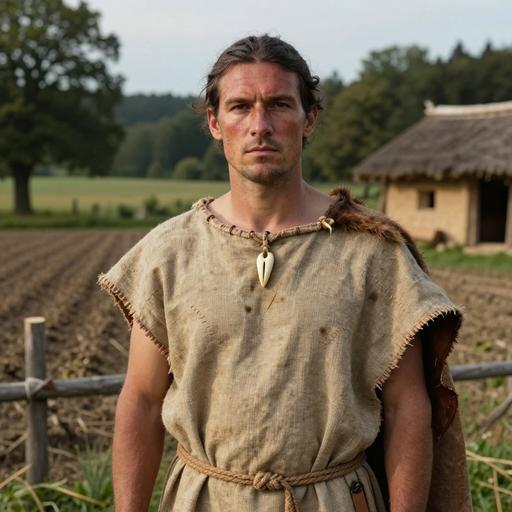
Portrait reconstruction of I6912
Ancient Individual

A man buried in Austria in the Neolithic era

I6912
5500 BCE - 4775 BCE
Male
Neolithic Linear Pottery Culture, Austria
Austria
Scroll to begin
Chapter I

Identity

The biological and cultural markers that define this ancient individual

Sample ID

I6912

Date Range

5500 BCE - 4775 BCE

Biological Sex

Male

mtDNA Haplogroup

J1

Y-DNA Haplogroup

BT

Cultural Period

Neolithic Linear Pottery Culture, Austria

Chapter II

Place

Where this individual was discovered

Country Austria
Locality Brunn Wolfholz
Coordinates 48.1204, 16.2917
Chapter III

Time

When this individual lived in the broader context of human history

I6912 5500 BCE - 4775 BCE
Chapter IV

Story

The narrative of this ancient life

The Linear Pottery Culture (LPC), also known as Linearbandkeramik (LBK), is a major archaeological horizon of the European Neolithic, dating approximately from 5500 to 4500 BCE. It marks one of the earliest farming communities in Central Europe and played a crucial role in the transition from hunter-gatherer societies to agricultural-based sedentary communities. The influence of this culture extended across a wide region, including what is today modern Austria.

Geographical Extent and Environment

In Austria, the Linear Pottery Culture primarily spanned the region's fertile river valleys such as those along the Danube River. The choice of these locations was strategic, benefiting from the rich alluvial soils that were ideal for agriculture. This period coincides with the Atlantic climatic phase, characterized by warmer and wetter conditions, which further facilitated the successful emergence of farming practices.

Settlement Patterns

Linear Pottery settlements in Austria were typically small, comprising a few extended family households. These settlements were usually situated on loess soils, which were easier to cultivate with the rudimentary tools available at the time. The villages consisted of longhouses built using a post-and-beam construction technique, with wattle and daub walls and thatched roofs. These longhouse structures were multi-functional, serving as both living spaces and community areas for various activities.

Economy and Subsistence

The economy of the Linear Pottery Culture was primarily based on agriculture, supplemented by hunting, gathering, and fishing. The main crops cultivated included emmer and einkorn wheat, barley, peas, and lentils. The cultivation techniques, although basic, marked a significant transformation in subsistence strategies, leading to more permanent settlements.

Domesticated animals, including cattle, pigs, and sheep/goats, played a vital role in the economy. Cattle were particularly significant, providing not only meat but also secondary products such as milk and draught power. Hunting and gathering continued to contribute to the diet, with game such as deer and wild boar being important sources of protein.

Material Culture

The Linear Pottery Culture is named for its distinctive pottery, which features linear and geometric patterns incised or impressed onto the clay before firing. These patterns are believed to have held symbolic or social significance and demonstrate a refined sense of aesthetic.

Apart from pottery, other artifacts include stone tools such as polished adzes for woodworking, flint blades, and borers. The culture also produced ornaments made from bone, antler, and stone, indicating an appreciation for personal adornment and possibly status differentiation within communities.

Social Organization

The social structure of the LBK communities in Austria, as inferred from archaeological evidence, was likely organized around extended family units. The uniformity in house sizes and grave goods suggests relatively egalitarian social relations, with variations arising more from family size than hierarchical stratification.

Religious and Ritual Practices

While direct evidence of religious beliefs is sparse, the presence of figurines and certain burial practices points towards ritual activities and perhaps a belief in the afterlife. Burials were typically inhumations, often oriented in specific directions, which might have had symbolic meanings.

Interaction and Influence

The Linear Pottery Culture in Austria did not exist in isolation but was part of a wider network of early Neolithic cultures in Europe. There is evidence of both trade and cultural exchange between LBK groups and neighboring hunter-gatherer societies, as well as other Neolithic cultures. This interaction is seen through the transfer of materials, such as high-quality flint and exotic stones, and the sharing of cultural practices and technological innovations.

Legacy

The influence of the Linear Pottery Culture was profound, laying the foundations for subsequent Neolithic cultures in Central and Western Europe. The move towards agriculture and settled life, initiated by the LBK, set the stage for significant demographic and cultural developments in prehistoric Europe.

In summary, the Linear Pottery Culture in Austria represents a pivotal moment in European prehistory, characterized by the adoption of agriculture, the establishment of permanent settlements, and the development of a distinctive material culture. This culture not only transformed the landscape and local societies of its time but also left a lasting legacy on the cultural and historical trajectory of the region.

Chapter V

Genetics

The genetic ancestry of this ancient individual

Ancient Genetic Admixture

This analysis compares the DNA profile of I6912 with ancient reference populations, showing the genetic composition in terms of prehistoric ancestral groups.

Neolithic Farmers 41.5%
European Hunter-Gatherers 28.4%
Western Steppe Pastoralists 27.8%
Ancient Asians 2.3%

Modern Genetic Admixture

This analysis compares the DNA profile with present-day reference populations, showing what percentage of genetic makeup resembles modern populations from different regions.

Europe 89.3%
Southern European 51.3%
Italian 41.9%
Sardinian 9.4%
Northwestern European 30.8%
Scandinavian 21.2%
English 9.6%
Eastern European 7.2%
Asia 8.7%
Northern West Asian 8.7%
Cypriot 8.7%
Africa 2.0%
West African 2.0%
Senegambian & Guinean 1.5%
Ghanaian, Liberian, Sierra Leonean 0.5%

Closest Modern Populations

These are the modern populations showing the closest statistical alignment to A man buried in Austria in the Neolithic era, ranked by genetic distance. Lower distance values indicate closer statistical similarity.

1
Spanish Camp De Tarragona
1.5863
2
Spanish Barcelones
1.5863
3
Spanish Penedes
1.6582
4
French Auvergne
1.6824
5
Spanish Lleida
1.7000
6
Spanish Peri Barcelona
1.7535
7
Spanish Mallorca
1.8016
8
Spanish Girona
1.8229
9
Spanish Valencia
1.8401
10
Spanish Terres De L'ebre
1.8801
Chapter VI

Context

Other ancient individuals connected to this sample

Sources

References

Scientific publications and genetic data

Scientific Publication

Interactions between earliest Linearbandkeramik farmers and central European hunter gatherers at the dawn of European Neolithization

Authors Nikitin AG, Stadler P, Kotova N
Abstract

Archaeogenetic research over the last decade has demonstrated that European Neolithic farmers (ENFs) were descended primarily from Anatolian Neolithic farmers (ANFs). ENFs, including early Neolithic central European Linearbandkeramik (LBK) farming communities, also harbored ancestry from European Mesolithic hunter gatherers (WHGs) to varying extents, reflecting admixture between ENFs and WHGs. However, the timing and other details of this process are still imperfectly understood. In this report, we provide a bioarchaeological analysis of three individuals interred at the Brunn 2 site of the Brunn am Gebirge-Wolfholz archeological complex, one of the oldest LBK sites in central Europe. Two of the individuals had a mixture of WHG-related and ANF-related ancestry, one of them with approximately 50% of each, while the third individual had approximately all ANF-related ancestry. Stable carbon and nitrogen isotope ratios for all three individuals were within the range of variation reflecting diets of other Neolithic agrarian populations. Strontium isotope analysis revealed that the ~50% WHG-ANF individual was non-local to the Brunn 2 area. Overall, our data indicate interbreeding between incoming farmers, whose ancestors ultimately came from western Anatolia, and local HGs, starting within the first few generations of the arrival of the former in central Europe, as well as highlighting the integrative nature and composition of the early LBK communities.

G25 Coordinates

The G25 coordinates for sample I6912 can be used for detailed admixture analysis in our G25 Studio tool.

I6912,0.12062964,0.13872266,0.04269322,0.00597198,0.04400948,0.00029092,-0.0015554,0.00367612,0.0205295,0.0251625,-0.00347042,0.00582458,-0.0136769,-0.00961054,0.00754642,-0.00059968,-0.0076564,0.00179524,-0.00043106,-0.00285976,0.00223234,0.00389444,-0.00717322,0.00195678,0.00142166
Analyze in G25 Studio
Use code for 40% off Expires Feb 27