


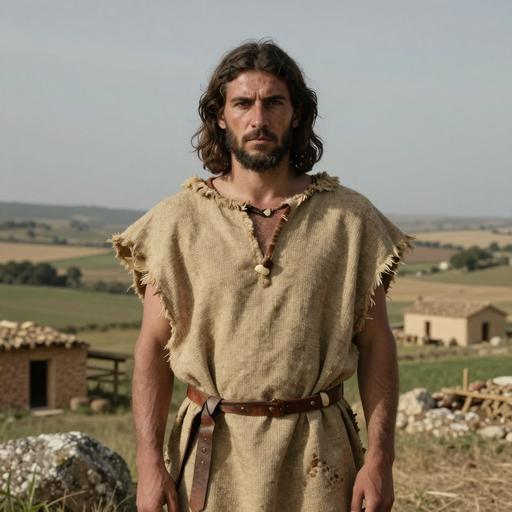
I3807
Muslim Nazari Period, Spain
1500 CE
Andalusia. Granada. Mondújar (Lecrín). Nécropolis de Torna Alta, Spain
I3981
Roman Period Spain
400 CE
Andalusia. Granada. Paseíllos universitarios-Fuentenueva, Spain
I2472
Middle Bronze Age Spain
1533 BCE
Basque Country. Araba/Álava. Laguardia. El Sotillo, Spain
I1310
Early Bronze Age Spain
2000 BCE
Barcelona. Sabadell. Can Roquetes, Spain
I0843
Hunter-Gatherer Spain
6015 BCE
Castilla y León. León. La Brana-Arintero, Spain
I1977
Early Bronze Age Spain
1613 BCE
Basque Country. Araba/Álava. Laguardia. El Sotillo, Spain
I3322
Iron Age Spain
600 BCE
Valencian Community. Castelló/Castellón. Vinaròs. Puig de la Misericordia, Spain
I3324
Iron Age Spain
359 BCE
Girona. Ullastret. Puig de Sant Andreu, Spain
I3432
Chalcolithic Portugal
3081 BCE
Évora. Reguengos de Monsaraz. Perdigões, Portugal
I3485
Early Bronze Age Spain
2300 BCE
Ciudad Real. Terrinches. Castillejo del Bonete, Spain
I3486
Early Bronze Age Spain
1750 BCE
Valencian Community. Alacant/Alicante. Villena. Cabezo Redondo, Spain
I3487
Early Bronze Age Spain
1739 BCE
Valencian Community. Alacant/Alicante. Villena. Cabezo Redondo, Spain
| Sample ID | Culture/Period | Date | Location | Action |
|---|---|---|---|---|
| I3807 | Muslim Nazari Period, Spain | 1500 CE | Andalusia. Granada. Mondújar (Lecrín). Nécropolis de Torna Alta, Spain | View |
| I3981 | Roman Period Spain | 400 CE | Andalusia. Granada. Paseíllos universitarios-Fuentenueva, Spain | View |
| I2472 | Middle Bronze Age Spain | 1533 BCE | Basque Country. Araba/Álava. Laguardia. El Sotillo, Spain | View |
| I1310 | Early Bronze Age Spain | 2000 BCE | Barcelona. Sabadell. Can Roquetes, Spain | View |
| I0843 | Hunter-Gatherer Spain | 6015 BCE | Castilla y León. León. La Brana-Arintero, Spain | View |
| I1977 | Early Bronze Age Spain | 1613 BCE | Basque Country. Araba/Álava. Laguardia. El Sotillo, Spain | View |
| I3322 | Iron Age Spain | 600 BCE | Valencian Community. Castelló/Castellón. Vinaròs. Puig de la Misericordia, Spain | View |
| I3324 | Iron Age Spain | 359 BCE | Girona. Ullastret. Puig de Sant Andreu, Spain | View |
| I3432 | Chalcolithic Portugal | 3081 BCE | Évora. Reguengos de Monsaraz. Perdigões, Portugal | View |
| I3485 | Early Bronze Age Spain | 2300 BCE | Ciudad Real. Terrinches. Castillejo del Bonete, Spain | View |
| I3486 | Early Bronze Age Spain | 1750 BCE | Valencian Community. Alacant/Alicante. Villena. Cabezo Redondo, Spain | View |
| I3487 | Early Bronze Age Spain | 1739 BCE | Valencian Community. Alacant/Alicante. Villena. Cabezo Redondo, Spain | View |
| I3488 | Early Bronze Age Spain | 1750 BCE | Valencian Community. Alacant/Alicante. Villena. Cabezo Redondo, Spain | View |
| I3490 | Early Bronze Age Spain | 1850 BCE | Burgos. La Horra, Spain | View |
| I3491 | Early Bronze Age Spain | 1850 BCE | Castilla y León. Valladolid. Fuente la Mora, Spain | View |
| I3493 | Middle Bronze Age Spain | 1422 BCE | Salamanca. Aldeaseca de la Frontera. Tordillos, Spain | View |
| I3574 | Visigothic Period Granada, Spain | 400 CE | Granada. Montefrío. El Castillón, Spain | View |
| I3575 | Visigothic Period Granada, Spain | 400 CE | Granada. Montefrío. El Castillón, Spain | View |
| I3577 | Visigothic Period Granada, Spain | 400 CE | Granada. Montefrío. El Castillón, Spain | View |
| I3578 | Visigothic Period Granada, Spain | 400 CE | Granada. Montefrío. El Castillón, Spain | View |
I0405
Middle to Late Neolithic Spain
3900 BCE
La Mina, Spain
I0407
Middle to Late Neolithic Spain
3900 BCE
La Mina, Spain
I0408
Middle to Late Neolithic Spain
3895 BCE
La Mina, Spain
I0406
Middle to Late Neolithic Spain
3900 BCE
La Mina, Spain
I7549
Middle to Late Neolithic Spain
4300 BCE
Cádiz. San Fernando. Campo de Hockey, Spain
I7550
Middle to Late Neolithic Spain
4700 BCE
Cádiz. San Fernando. Campo de Hockey, Spain
I7600
Middle to Late Neolithic Spain
4000 BCE
Alicante. Alcoi. Llometes, Spain
I7602
Middle to Late Neolithic Spain
3500 BCE
Mandubi Zelaia, Spain
I7603
Middle to Late Neolithic Spain
3500 BCE
Mandubi Zelaia, Spain
I7605
Middle to Late Neolithic Spain
3500 BCE
Mandubi Zelaia, Spain
I7643
Middle to Late Neolithic Spain
3952 BCE
Valencian Community. Alacant/Alicante. Alcoi. Les Llometes, Spain
I7644
Middle to Late Neolithic Spain
3635 BCE
Valencian Community. Alacant/Alicante. Alcoi. Les Llometes, Spain
| Sample ID | Culture/Period | Date | Location | Action |
|---|---|---|---|---|
| I0405 | Middle to Late Neolithic Spain | 3900 BCE | La Mina, Spain | View |
| I0407 | Middle to Late Neolithic Spain | 3900 BCE | La Mina, Spain | View |
| I0408 | Middle to Late Neolithic Spain | 3895 BCE | La Mina, Spain | View |
| I0406 | Middle to Late Neolithic Spain | 3900 BCE | La Mina, Spain | View |
| I7549 | Middle to Late Neolithic Spain | 4300 BCE | Cádiz. San Fernando. Campo de Hockey, Spain | View |
| I7550 | Middle to Late Neolithic Spain | 4700 BCE | Cádiz. San Fernando. Campo de Hockey, Spain | View |
| I7600 | Middle to Late Neolithic Spain | 4000 BCE | Alicante. Alcoi. Llometes, Spain | View |
| I7602 | Middle to Late Neolithic Spain | 3500 BCE | Mandubi Zelaia, Spain | View |
| I7603 | Middle to Late Neolithic Spain | 3500 BCE | Mandubi Zelaia, Spain | View |
| I7605 | Middle to Late Neolithic Spain | 3500 BCE | Mandubi Zelaia, Spain | View |
| I7643 | Middle to Late Neolithic Spain | 3952 BCE | Valencian Community. Alacant/Alicante. Alcoi. Les Llometes, Spain | View |
| I7644 | Middle to Late Neolithic Spain | 3635 BCE | Valencian Community. Alacant/Alicante. Alcoi. Les Llometes, Spain | View |
| I7646 | Middle to Late Neolithic Spain | 3711 BCE | Valencian Community. Alacant/Alicante. Alcoi. Les Llometes, Spain | View |
| I7647 | Middle to Late Neolithic Spain | 4045 BCE | Valencian Community. Alacant/Alicante. Alcoi. Les Llometes, Spain | View |
| I7645 | Middle to Late Neolithic Spain | 3981 BCE | Valencian Community. Alacant/Alicante. Alcoi. Les Llometes, Spain | View |
| I7547 | Middle to Late Neolithic Spain | 4300 BCE | Cádiz. San Fernando. Campo de Hockey, Spain | View |
| I7601 | Middle to Late Neolithic Spain | 3644 BCE | Alicante. Alcoi. Llometes, Spain | View |
| I7606 | Middle to Late Neolithic Spain | 3500 BCE | Mandubi Zelaia, Spain | View |
| I7642 | Middle to Late Neolithic Spain | 2909 BCE | Valencian Community. Alacant/Alicante. Alcoi. Les Llometes, Spain | View |
| I7604 | Middle to Late Neolithic Spain | 3500 BCE | Mandubi Zelaia, Spain | View |