Menu
Store
Blog
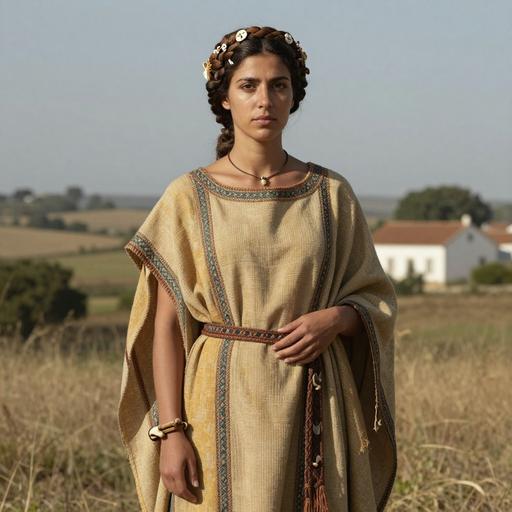
Portrait reconstruction of I8045
Ancient Individual

A woman buried in Portugal in the Middle Bronze Age era

I8045
1700 BCE - 1300 BCE
Female
Middle Bronze Age Portugal
Portugal
Scroll to begin
Chapter I

Identity

The biological and cultural markers that define this ancient individual

Sample ID

I8045

Date Range

1700 BCE - 1300 BCE

Biological Sex

Female

mtDNA Haplogroup

U5b

Cultural Period

Middle Bronze Age Portugal

Chapter II

Place

Where this individual was discovered

Country Portugal
Locality Setúbal. Melides. Casas Velhas
Coordinates 38.1988, -8.7100
Chapter III

Time

When this individual lived in the broader context of human history

I8045 1700 BCE - 1300 BCE
Chapter IV

Story

The narrative of this ancient life

The Middle Bronze Age in Portugal is a fascinating and transformative era situated within the broader cultural framework of the Atlantic Bronze Age, approximately dated from 1800 to 1100 BCE. This period marked significant developments in social organization, technology, and trade within the region now known as Portugal, situated on the Iberian Peninsula.

Geographic and Environmental Context

Portugal during this time was characterized by a diverse range of landscapes, from the rugged Atlantic coastline to the fertile river valleys and the expansive interior plains. The Atlantic Ocean played a crucial role in shaping the climate, which was generally temperate but varied across different regions. The natural environment provided resources such as timber, metals, and agricultural opportunities, which heavily influenced the lifestyle and economy of Middle Bronze Age societies.

Cultural and Social Structures

The societies in Middle Bronze Age Portugal were primarily organized into small, tribal communities that occupied fortified settlements known as castros. These settlements were strategically located on hilltops or other defensible positions and often surrounded by walls and ditches for protection. The social structure was predominantly tribal, with kinship playing a crucial role in the organization of societies. The influence of local chieftains and a warrior aristocracy suggests a hierarchical society with emerging social stratification.

Economy and Subsistence

The economy during this period was based on a combination of agriculture, animal husbandry, fishing, and gathering. The fertile river valleys supported the cultivation of crops such as barley, wheat, and legumes, while pastoral activities included the herding of sheep, goats, and cattle. The proximity to the Atlantic Ocean and numerous rivers facilitated fishing and trade, contributing to a diverse subsistence economy.

Metalworking, particularly the production of bronze tools and weapons, was a hallmark of this era. The presence of native copper and tin resources in the Iberian Peninsula allowed for the local production of bronze, an alloy of copper and tin. This technological advancement facilitated the emergence of specialized crafts and trade networks, as bronze items became a crucial component of both daily life and military endeavors.

Trade and Interaction

Middle Bronze Age Portugal was part of a broader network of trade and cultural exchange that stretched across the Atlantic seaboard, incorporating regions as far north as the British Isles and as far south as North Africa. The Atlantic Bronze Age is characterized by extensive maritime trade, facilitated by advances in seafaring technology. Trade items likely included metals, pottery, textiles, salt, and possibly amber, alongside the exchange of cultural practices and technological knowledge.

The exchange with neighboring regions contributed to the cultural syncretism observed in archaeological findings, such as the adoption of new pottery styles and burial practices. This suggests that Middle Bronze Age communities were not isolated, but rather dynamic participants in a broader Atlantic cultural sphere.

Religion and Rituals

Religious beliefs during the Middle Bronze Age in Portugal were likely animistic and polytheistic, centered around natural elements and possibly ancestor worship. The archaeological record, though limited, points to the construction of megalithic structures and stone monuments, which were possibly used for ceremonial purposes. These structures reflect a continuity from the previous Neolithic and Chalcolithic periods, indicating deeply rooted spiritual traditions.

Burial practices varied, with evidence of both individual and collective burials, often accompanied by grave goods such as pottery, jewelry, and weapons. These practices provide insight into the beliefs surrounding death and the afterlife, highlighting the importance of the deceased in maintaining social cohesion and continuity.

Technological and Artistic Developments

The technological landscape of Middle Bronze Age Portugal was marked by the widespread use of bronze tools and weapons, including swords, axes, and spearheads. The production of these items required sophisticated knowledge of metallurgy and craftsmanship, which spurred the development of specialized labor.

Artistic expression is evident in the pottery, metalwork, and personal adornments from this period. Pottery styles exhibit regional variation and innovation in form and decoration, while metal objects such as fibulae, torcs, and armlets display aesthetic sophistication and technical skill.

Legacy and Influence

The Middle Bronze Age in Portugal laid the foundations for subsequent cultural developments during the Late Bronze Age and the early Iron Age. The advances in metallurgy, trade networks, and social organization established during this era had a lasting impact on the cultural evolution of the region.

In summary, the Middle Bronze Age in Portugal represents a period of dynamic change and cultural integration within the Atlantic Bronze Age. The interplay of local resources, technological innovation, and external influences shaped a distinctive and resilient culture that contributed significantly to the historical trajectory of the Iberian Peninsula.

Chapter V

Genetics

The genetic ancestry of this ancient individual

Ancient Genetic Admixture

This analysis compares the DNA profile of I8045 with ancient reference populations, showing the genetic composition in terms of prehistoric ancestral groups.

Neolithic Farmers 39.7%
European Hunter-Gatherers 26.8%
Western Steppe Pastoralists 15.5%
Ancient Oceanians 13.0%
Ancient Native Americans 2.7%
Ancient Asians 2.3%

Modern Genetic Admixture

This analysis compares the DNA profile with present-day reference populations, showing what percentage of genetic makeup resembles modern populations from different regions.

Europe 88.4%
Southern European 88.4%
Iberian 80.9%
Sardinian 7.6%
Asia 6.3%
Northern West Asian 6.3%
Cypriot 6.3%
Oceania 3.5%
Melanesian 3.5%
Papuan 3.5%
America 1.3%
America 1.3%
Native American 1.3%
Africa 0.5%
Congolese & Southern East African 0.5%
South East African 0.5%

Closest Modern Populations

These are the modern populations showing the closest statistical alignment to A woman buried in Portugal in the Middle Bronze Age era, ranked by genetic distance. Lower distance values indicate closer statistical similarity.

1
Spanish Camp De Tarragona
4.7307
2
Spanish Eivissa
4.7874
3
French Provence
4.8730
4
Spanish Andalucia
4.8811
5
Spanish Castilla Y Leon
4.8812
6
French Auvergne
4.8966
7
Spanish Valencia
4.9076
8
Spanish Terres De L'ebre
4.9347
9
French Occitanie
4.9563
10
Spanish Galicia
4.9635
Chapter VI

Context

Other ancient individuals connected to this sample

Sources

References

Scientific publications and genetic data

Scientific Publication

The genomic history of the Iberian Peninsula over the past 8000 years

Authors Olalde I, Mallick S, Patterson N
Abstract

We assembled genome-wide data from 271 ancient Iberians, of whom 176 are from the largely unsampled period after 2000 BCE, thereby providing a high-resolution time transect of the Iberian Peninsula. We document high genetic substructure between northwestern and southeastern hunter-gatherers before the spread of farming. We reveal sporadic contacts between Iberia and North Africa by ~2500 BCE and, by ~2000 BCE, the replacement of 40% of Iberia's ancestry and nearly 100% of its Y-chromosomes by people with Steppe ancestry. We show that, in the Iron Age, Steppe ancestry had spread not only into Indo-European-speaking regions but also into non-Indo-European-speaking ones, and we reveal that present-day Basques are best described as a typical Iron Age population without the admixture events that later affected the rest of Iberia. Additionally, we document how, beginning at least in the Roman period, the ancestry of the peninsula was transformed by gene flow from North Africa and the eastern Mediterranean.

G25 Coordinates

The G25 coordinates for sample I8045 can be used for detailed admixture analysis in our G25 Studio tool.

I8045,0.11114512,0.11288736,0.04225068,0.01205988,0.03202668,-0.00911012,0.00251794,0.0086525,0.01846898,0.0180387,-0.00095888,0.00401208,-0.0060281,-0.00827726,0.00154022,-0.00373162,-0.01663066,-0.00281352,-0.00564298,-0.00418284,0.00571646,0.00786864,-0.01493272,-0.00697648,-0.00034864
Analyze in G25 Studio
Use code for 40% off Expires Feb 27