


| Sample ID | Culture/Period | Date | Location | Action |
|---|---|---|---|---|
| Iceman | Middle Neolithic Iceman, Northern Italy | 3486 BCE | Trentino-South Tyrol. Oetz valley, Italy | View |
Chapter IV
Story
The narrative of this ancient life
The Middle Neolithic period in Northern Italy, particularly in the Alpine regions, is a fascinating era marked by the development and flourishing of Alpine cultures, which were sophisticated in their adaptation to the challenging mountainous environments. This period is notably associated with the Iceman, also known as Ötzi, whose remarkably preserved body provides significant insights into the lifestyle, culture, and technologies of the time.
Geography and Environment
The Alpine region of Northern Italy during the Middle Neolithic was characterized by rugged terrains, dense forests, and a climate that fluctuated between cold mountain temperatures and moderate lowland conditions. The Alps acted as a natural barrier yet also served as a crucial corridor for trade and communication between different Neolithic communities across Europe.
Society and Culture
Community Structure:
- The societies were likely organized into small, semi-nomadic groups or larger settled communities, depending on the season and availability of resources.
- Social structures were possibly egalitarian with roles defined by skill sets such as hunting, gathering, tool-making, and later, farming.
Diet and Agriculture:
- The transition from a hunter-gatherer lifestyle to more settled agricultural practices was underway. Communities engaged in animal husbandry, likely rearing sheep, goats, and cattle.
- Archaeobotanical evidence suggests the cultivation of crops like cereals, including barley and wheat, supplemented by foraging wild plants and berries.
Material Culture and Craftsmanship:
- Pottery from this era shows advancements in design and technology. Items were often decorated with geometric patterns and were used for both domestic purposes and ritualistic practices.
- Tool-making skills were highly advanced, with evidence of polished stone tools such as axes, scrapers, and arrowheads made from flint and other local materials.
Textiles and Clothing:
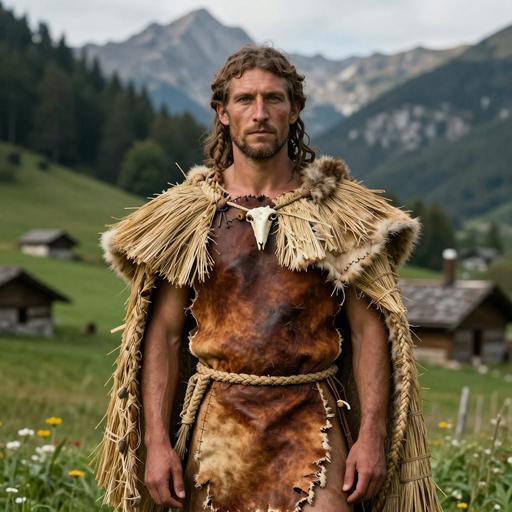
- The Iceman’s attire suggests the use of animal hides and woven grass for clothing, tailored for the cold alpine climate, with significant skill in sewing and textile creation.
- His garments included a fur hat, leather shoes insulated with grass, leggings, and a complexly designed belt and loincloth.
Spiritual Beliefs and Practices
Evidence points towards a culture imbued with animistic beliefs, where natural elements and landscapes held spiritual significance. Rituals might have been carried out in designated natural settings, possibly involving offerings and the use of symbolic artifacts.
Technological Innovations
Tools and Weapons:
- The era saw the use of composite tools, combining different materials like wood, bone, and stone, showcasing a deep understanding of material properties.
- Weapons such as bows and arrows, daggers, and spears indicate a society proficient in hunting, self-defense, and possibly warfare.
Transport and Trade:
- Nordic technologies and imported items suggest active trade routes. Raw materials, ideas, and artifacts were exchanged, fostering cultural connections across central Europe.
Ötzi the Iceman
Ötzi, discovered in 1991 in the Ötztal Alps, provides a unique snapshot of life during this era:
- Physical Attributes: His well-preserved remains offer insights into health, diet, and even technologies like tattooing as possible therapeutic or ritualistic practice.
- Personal Items: Tools and personal items carried by Ötzi include a copper-bladed axe, implying metallurgical advancement, a small flint dagger, a quiver of arrows, and a backpack, illustrating ingenuity in personal transport.
- Dietary Evidence: The contents of his stomach and the pollen found on his body provide clues about his last meals and seasonal movement.
Conclusion
The Middle Neolithic Alpine cultures in Northern Italy were sophisticated and adaptable, skillfully interacting with their challenging environment. The era is characterized by significant achievements in social organization, technological innovation, and cultural development, leaving a lasting legacy that continues to intrigue and inform modern understanding of prehistoric European societies.