Menu
Store
Blog
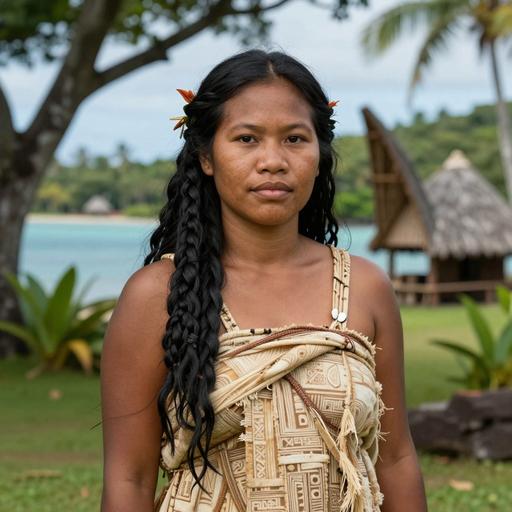
Portrait reconstruction of LHA001
Ancient Individual

A woman buried in Tonga in the Middle Ages era

LHA001
1034 CE - 1182 CE
Female
Tonga 800 Years Ago
Tonga
Scroll to begin
Chapter I

Identity

The biological and cultural markers that define this ancient individual

Sample ID

LHA001

Date Range

1034 CE - 1182 CE

Biological Sex

Female

mtDNA Haplogroup

B4a1a1

Cultural Period

Tonga 800 Years Ago

Chapter II

Place

Where this individual was discovered

Country Tonga
Locality Tongatapu
Chapter III

Time

When this individual lived in the broader context of human history

LHA001 1034 CE - 1182 CE
Chapter IV

Story

The narrative of this ancient life

Tonga, located in the South Pacific Ocean, is an archipelago that is rich in history and cultural heritage. Around 800 years ago, during the 13th century, Tonga was a significant and influential center of Polynesian culture, often referred to as the Tongan Empire or Tuʻi Tonga Empire. This era was characterized by its political complexity, advanced social organization, impressive maritime capabilities, and vibrant cultural expressions.

Political Structure and Society

The Tongan society of 800 years ago was hierarchical and structured under a centralized monarchy. At the apex was the Tuʻi Tonga, the sacred and political leader considered semi-divine. The power of the Tuʻi Tonga extended beyond the shores of Tonga, influencing a vast maritime empire that included parts of Samoa, Fiji, and other islands in the South Pacific.

The Tongan Empire was known for its complex social strata. The society was divided into chiefly lines (hou’eiki), commoners (tu’a), and servants or slaves (vasa and kainga). The chiefly system was highly stratified, with myriad noble titles and obligations that governed social conduct and political arrangements. Chiefs had significant power over their subjects and were responsible for maintaining order, leading religious rites, and managing resources.

Economy and Trade

Economically, Tonga was a thriving hub in the Polynesian network, primarily due to its strategic location and seafaring prowess. The Tongan people were skilled navigators, using outrigger canoes and large double-hulled canoes (known as 'kalia') for long-distance travel and trade. They engaged in the trade of goods such as finely woven mats, tapa cloth (made from tree bark), and carved wooden objects. The islands were abundant with resources like yams, taro, coconuts, bananas, and fish, which formed the staples of their diet and sustained trade with neighboring islands.

The Tongan influence as both a military and trade power contributed to its regional dominance, facilitating cultural exchange and the spread of Tongan customs and language.

Culture and Religion

Religion was central to Tongan society, with a pantheon of gods and ancestral worship playing crucial roles. The Tuʻi Tonga himself was considered a direct descendant of the gods, which legitimized his rule and added a divine element to his leadership. Rituals and religious ceremonies were integral to Tongan life, often conducted in impressive stone structures known as \langi" (tombs) and "ha’amonga 'a Maui" (a trilithon thought to be a ceremonial gateway or sundial).

The Tongan people were also remarkable artisans, known for their elaborate carvings, tapa cloth with intricate designs, and beautiful woven mats. These crafts were not only for everyday use but also held highly ceremonial and cultural significance, often being exchanged as gifts or tribute.

Dance, music, and oral traditions thrived in this era, with storytelling and history preserved through chants (lakalaka), songs, and dances. These performances were not just entertainment but also a means of maintaining societal values, history, and genealogy.

Conclusion

Overall, Tonga 800 years ago was a robust and influential culture in the Polynesian world. It stood as a beacon of political power, economic exchange, and cultural development in the Pacific. The legacies of this era, reflected in Tonga’s social structures, artistic traditions, and seafaring skills, continue to resonate in Tongan culture and heritage today. The interconnectedness of the Tongan Empire with other Polynesian societies also underscores the broader narrative of Polynesian migration, trade, and cultural diffusion that shaped the history of the Pacific Islands."

Chapter V

Genetics

The genetic ancestry of this ancient individual

Ancient Genetic Admixture

This analysis compares the DNA profile of LHA001 with ancient reference populations, showing the genetic composition in terms of prehistoric ancestral groups.

Ancient Asians 56.4%
Ancient Oceanians 29.3%
Neolithic Farmers 5.1%
Ancient Africans 4.6%
Western Steppe Pastoralists 4.6%

Modern Genetic Admixture

This analysis compares the DNA profile with present-day reference populations, showing what percentage of genetic makeup resembles modern populations from different regions.

Asia 71.0%
Chinese & Southeast Asian 42.8%
Vietnamese 36.6%
Chinese 6.2%
Japanese & Korean 18.9%
Japanese 18.9%
Arab, Egyptian & Levantine 8.2%
Arabian 5.4%
Levantine 2.9%
Central Asian, Northern Indian & Pakistani 1.0%
Indian 1.0%
Oceania 26.0%
Melanesian 26.0%
Papuan 26.0%
Africa 2.4%
Northern East African 2.4%
Eastern African 2.4%
America 0.7%
America 0.7%
Native American 0.7%

Closest Modern Populations

These are the modern populations showing the closest statistical alignment to A woman buried in Tonga in the Middle Ages era, ranked by genetic distance. Lower distance values indicate closer statistical similarity.

1
Bajo
10.7548
2
Aeta
13.9331
3
Batak
14.1629
4
Agta
14.1646
5
Maniq
16.8917
6
Jehai
17.8245
7
Mon
18.7485
8
Thai
18.8068
9
Malay
19.2296
10
Vizayan
19.3369
Chapter VI

Context

Other ancient individuals connected to this sample

Sources

References

Scientific publications and genetic data

Scientific Publication

Language continuity despite population replacement in Remote Oceania

Authors Posth C, Nägele K, Colleran H
Abstract

Recent genomic analyses show that the earliest peoples reaching Remote Oceania-associated with Austronesian-speaking Lapita culture-were almost completely East Asian, without detectable Papuan ancestry. However, Papuan-related genetic ancestry is found across present-day Pacific populations, indicating that peoples from Near Oceania have played a significant, but largely unknown, ancestral role. Here, new genome-wide data from 19 ancient South Pacific individuals provide direct evidence of a so-far undescribed Papuan expansion into Remote Oceania starting ~2,500 yr BP, far earlier than previously estimated and supporting a model from historical linguistics. New genome-wide data from 27 contemporary ni-Vanuatu demonstrate a subsequent and almost complete replacement of Lapita-Austronesian by Near Oceanian ancestry. Despite this massive demographic change, incoming Papuan languages did not replace Austronesian languages. Population replacement with language continuity is extremely rare-if not unprecedented-in human history. Our analyses show that rather than one large-scale event, the process was incremental and complex, with repeated migrations and sex-biased admixture with peoples from the Bismarck Archipelago.

G25 Coordinates

The G25 coordinates for sample LHA001 can be used for detailed admixture analysis in our G25 Studio tool.

LHA001,0.0014859,-0.36371544,-0.1049059,0.0473946,0.13285572,-0.1025611,-0.00733922,-0.00894454,-0.02357736,-0.01000848,0.00147184,0.00221704,0.00188788,-0.00644624,0.00152712,0.00200344,0.00630688,-0.0032302,-0.00166576,-0.00849394,0.00988504,0.00742634,0.01121434,0.0034419,0.0048007
Analyze in G25 Studio
Use code for 40% off Expires Feb 27