Menu
Store
Blog
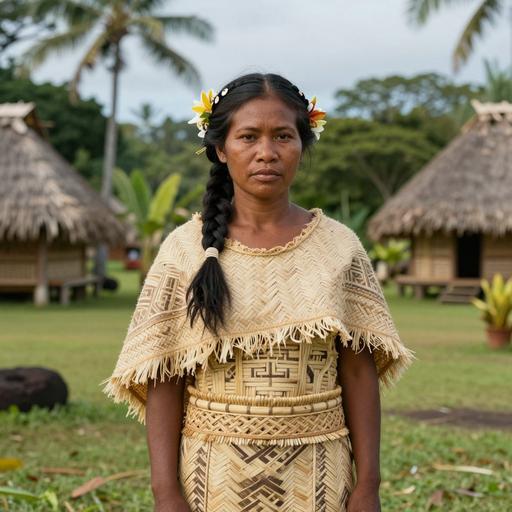
Portrait reconstruction of TON001
Ancient Individual

A woman buried in Tonga in the Iron Age era

TON001
850 BCE - 500 BCE
Female
Tonga 2,500 Years Ago
Tonga
Scroll to begin
Chapter I

Identity

The biological and cultural markers that define this ancient individual

Sample ID

TON001

Date Range

850 BCE - 500 BCE

Biological Sex

Female

mtDNA Haplogroup

B4a1a1a

Cultural Period

Tonga 2,500 Years Ago

Chapter II

Place

Where this individual was discovered

Country Tonga
Locality Talasiu site. Tongatapu
Chapter III

Time

When this individual lived in the broader context of human history

TON001 850 BCE - 500 BCE
Chapter IV

Story

The narrative of this ancient life

Around 2,500 years ago, the region we now know as Tonga was part of a vibrant and dynamic era in the broader context of Polynesian history. This period marks an early phase in the settlement of Polynesia, characterized by exploration, the establishment of complex societies, and the development of unique cultural identities. Here’s an extensive look into what the Tonga region might have been like during this time:

Geographical Context

Tonga, an archipelago in the South Pacific Ocean, consists of over 170 islands, of which 36 are inhabited. Around 2,500 years ago, the archipelago served as a pivotal point in the migration and settlement patterns of ancient Polynesians, who were known for their impressive navigational skills and voyaging capabilities. These islands provided fertile grounds, abundant marine resources, and a favorable climate, all of which supported early settlement.

Cultural and Social Structure

The society around this time was organized into kinship groups or extended families, often referred to as 'kainga.' These were governed by chiefs, known as 'Mata'i,' who wielded significant power and influence. The chiefdoms in Tonga were characterized by a hierarchical structure with a strong emphasis on genealogy and rank, aspects that continued to be important in later Tongan society. Alliances and rivalries among different kinship groups played crucial roles in the social dynamics of the time.

Settlement and Architecture

Settlements were typically located along coastlines, with structures primarily made from natural materials like wood, bamboo, and thatch. Early Tongan society had adept skills in constructing homes, communal spaces, and storage facilities essential for their subsistence lifestyle. Evidence suggests the existence of complex settlement patterns, including ceremonial and communal spaces, indicating a rich cultural and social life.

Economy and Subsistence

The economy of ancient Tonga was predominantly based on agriculture and fishing. Staple crops included taro, yam, and breadfruit, while fishing provided a critical source of protein. The Tongans had an intricate understanding of horticulture, which was evident in the way they managed and cultivated their land. The development of sophisticated agricultural techniques, such as the use of terracing and crop rotation, supported sustainable living.

Art and Craftsmanship

Tonga's early inhabitants were skilled artisans, and this period saw the development of various crafts including wood carving, pottery, and the creation of tools and weapons from stone, bone, and shell. Lapita pottery, distinguished by its intricate geometric designs, is particularly significant as it provides evidence of cultural links with other Polynesian groups and a means of understanding early Polynesian migration patterns.

Navigation and Exploration

One of the most striking aspects of early Polynesian culture, including that of ancient Tonga, was their advanced navigational skills. Using stars, ocean currents, wind patterns, and bird flight paths, Tongan navigators traversed vast distances across the Pacific Ocean. Their voyages facilitated not only the spread of people but also the exchange of goods, ideas, and technologies, which enriched their culture and forged connections across vast oceanic distances.

Religion and Spiritual Beliefs

The spiritual life of the early Tongans was deeply intertwined with nature and ancestral worship. They believed in a pantheon of gods and spirits, and religious practices often involved rituals and offerings to deities associated with natural elements like the sea, sky, and earth. Ancestral worship underscored the importance of lineage and continuity, with ancestors playing a crucial role in guiding and protecting the living.

Influence and Legacy

The influence of the early Tongan culture around 500 BCE laid the groundwork for the Tongan Empire, which emerged several centuries later. This proto-culture contributed significantly to the development of a distinct Tongan identity, marked by its political structures, language, customs, and art forms. The enduring legacy of this era is visible in the continued importance of kinship, chieftaincy, and cultural traditions in Tonga today.

In summary, Tonga 2,500 years ago was a period of exploration, settlement, and cultural blossoming, fostering a society that mastered their environment and navigated the vast Pacific with remarkable skill. The foundations built during this early period paved the way for Tonga's rich historical tapestry, influencing not only Tonga itself but also the broader Polynesian world.

Chapter V

Genetics

The genetic ancestry of this ancient individual

Ancient Genetic Admixture

This analysis compares the DNA profile of TON001 with ancient reference populations, showing the genetic composition in terms of prehistoric ancestral groups.

Ancient Asians 90.4%
Neolithic Farmers 5.4%
Western Steppe Pastoralists 4.2%

Modern Genetic Admixture

This analysis compares the DNA profile with present-day reference populations, showing what percentage of genetic makeup resembles modern populations from different regions.

Asia 90.0%
Chinese & Southeast Asian 90.0%
Vietnamese 46.5%
Chinese 35.2%
Indonesian Khmer Thai Myanma 8.3%
Oceania 3.8%
Melanesian 3.8%
Papuan 3.8%
Europe 2.9%
Northwestern European 2.9%
Northwestern European 2.1%
Scandinavian 0.7%
America 2.2%
America 2.2%
Native American 2.2%
Africa 1.2%
West African 1.2%
Nigerian 1.2%

Closest Modern Populations

These are the modern populations showing the closest statistical alignment to A woman buried in Tonga in the Iron Age era, ranked by genetic distance. Lower distance values indicate closer statistical similarity.

1
Kinh Vietnam
4.0774
2
Tai Lue
4.5163
3
Dai
4.5200
4
Lahu
4.9620
5
Gelao
4.9851
6
Zhuang
5.3089
7
Mulam
5.3840
8
Lao
5.4244
9
Baiku Yao Guizhou
5.5874
10
Changshan Yao Guizhou
5.5906
Chapter VI

Context

Other ancient individuals connected to this sample

Sources

References

Scientific publications and genetic data

Scientific Publication

Language continuity despite population replacement in Remote Oceania

Authors Posth C, Nägele K, Colleran H
Abstract

Recent genomic analyses show that the earliest peoples reaching Remote Oceania-associated with Austronesian-speaking Lapita culture-were almost completely East Asian, without detectable Papuan ancestry. However, Papuan-related genetic ancestry is found across present-day Pacific populations, indicating that peoples from Near Oceania have played a significant, but largely unknown, ancestral role. Here, new genome-wide data from 19 ancient South Pacific individuals provide direct evidence of a so-far undescribed Papuan expansion into Remote Oceania starting ~2,500 yr BP, far earlier than previously estimated and supporting a model from historical linguistics. New genome-wide data from 27 contemporary ni-Vanuatu demonstrate a subsequent and almost complete replacement of Lapita-Austronesian by Near Oceanian ancestry. Despite this massive demographic change, incoming Papuan languages did not replace Austronesian languages. Population replacement with language continuity is extremely rare-if not unprecedented-in human history. Our analyses show that rather than one large-scale event, the process was incremental and complex, with repeated migrations and sex-biased admixture with peoples from the Bismarck Archipelago.

G25 Coordinates

The G25 coordinates for sample TON001 can be used for detailed admixture analysis in our G25 Studio tool.

TON001,0.01274568,-0.41605134,-0.05580258,-0.04373592,0.11462994,0.03106784,-0.00070878,-0.00421728,-0.018298,-0.01099766,0.00343418,0.00033274,0.0050479,-0.00855636,0.00202958,0.00256972,0.00746184,-0.0032177,-0.00196502,-0.01179374,0.01198512,0.01042338,0.01681242,0.00437368,0.00539914
Analyze in G25 Studio
Use code for 40% off Expires Feb 27