Menu
Store
Blog
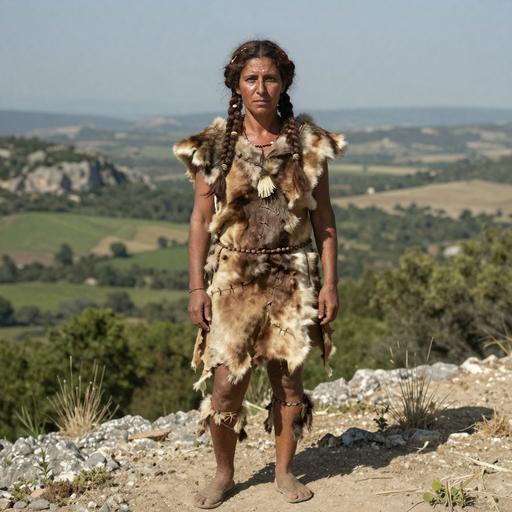
Portrait reconstruction of Ostuni2
Ancient Individual

A woman buried in Italy in the Hunter-Gatherer era

Ostuni2
27546 BCE - 26837 BCE
Female
Ostuni 2 Hunter-Gatherer, Southern Italy
Italy
Scroll to begin
Chapter I

Identity

The biological and cultural markers that define this ancient individual

Sample ID

Ostuni2

Date Range

27546 BCE - 26837 BCE

Biological Sex

Female

mtDNA Haplogroup

U2

Cultural Period

Ostuni 2 Hunter-Gatherer, Southern Italy

Chapter II

Place

Where this individual was discovered

Country Italy
Locality Apulia. Ostuni
Coordinates 40.7300, 17.5700
Chapter III

Time

When this individual lived in the broader context of human history

Ostuni2 27546 BCE - 26837 BCE
Chapter IV

Story

The narrative of this ancient life

The Ostuni 2 site, located in Southern Italy, provides an insightful glimpse into the Mediterranean Hunter-Gatherer culture during the Upper Paleolithic era. This period is particularly significant for understanding the lifestyles and adaptations of human societies on the cusp of transitioning from mobile hunter-gatherer groups to more settled agricultural communities. The following description delves into various aspects of the Ostuni 2 Hunter-Gatherer culture, based on archaeological and anthropological evidence.

Geographic and Environmental Context

Ostuni 2 is situated in the Puglia region of Southern Italy, a zone characterized by a combination of coastal environments, limestone plateaus, and fertile plains. During the time of the Ostuni 2 inhabitants, the area was likely rich in biodiversity, with a variety of flora and fauna that supported a hunter-gatherer lifestyle. The Mediterranean climate, with its mild, wet winters and hot, dry summers, would have influenced the availability of resources and the seasonal movements of people and animals.

Subsistence and Economy

The Ostuni 2 inhabitants were primarily hunter-gatherers, relying on the natural bounty of the landscape for survival. They hunted a range of game, including deer, wild boar, and possibly aurochs, using sophisticated lithic tools and strategies. Evidence from excavated faunal remains indicates that butchering and processing of animals were well-understood practices.

Gathering would have complemented hunting, with the collection of fruits, nuts, seeds, and tubers playing a significant role in their diet. The presence of marine resources such as shellfish and fish also suggests the utilization of nearby coastal resources, a typical trait of Mediterranean hunter-gatherer groups.

Tools and Technology

The technology of the Ostuni 2 people was characterized by the production of stone tools and implements. These included finely crafted blades and points, microliths used as composite tools, and scrapers for processing hides and other materials. The lithic technology indicates a high degree of skill and knowledge in tool-making, crucial for daily survival.

Social Structure and Organization

While direct evidence of social structure is sparse, insights can be inferred from burial practices and the spatial organization of sites. The discovery of burials, such as the famed Ostuni Woman, provides information on the social and symbolic life of the community. The care taken in these burials suggests a degree of social organization and possibly hierarchies or roles within the group. The presence of grave goods and ochre suggests ritualistic or symbolic behaviors, indicating complex social and spiritual beliefs.

Art and Symbolism

Like other Upper Paleolithic cultures, the Ostuni 2 group likely engaged in forms of artistic expression. This might have included body adornment, use of ochre for decoration, and possibly the creation of portable art objects. Their symbolic world would have been rich and interwoven with their daily activities, beliefs, and interactions with the environment.

Linguistic and Cultural Legacy

Although specific languages spoken by the Ostuni 2 people are unknown, linguistic reconstruction suggests that the language would have belonged to a wider Paleolithic European linguistic continuum. Cultural transmission through traditions, myths, and knowledge about the environment and techniques would have been critical for survival.

Interactions and Mobility

The mobility of the Ostuni 2 group would have been influenced by resource availability, climatic conditions, and social factors. Seasonal migrations in search of game, water, and favorable living conditions were likely practiced. This mobility also facilitated interactions with neighboring groups, leading to cultural exchanges and genetic flow within the wider region.

Conclusion

The Ostuni 2 Hunter-Gatherer culture was a vibrant society that adapted expertly to its environment. Through their resourcefulness, technological innovation, and social structures, they thrived in the diverse and challenging landscape of Southern Italy. The archaeological evidence gleaned from the Ostuni 2 site enriches our understanding of Mediterranean hunter-gatherers, offering a nuanced picture of life during the Upper Paleolithic in this region.

Chapter V

Genetics

The genetic ancestry of this ancient individual

Ancient Genetic Admixture

This analysis compares the DNA profile of Ostuni2 with ancient reference populations, showing the genetic composition in terms of prehistoric ancestral groups.

Western Steppe Pastoralists 36.8%
Neolithic Farmers 33.4%
Ancient Asians 24.8%
Ancient Africans 5.1%

Modern Genetic Admixture

This analysis compares the DNA profile with present-day reference populations, showing what percentage of genetic makeup resembles modern populations from different regions.

Europe 52.9%
Northwestern European 29.2%
Finnish 17.4%
Scandinavian 11.8%
Southern European 23.7%
Sardinian 23.7%
Asia 34.7%
Central Asian, Northern Indian & Pakistani 18.8%
Indian 18.8%
Northern Asian 15.9%
Siberian 15.9%
Africa 12.5%
African Hunter-Gatherer 9.8%
Congolese & Southern East African 2.7%
South East African 2.7%

Closest Modern Populations

These are the modern populations showing the closest statistical alignment to A woman buried in Italy in the Hunter-Gatherer era, ranked by genetic distance. Lower distance values indicate closer statistical similarity.

1
Roma Bilbao
10.9029
2
Roma Granada
11.1354
3
Roma Porto
11.3114
4
Tatar Kazan
11.5065
5
Tajik Tajikistan Ayni
11.5066
6
Tajik Tajikistan Hisor
11.5533
7
Pamiri Sarikoli
11.6253
8
Tatar Lipka
11.6594
9
Roma Madrid
11.7545
10
Tatar Mishar
11.8055
Chapter VI

Context

Other ancient individuals connected to this sample

Sources

References

Scientific publications and genetic data

Scientific Publication

The genetic history of Ice Age Europe

Authors Fu Q, Posth C, Hajdinjak M
Abstract

Modern humans arrived in Europe ~45,000 years ago, but little is known about their genetic composition before the start of farming ~8,500 years ago. Here we analyse genome-wide data from 51 Eurasians from ~45,000-7,000 years ago. Over this time, the proportion of Neanderthal DNA decreased from 3-6% to around 2%, consistent with natural selection against Neanderthal variants in modern humans. Whereas there is no evidence of the earliest modern humans in Europe contributing to the genetic composition of present-day Europeans, all individuals between ~37,000 and ~14,000 years ago descended from a single founder population which forms part of the ancestry of present-day Europeans. An ~35,000-year-old individual from northwest Europe represents an early branch of this founder population which was then displaced across a broad region, before reappearing in southwest Europe at the height of the last Ice Age ~19,000 years ago. During the major warming period after ~14,000 years ago, a genetic component related to present-day Near Easterners became widespread in Europe. These results document how population turnover and migration have been recurring themes of European prehistory.

G25 Coordinates

The G25 coordinates for sample Ostuni2 can be used for detailed admixture analysis in our G25 Studio tool.

Ostuni2,0.0302766,0.02043136,0.00458366,0.05490682,0.02315914,0.03164594,-0.01174956,-0.0006073,0.00552678,0.0031992,0.00107792,0.00498408,0.00051568,-0.00352668,0.00932274,-0.0040695,-0.00724564,0.00020868,0.00054284,-0.00056608,0.003914,0.00153414,-0.00291606,0.00644968,-0.00387235
Analyze in G25 Studio
Use code for 40% off Expires Feb 27