Menu
Store
Blog
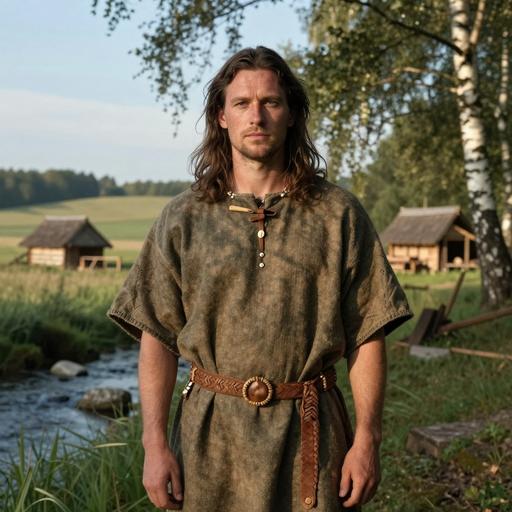
Portrait reconstruction of Spiginas2
Ancient Individual

A man buried in Lithuania in the Late Neolithic era

Spiginas2
2132 BCE - 1749 BCE
Male
Late Neolithic Lithuania
Lithuania
Scroll to begin
Chapter I

Identity

The biological and cultural markers that define this ancient individual

Sample ID

Spiginas2

Date Range

2132 BCE - 1749 BCE

Biological Sex

Male

mtDNA Haplogroup

I4a

Y-DNA Haplogroup

R-CTS1211

Cultural Period

Late Neolithic Lithuania

Chapter II

Place

Where this individual was discovered

Country Lithuania
Locality Spiginas
Coordinates 55.7680, 22.4170
Chapter III

Time

When this individual lived in the broader context of human history

Spiginas2 2132 BCE - 1749 BCE
Chapter IV

Story

The narrative of this ancient life

The Late Neolithic period in Lithuania, corresponding to the broader European Neolithic timeline, roughly dates from around 3000 to 2000 BCE. During this era, significant cultural, technological, and societal changes swept across the region, marking a profound transformation from hunter-gatherer societies to more settled, agriculture-based communities. This transformation was influenced by the broader migration patterns of Indo-European peoples into the Baltic region, leading to a fusion of local and incoming cultural traits.

Geographic and Environmental Context

Lithuania, during the Late Neolithic, was characterized by a mix of dense forests, open plains, and numerous lakes and rivers. The fertile land and abundant water sources made it an attractive area for early agricultural communities. The Baltic Sea to the west played a critical role in facilitating trade and cultural exchange with other European regions.

Cultural and Social Structures

1. Settlement and Lifestyle: Late Neolithic Lithuanian communities began to transition more decisively from nomadic lifestyles to settled agricultural ones. Settlements were often located near water bodies, which provided both strategic advantages and necessary resources. These communities were typically small in scale, comprising a few extended families, and were organized around a rudimentary form of social hierarchy.

2. Agriculture and Economy: Agriculture became a dominant economic activity, with the cultivation of cereal crops such as wheat, barley, and rye. Domestication of animals, including cattle, pigs, and sheep, supplemented this subsistence base. The Neolithic toolset, which included stone axes, sickles, and pottery, facilitated these agrarian activities. The region also saw advancements in textile production, with the development of weaving techniques.

3. Trade and Exchange: Trade networks began to develop more extensively during the Late Neolithic period, as evidenced by the discovery of amber, flint, and other materials not native to Lithuania. Amber, in particular, became a valued commodity, linking Baltic communities with distant cultures. This early form of trade contributed to the cultural syncretism observed in the region.

Archaeological and Material Culture

1. Pottery and Artifacts: The Late Neolithic Lithuanian culture produced a distinctive style of pottery known as the Narva and Globular Amphora cultures. These ceramics were typically decorated with cord impressions and linear motifs. Additionally, archaeologists have unearthed bone and stone implements indicative of the craftsmanship of the period.

2. Burial Practices: Burial practices from this era reflect a belief in an afterlife and social stratification. Graves often contained pottery, tools, and ornaments, suggesting a belief in the importance of these items in the afterworld. Burial mounds, or kurgans, associated with the Indo-European Yamna culture, began to appear in the landscape, indicating the influence of new cultural elements.

Linguistic and Genetic Influence

The Indo-European migration into the Baltic region brought about linguistic changes that laid the foundations for the Baltic languages, including Lithuanian. Genetic studies suggest that the Late Neolithic population in Lithuania was a mix of local hunter-gatherers and incoming Indo-European peoples. This genetic and cultural blending played a crucial role in shaping the identities of later Baltic societies.

Spiritual and Religious Beliefs

The spiritual life of Late Neolithic Lithuania was likely characterized by animistic beliefs, a reverence for nature, and shamanistic practices. Evidence of ritualistic activities, such as offerings and possible ceremonial structures, indicate that these communities had complex spiritual lives.

Legacy and Impact

The Late Neolithic era set the stage for the subsequent Bronze Age in Lithuania. The cultural, technological, and societal foundations established during this period influenced the evolution of Baltic societies well into the historical era. The amalgamation of indigenous and Indo-European elements during the Late Neolithic left an enduring legacy on Lithuanian heritage, manifesting in linguistic, cultural, and genetic traits observable today.

In summary, Late Neolithic Lithuania was a period of dynamic transformation marked by significant social, cultural, and technological advancements as a result of both internal evolution and external influences from migrating Indo-European groups. This era laid the groundwork for the complex tapestry of Baltic history and culture that we recognize today.

Chapter V

Genetics

The genetic ancestry of this ancient individual

Ancient Genetic Admixture

This analysis compares the DNA profile of Spiginas2 with ancient reference populations, showing the genetic composition in terms of prehistoric ancestral groups.

Western Steppe Pastoralists 54.9%
European Hunter-Gatherers 35.3%
Neolithic Farmers 9.8%

Modern Genetic Admixture

This analysis compares the DNA profile with present-day reference populations, showing what percentage of genetic makeup resembles modern populations from different regions.

Europe 100.0%
Northwestern European 56.4%
Finnish 19.8%
English 17.8%
Scandinavian 13.7%
Northwestern European 5.1%
Eastern European 43.7%

Closest Modern Populations

These are the modern populations showing the closest statistical alignment to A man buried in Lithuania in the Late Neolithic era, ranked by genetic distance. Lower distance values indicate closer statistical similarity.

1
Estonian
1.4892
Chapter VI

Context

Other ancient individuals connected to this sample

Sources

References

Scientific publications and genetic data

Scientific Publication

The genetic prehistory of the Baltic Sea region

Authors Mittnik A, Wang CC, Pfrengle S
Abstract

While the series of events that shaped the transition between foraging societies and food producers are well described for Central and Southern Europe, genetic evidence from Northern Europe surrounding the Baltic Sea is still sparse. Here, we report genome-wide DNA data from 38 ancient North Europeans ranging from ~9500 to 2200 years before present. Our analysis provides genetic evidence that hunter-gatherers settled Scandinavia via two routes. We reveal that the first Scandinavian farmers derive their ancestry from Anatolia 1000 years earlier than previously demonstrated. The range of Mesolithic Western hunter-gatherers extended to the east of the Baltic Sea, where these populations persisted without gene-flow from Central European farmers during the Early and Middle Neolithic. The arrival of steppe pastoralists in the Late Neolithic introduced a major shift in economy and mediated the spread of a new ancestry associated with the Corded Ware Complex in Northern Europe.

G25 Coordinates

The G25 coordinates for sample Spiginas2 can be used for detailed admixture analysis in our G25 Studio tool.

Spiginas2,0.1323864,0.11513778,0.08577102,0.07565066,0.0384605,0.0315699,0.00966874,0.01637352,-0.00132308,-0.0304831,-0.00130822,-0.0076559,0.0161139,0.01795672,-0.00380738,0.00170276,0.00054152,-0.00224134,0.00418922,0.00067946,0.00187862,-0.00392226,-0.00082706,0.00483358,-7.221E-05
Analyze in G25 Studio
Use code for 40% off Expires Feb 27