Menu
Store
Blog
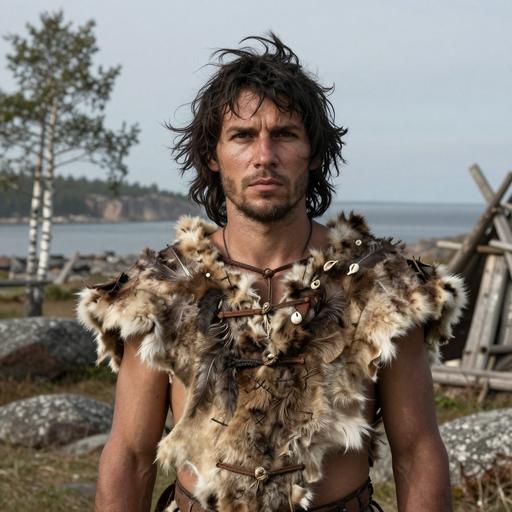
Portrait reconstruction of StoraForvar11
Ancient Individual

A man buried in Sweden in the Mesolithic era

StoraForvar11
5557 BCE - 5230 BCE
Male
Hunter-Gatherer Sweden
Sweden
Scroll to begin
Chapter I

Identity

The biological and cultural markers that define this ancient individual

Sample ID

StoraForvar11

Date Range

5557 BCE - 5230 BCE

Biological Sex

Male

mtDNA Haplogroup

Not available

Y-DNA Haplogroup

Not available

Cultural Period

Hunter-Gatherer Sweden

Chapter II

Place

Where this individual was discovered

Country Sweden
Locality Gotland. Stora Karlsö
Coordinates 57.2850, 17.9710
Chapter III

Time

When this individual lived in the broader context of human history

StoraForvar11 5557 BCE - 5230 BCE
Chapter IV

Story

The narrative of this ancient life

Hunter-Gatherer Sweden, particularly during the era of the Western European Hunter-Gatherers (WEHG), represents a fascinating chapter in prehistoric European history. This period, spanning from the Mesolithic to the early Neolithic (roughly 10,000 to 6,000 years ago), is characterized by a lifestyle deeply attuned to the rhythms of nature, where people relied on hunting, fishing, and foraging as their primary means of subsistence. Here's an extensive and detailed description of this era and culture:

Environment and Geography

Hunter-Gatherer Sweden was shaped by the retreat of glaciers following the last Ice Age, which transformed the Scandinavian Peninsula into a rich mosaic of ecosystems. As temperatures rose, vast forests of birch, pine, and later mixed deciduous trees emerged, alongside extensive river systems, lakes, and a rugged coastline interspersed with archipelagos. These environments provided diverse habitats for various game animals and plant species.

Subsistence Strategies

Hunting and Fishing: The WEHG in Sweden primarily relied on hunting for their sustenance. Large game such as elk, red deer, and wild boar were common targets, while smaller animals like beavers and birds supplemented their diet. The use of bows, arrows, spear-throwers, and traps indicates advanced hunting techniques. Fishing, both in freshwater and marine environments, was crucial, with evidence of harpoons and fishhooks. Species such as salmon, pike, and seal were significant for coastal and riverine communities.

Gathering: The flora of prehistoric Sweden offered a bounty of resources. Communities gathered nuts, berries, roots, and tubers. Hazel nuts, in particular, were abundant and served as an essential food source. The diverse plant life also played a role in medicine and tool-making.

Social Structure and Organization

The social structure of WEHG societies in Sweden was likely egalitarian, with small, mobile bands of 20-50 individuals. These groups were kin-based, and their size and composition could fluctuate due to seasonal changes and resource availability. Cooperation and sharing were essential survival strategies, with resources distributed among community members.

Cultural Practices and Material Culture

Material Culture: WEHG societies in Sweden crafted a range of tools and artifacts primarily from stone, bone, and wood. Microliths—small, carefully crafted stone blades—were used in composite tools. Bone and antler were fashioned into harpoons, needles, and adornments. The craftsmanship of these tools reflects both functional needs and aesthetic expression.

Housing: Evidence suggests that these communities lived in temporary structures, such as wigwams or tent-like shelters, made from wood, bark, and animal hides. The mobility of their lifestyle required easily disassembled or abandoned dwellings.

Art and Symbolism: Rock carvings and portable art objects have been discovered, indicating a rich symbolic life. These include geometric patterns, representations of animals, and possibly shamanistic symbols. Such art likely played a role in rituals, storytelling, and the transmission of knowledge.

Trade and Interactions

Despite their remote location, WEHG groups in Sweden participated in a wider network of trade and cultural exchange. Archaeological finds, such as exotic flint and other raw materials, suggest interaction with distant groups. These exchanges not only provided material goods but also facilitated the flow of ideas, innovations, and genes, contributing to cultural cohesion across regions.

Transition and Legacy

The arrival of Neolithic farmers from the south eventually brought significant changes. Agriculture started to supplement traditional foraging, leading to more sedentary lifestyles. However, the spiritual and cultural fabric of the hunter-gatherer societies persisted, influencing successor cultures in the region. The legacy of these early inhabitants is observed in the genetic makeup of modern Scandinavian populations and the archaeological record, which continues to reveal new insights into their lifestyles and beliefs.

In summary, Hunter-Gatherer Sweden during the era of Western European Hunter-Gatherers was marked by a harmonious interaction with the environment, complex social relations, and a rich cultural life, all of which laid the foundations for subsequent developments in prehistoric Scandinavia.

Chapter V

Genetics

The genetic ancestry of this ancient individual

Ancient Genetic Admixture

This analysis compares the DNA profile of StoraForvar11 with ancient reference populations, showing the genetic composition in terms of prehistoric ancestral groups.

Western Steppe Pastoralists 61.3%
European Hunter-Gatherers 20.7%
Neolithic Farmers 10.6%
Ancient Asians 7.5%

Modern Genetic Admixture

This analysis compares the DNA profile with present-day reference populations, showing what percentage of genetic makeup resembles modern populations from different regions.

Europe 98.4%
Northwestern European 60.9%
Scandinavian 24.0%
English 21.6%
Finnish 12.7%
Northwestern European 2.6%
Eastern European 35.4%
Southern European 2.2%
Balkan 2.2%
Africa 1.6%
West African 1.6%
Senegambian & Guinean 1.6%

Closest Modern Populations

These are the modern populations showing the closest statistical alignment to A man buried in Sweden in the Mesolithic era, ranked by genetic distance. Lower distance values indicate closer statistical similarity.

1
Estonian
2.3944
2
Ingrian
2.9159
3
Finnish Central
3.0251
4
Russian Yaroslavl
3.0442
5
Russian Pskov
3.2496
6
Russian Tver
3.2627
7
Finnish Southwest
3.3190
8
Russian Kostroma
3.3281
9
Russian Kaluga
3.4166
10
Finnish Southeast
3.5294
Chapter VI

Context

Other ancient individuals connected to this sample

Sources

References

Scientific publications and genetic data

Scientific Publication

Genomic diversity and admixture differs for Stone-Age Scandinavian foragers and farmers

Authors Skoglund P, Malmström H, Omrak A
Abstract

Prehistoric population structure associated with the transition to an agricultural lifestyle in Europe remains a contentious idea. Population-genomic data from 11 Scandinavian Stone Age human remains suggest that hunter-gatherers had lower genetic diversity than that of farmers. Despite their close geographical proximity, the genetic differentiation between the two Stone Age groups was greater than that observed among extant European populations. Additionally, the Scandinavian Neolithic farmers exhibited a greater degree of hunter-gatherer-related admixture than that of the Tyrolean Iceman, who also originated from a farming context. In contrast, Scandinavian hunter-gatherers displayed no significant evidence of introgression from farmers. Our findings suggest that Stone Age foraging groups were historically in low numbers, likely owing to oscillating living conditions or restricted carrying capacity, and that they were partially incorporated into expanding farming groups.

G25 Coordinates

The G25 coordinates for sample StoraForvar11 can be used for detailed admixture analysis in our G25 Studio tool.

StoraForvar11,0.12970646,0.10842646,0.08931054,0.0761428,0.03623602,0.03086312,0.00902306,0.0173336,-0.00185262,-0.03244054,0.00282302,-0.00766356,0.01384108,0.01162876,-0.00111368,-0.00143864,5.8E-05,-0.00296612,0.00314554,-0.0001821,0.00278858,-0.00398662,-0.00683616,0.0084394,0.00136165
Analyze in G25 Studio
Use code for 40% off Expires Feb 27